

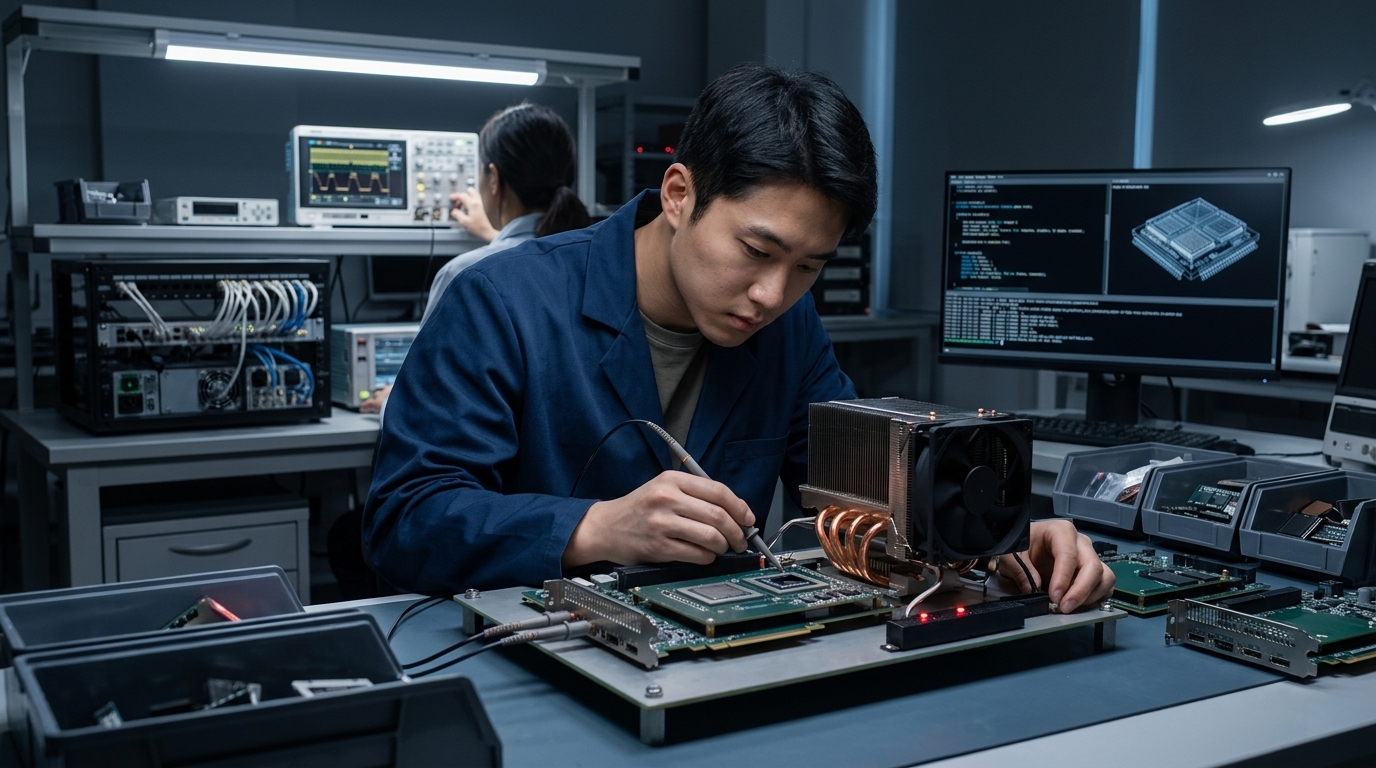
The U.S. government has leveled direct accusations against Chinese firm Moonshot AI, alleging that it successfully bypassed strict export controls to access advanced Nvidia AI chips. Michael Kratsios, Director of the White House Office of Science and Technology Policy, revealed that the company acquired servers equipped with Nvidia GB300 chips in Thailand, likely utilizing them for model training.
The Kimi K3 Model and Moonshot's Rise
These allegations follow the recent unveiling of Kimi K3, an open-source model boasting 2.8 trillion parameters. Moonshot claims that K3 outperforms top-tier American models in certain benchmarks, including Anthropic’s Fable 5 and OpenAI’s GPT 5.6 Sol. However, Washington contends that Moonshot utilized "distillation" techniques to extract knowledge from Anthropic’s Fable model—a practice U.S. Treasury Secretary Scott Bessent has characterized as intellectual property theft.
Closing Export Loopholes
The Moonshot case highlights a critical vulnerability in the U.S. regulatory framework: the ability of Chinese firms to procure hardware through subsidiaries in third-party nations like Thailand and Malaysia. In response, the U.S. Department of Commerce has issued new guidelines clarifying that export restrictions apply to all entities with a Chinese parent company, regardless of their geographic location.
Furthermore, the U.S. is advancing the "Remote Access Security Act" (RASA), aimed at closing loopholes that allow remote, cloud-based access to critical hardware and software. China has dismissed the charges, with an embassy spokesperson calling them "malicious smears" against its technological development.





