

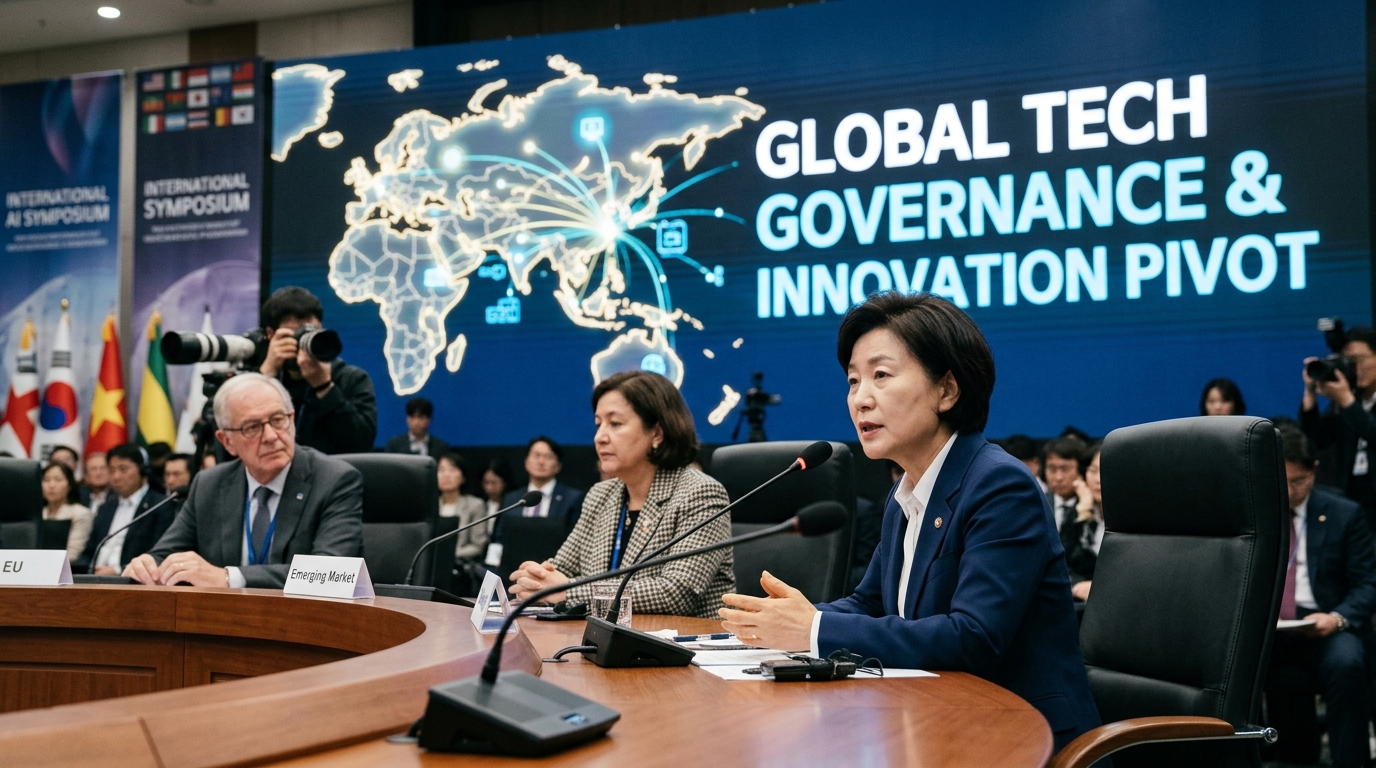
In an era where technological supremacy is the new currency of geopolitical power, South Korea is embarking on a bold institutional reform. The recent announcement granting legal authority and enhanced powers to the Program Directors (PDs) of the K-Moonshot project is not merely a bureaucratic reshuffling; it is a strategic declaration of intent. Seoul, recognizing that the traditional model of incremental development is no longer sufficient, is adopting a framework reminiscent of the U.S. DARPA, handing the keys of decision-making to scientist-leaders beyond the narrow confines of individual ministries.
Breaking with Bureaucratic Tradition
For decades, the South Korean R&D system was characterized by a rigid, hierarchical structure where failure was virtually taboo. This led to a "catch-up" culture, where the nation perfected existing technologies but rarely pioneered radical breakthroughs. The K-Moonshot program aims to overturn this reality. With the new legislative framework, PDs gain the legal authority to manage budgets and direct cross-ministerial collaborations without hitting the usual roadblocks of public administration.
The newly launched cross-ministerial governance allows for the convergence of resources from the Ministry of Science, the Ministry of Trade, and the Ministry of Defense. This horizontal structure is critical for technologies like Artificial Intelligence, quantum computing, and biotechnology, which do not fit into single-sector silos. As analysts in Seoul point out, "It is no longer about which ministry controls the funds, but about which project can change the nation's future."
Geopolitical Strategy and the US-China Rivalry
This move by South Korea must be viewed within the broader context of the technological cold war between Washington and Beijing. Seoul finds itself in a delicate balance, being a close security ally of the US while remaining economically intertwined with China. Strengthening K-Moonshot is an effort to build "strategic autonomy." By investing in "moonshot" programs—goals that seem impossible but carry transformative impact—South Korea seeks to become an indispensable third pole in the global advanced technology supply chain.
- Autonomy in next-generation semiconductor manufacturing.
- Leadership in 6G technology and satellite communications.
- Development of sovereign AI models independent of foreign infrastructure.
"The legal empowerment of PDs is the 'fuel' for the K-Moonshot rocket. Without the freedom to fail and experiment, innovation remains a prisoner of bureaucracy," says a senior official from the Ministry of Science.
The Challenge of Cultural Transformation
Despite the legal empowerment, the greatest challenge remains a shift in mindset. In Korean society, the failure of a public project is often met with harsh criticism and political fallout. K-Moonshot requires a culture that embraces risk. The new PDs must have the courage to terminate non-performing projects and redirect resources to more promising ideas—a move that requires unprecedented political backing.
Furthermore, cross-ministerial cooperation is historically difficult in any country. South Korea is betting that the legal authority of PDs will act as a "battering ram" against the protectionism of individual ministries. If this experiment succeeds, South Korea could offer a new model of innovation governance for the 21st century, blending state direction with private-sector agility.
Global Implications
The K-Moonshot case highlights a global trend: the return of the state as a central player in technological development. After decades of a laissez-faire approach, governments are realizing that markets alone cannot fund the basic science research required for giant leaps. South Korea, with its tradition of central planning and technological prowess, may be the best-suited nation to prove that "innovation state capitalism" is the key to survival in the age of Artificial Intelligence.




