

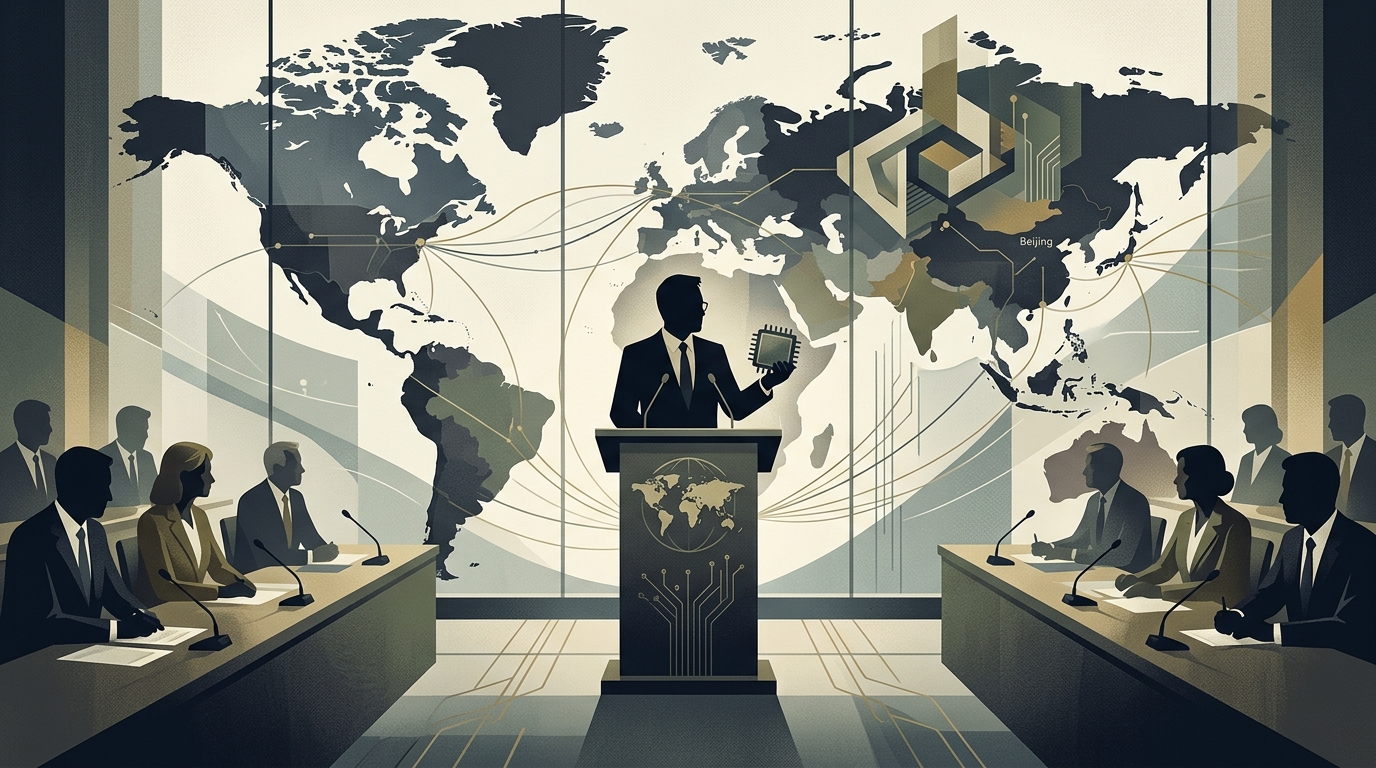
In a move that underscores the inextricable link between high technology and international statecraft, Jensen Huang, the visionary leader of Nvidia Corp., has expressed his readiness to accompany President Donald Trump on his upcoming high-stakes visit to China. This declaration, made during an interview with Bloomberg, is far more than a routine expression of corporate cooperation; it is a strategic positioning at the epicenter of the 21st century’s most consequential geopolitical rivalry.
As of May 2026, Nvidia remains the world’s most valuable company, a title secured by its absolute dominance in Artificial Intelligence infrastructure. However, the company exists in a state of delicate equilibrium. It is simultaneously the "crown jewel" of American technological prowess and a commercial entity for which China remains a vital, albeit restricted, market. Huang’s willingness to join the presidential delegation signals a push by Silicon Valley to directly influence the trajectory of US-China trade policy.
The Strategy of 'Semiconductor Diplomacy'
For Jensen Huang, an invitation to join such a trip would represent the ultimate validation of Nvidia as a state-level strategic asset. Semiconductors have long since evolved from mere computer components into the "oil" of the new economy and the bedrock of modern military capability. The Trump administration, characterized by its "America First" yet transactional approach, views Nvidia as a potent bargaining chip in its dealings with Beijing.
The hurdles, however, are formidable. Stringent export controls on high-end AI chips (such as the H200 series and its successors) have forced Nvidia to engineer specialized, throttled versions for the Chinese market. This regulatory environment has inadvertently provided a window for domestic Chinese players, most notably Huawei, to gain significant traction. Huang understands that total exclusion from the Chinese market would severely hamper Nvidia’s long-term growth trajectory. His presence on the trip could be an attempt to negotiate specific carve-outs or a more predictable regulatory framework.
The Trump Factor and Silicon Valley Realignment
Donald Trump’s relationship with the tech elite has historically been volatile, yet his second term appears to be defined by a pragmatic embrace of domestic AI champions. Trump recognizes that maintaining the technological lead is essential to his vision of national renewal. Nvidia is the battering ram of this effort.
"Technology is the language of power in the 21st century. When the CEO of the world’s most important chip company offers to sit at the negotiating table, we are no longer talking about trade—we are talking about the architecture of the global order," noted a senior Washington policy analyst.
Beijing is watching closely. To the Chinese leadership, Huang is a complex figure: a businessman eager to sell to their market, but also the man arming their primary geopolitical rival. Huang’s reception in Beijing, should he be invited, will serve as a litmus test for whether China is willing to make concessions to maintain access to the hardware essential for the AI revolution.
Risks, Rewards, and the Global Supply Chain
There is a darker side to this diplomatic dance. Many in Congress remain deeply skeptical of any rapprochement that might bolster China’s AI capabilities. Huang must walk a perilous tightrope: appearing as a loyal servant of US national security interests while simultaneously protecting shareholder value in a globalized marketplace.
If this trip proceeds, it will be the clearest sign yet that the era of "decoupling" is evolving into an era of "managed interdependence." Nvidia is no longer just a corporation; it is a geopolitical actor. Jensen Huang, in his signature leather jacket, is preparing to trade the boardrooms of Santa Clara for the grand halls of Beijing, attempting to ensure that the future of AI continues to be written with American silicon, even if it is fueled by global markets.
- Nvidia currently controls over 80% of the global AI chip market share.
- China has historically accounted for 20-25% of Nvidia's total revenue.
- The Trump administration is reportedly weighing new tariffs that could impact Taiwanese supply chains.





