

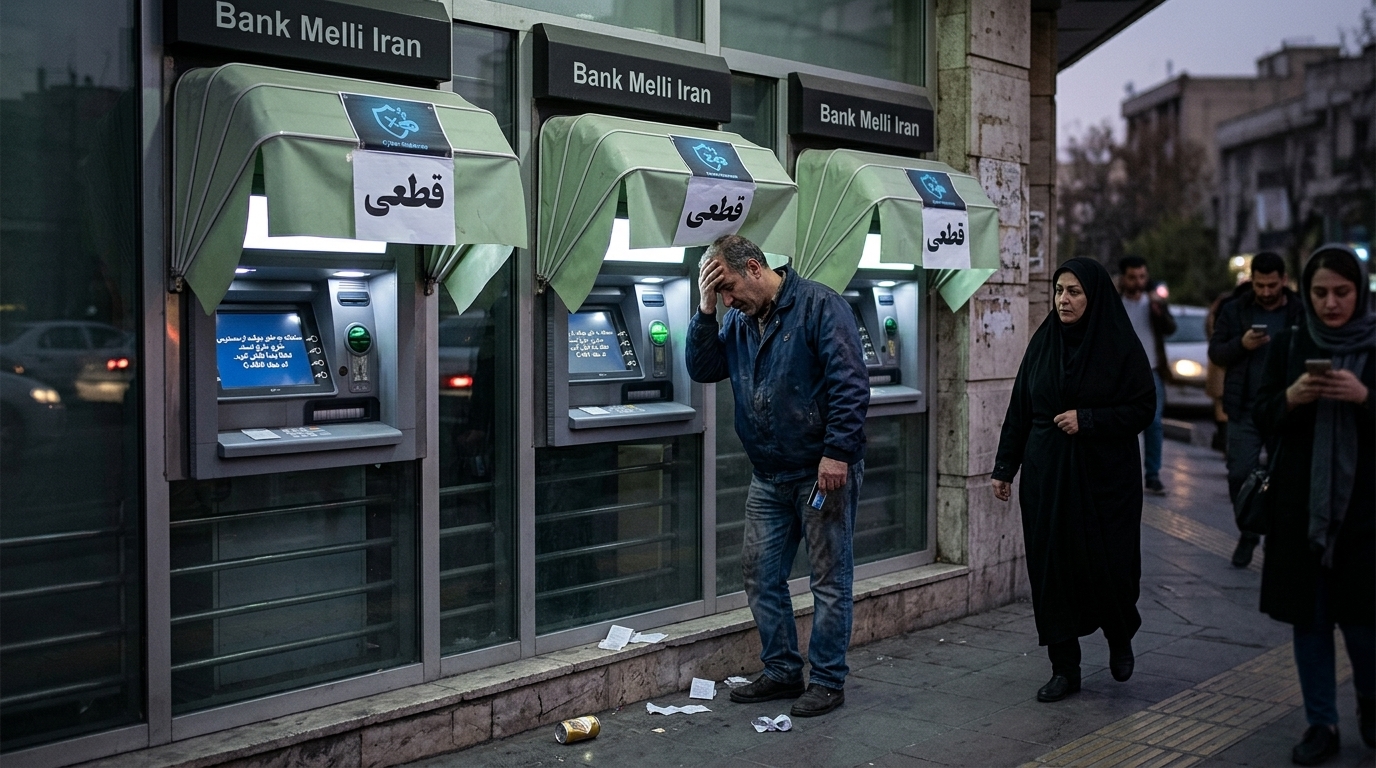
In an era where geopolitical balances in the Middle East resemble a tightrope walk, Tehran has found itself facing one of its most serious challenges in recent years—not on the battlefield, but in digital space. The recent cyberattack that hit three of the country's most significant banking institutions, Bank Melli, Bank Saderat, and Bank Tejarat, was not merely a technical glitch. It was a strategic move that paralyzed the card transaction system, leaving millions of citizens without access to their funds and causing tremors in the already strained Iranian economy.
The Timeline of Paralysis
According to reports from Iran's state banking technology provider (ISC), the attack targeted the heart of the payment processing system. Early Tuesday morning, users began reporting mass failures in ATM and POS terminal transactions. Bank Melli, the country's largest commercial banking organization, saw its digital gateways collapse, followed by Bank Saderat and Bank Tejarat. The disruption was not accidental. Security experts point out that the manner in which the attack manifested suggests a sophisticated operation, likely state-sponsored, aimed at causing maximum social unrest.
The Iranian government initially tried to downplay the event, citing "technical malfunctions." However, the scale of the problem made it clear that this was an orchestrated action. In Tehran and other major cities, queues formed outside branches as citizens tried to understand if their savings were safe. The psychological impact of such an attack is often more devastating than the economic damage itself, as it erodes citizens' trust in state institutions.
The Geopolitical Dimension and the 'Shadow War'
This attack cannot be examined in isolation from the broader context of the conflict between Iran and its regional rivals, primarily Israel. The "shadow war" that has been ongoing for years includes sabotage of nuclear facilities, assassinations of scientists, and, increasingly, cyberattacks on critical infrastructure. Iran has previously targeted Israeli water systems and hospitals, while Israel is considered responsible for attacks on the Iranian fuel distribution network and port facilities.
The use of Artificial Intelligence in these attacks is a game-changer. Attackers now use automated tools that can identify security vulnerabilities in real-time and adapt malware code to bypass defenses. For Iran, which is under strict international sanctions, access to advanced cyber defense systems is limited, making its infrastructure particularly vulnerable. The attack on the banks is a clear message: the financial heart of the country is exposed.
Economic Impact and Social Unrest
For an economy struggling with hyperinflation and currency devaluation, such a disruption is nightmarish. Small and medium-sized businesses that rely on daily transactions saw their revenues drop to zero for hours. Furthermore, the inability of citizens to purchase basic goods due to card failure fuels popular discontent. In a country where protests over economic reasons are frequent, the government fears that digital paralysis could spill over into the streets.
"Cybersecurity is no longer a technical issue, but a matter of national survival. When citizens cannot buy bread because the banking system is down, social cohesion is tested to its limits," says a Dubai-based security analyst.
Bank Melli, as the pillar of the state banking system, bears the brunt of the restoration efforts. However, the process of "cleaning" systems of potential malware that may remain dormant is time-consuming and costly. The need for a comprehensive overhaul of Iran's digital strategy is now imperative, although resources remain limited due to sanctions.
The Future of Cyber Conflicts
This incident highlights a global trend: banks are now the "new front" of geopolitical conflicts. It is no longer about stealing money, but about destroying the functionality of a state. As AI becomes increasingly integrated into offensive arsenals, the speed and scale of these attacks will increase. Iran, despite its efforts to develop domestic solutions, finds itself at a disadvantage in an arms race where code is the most powerful weapon.
In conclusion, the attack on Bank Melli, Saderat, and Tejarat is a reminder that in the 21st century, a country's power is judged not only by its missiles but also by the resilience of its servers. Tehran is now called upon to balance the need for digital modernization with the reality of a continuous cyberwar that threatens to destabilize its interior.





