

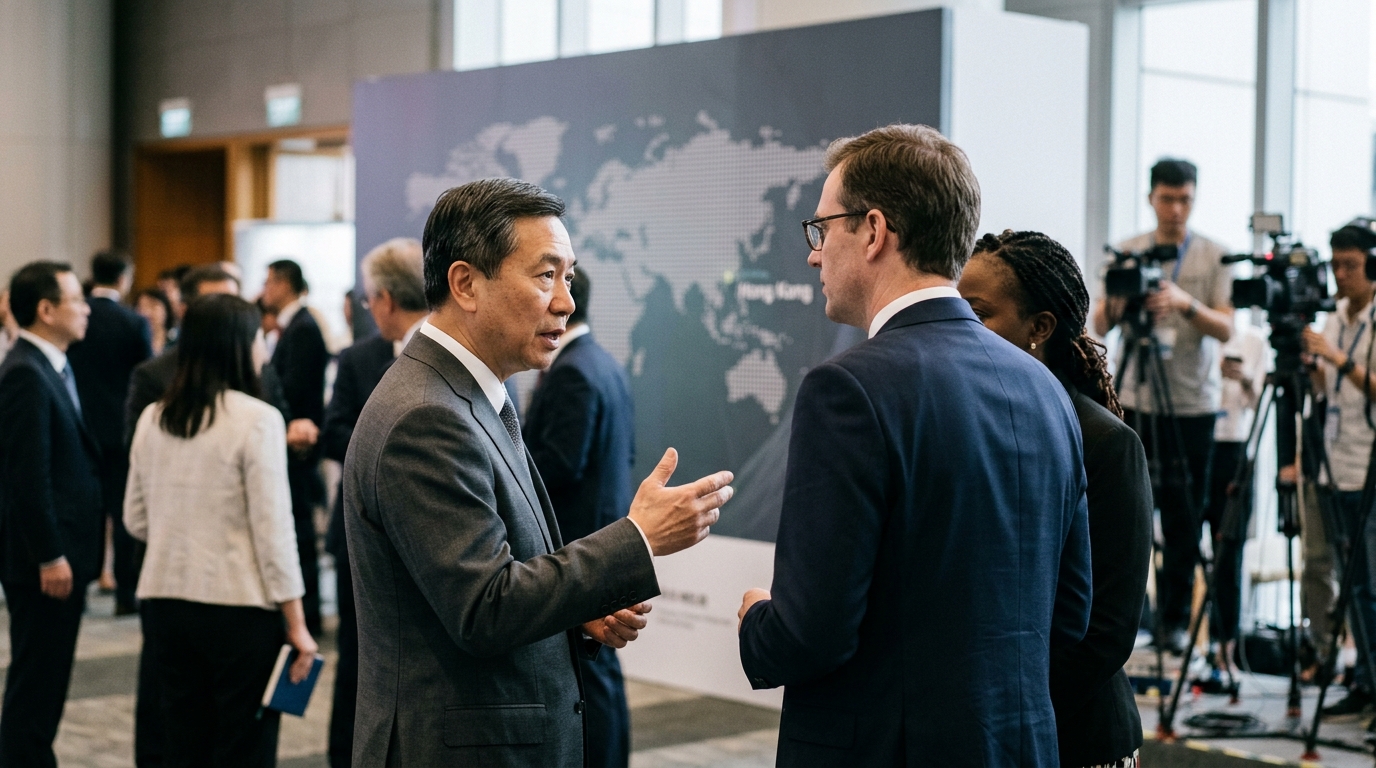
In the shifting landscape of global technological hegemony, Hong Kong finds itself at a critical juncture. Once the undisputed gateway between East and West, the city is now attempting to reinvent itself as a premier Artificial Intelligence (AI) hub. However, as analysts and recent commentary in the South China Morning Post suggest, this endeavor requires more than mere government subsidies; it demands a vision that acknowledges the harsh geopolitical realities of 2026.
The Semiconductor Dilemma and Western Sanctions
The single greatest obstacle to Hong Kong’s ambitions remains access to essential hardware. As US export restrictions on advanced chips from Nvidia and other giants intensify, the city is struggling to secure the computational power necessary for training Large Language Models (LLMs). Despite the establishment of the AI Supercomputing Centre at Cyberport, reliance on the "gray market" or less efficient domestic solutions from mainland China creates a significant competitiveness gap.
Hong Kong is no longer just competing with Singapore or London; it is also vying for relevance against neighboring mainland cities like Shenzhen and Beijing, which possess more direct access to state resources and a more integrated ecosystem. The need for a "third way"—one that leverages the city’s unique legal status while navigating the minefield of American sanctions—has never been more urgent.
Human Capital: The Dynamics of Brain Drain and Brain Gain
One of the most thorny issues is talent retention and attraction. While Hong Kong remains an attractive destination for scientists from mainland China due to its high standard of living and academic freedoms that still exceed those of mainland metropolises, the exodus of Western and local experts to Singapore and the US continues. Uncertainty surrounding the legal framework for data security and the "red lines" regarding AI-generated content creates an environment of hesitation for international investors.
- The need for clear regulatory provisions protecting intellectual property.
- Creating incentives for the return of Hong Kong’s tech diaspora.
- Strengthening university-industry collaboration via InnoHK clusters.
Integration with the Greater Bay Area (GBA)
The future of AI in Hong Kong is inextricably linked to the Greater Bay Area. Strategy must shift from competing with Shenzhen to achieving full complementarity. Hong Kong can offer the legal framework, financial services, and international networking, while Shenzhen provides the manufacturing base and market-scale application. However, this integration requires removing barriers to data flow across the border—a matter that remains politically sensitive.
"Hong Kong cannot simply be a consumer of AI technology; it must become the architect of the ethical and regulatory standards that will allow Chinese technology to engage with the world," notes a senior tech advisor in the region.
Realistic Goals and the 2026 Vision
The critique offered by the South China Morning Post highlights that the city must stop chasing "vanity projects" and focus on sectors where it holds a comparative advantage, such as AI in biomedicine, fintech, and maritime logistics. The attempt to create a "Silicon Valley clone" is destined for failure if local idiosyncrasies are ignored. 2026 demands that Hong Kong be honest with itself: it is a mediator in a decoupling world, and AI is the primary tool of that mediation.




