

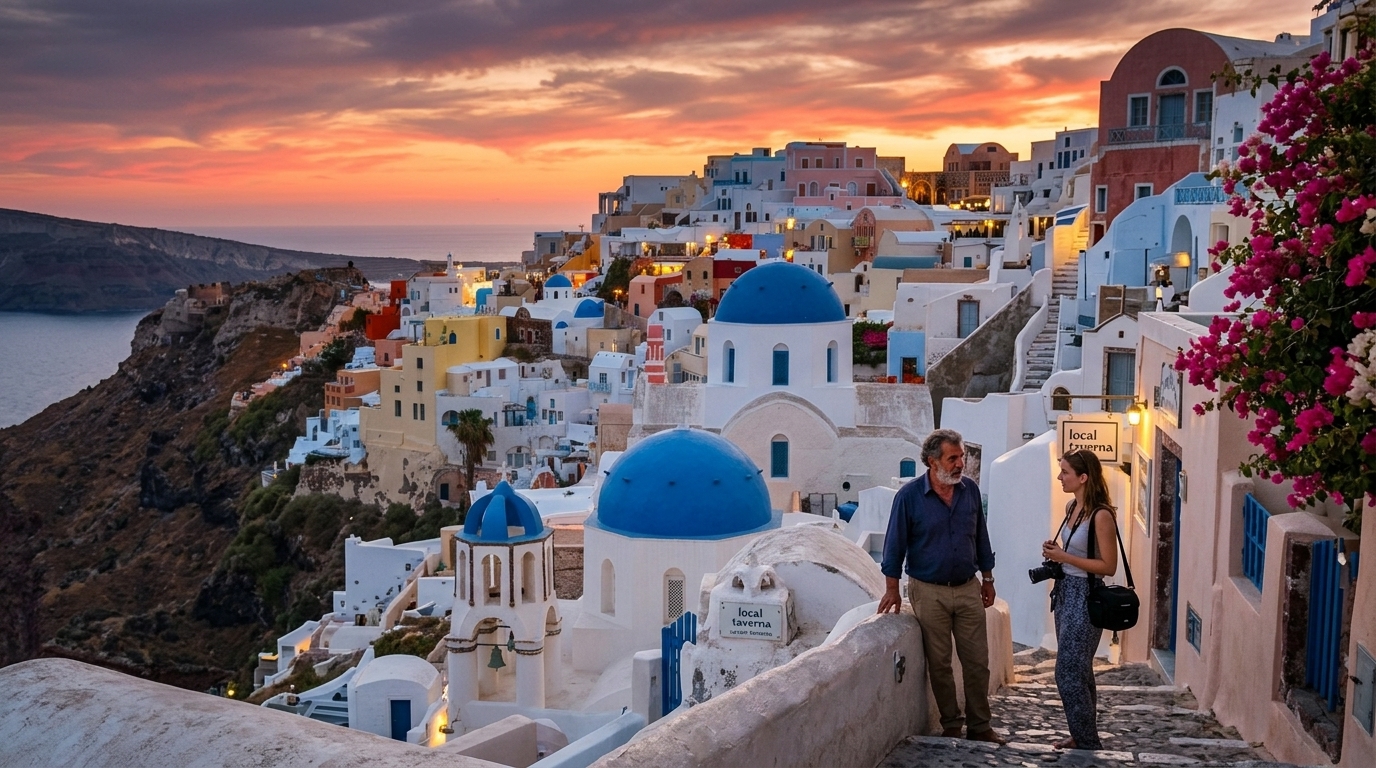
The Greek tourism industry, the traditional "lung" of the national economy, finds itself once again at a critical crossroads. As we move through 2026, the international environment remains exceptionally fluid, with geopolitical tensions in the Eastern Mediterranean and Ukraine reshaping the global travel map. However, Greece appears to maintain a paradoxical momentum. While forecasts for the current year point to new record arrivals, the discussion among analysts has shifted from quantity to quality and, most importantly, to the resilience of the model.
Geopolitics as a Double-Edged Sword
Geopolitical instability has historically functioned for Greece in a dual manner. On one hand, conflicts in neighboring countries or competing destinations (such as the Middle East) bolster Greece's profile as a "safe haven." Travelers from Western Europe and the US tend to prefer destinations within the EU and NATO when the wider region is in turmoil. On the other hand, increased energy costs and inflationary pressures caused by these crises eat away at tourists' disposable income and sharply increase the operating expenses of hotel units.
According to recent analyses, Greece has managed to capitalize on its stability, attracting investments in high-value tourism real estate. However, reliance on specific markets, such as Germany and the UK, remains high, making the product vulnerable to the economic fluctuations of these countries. Efforts to open up to markets like India and Southeast Asia are still in an embryonic stage, despite optimistic government pronouncements.
The "Achilles' Heel": Infrastructure and Climate Crisis
If geopolitics is the external risk, the real "Achilles' heel" of Greek tourism lies within. The over-concentration of tourists in specific destinations, such as Santorini and Mykonos, has led to "overtourism" phenomena that threaten to alter the identity of these areas. Infrastructure—from the road network and waste management to electricity and water supply grids—is being tested beyond its limits during the summer months.
- Water Scarcity: Climate change has made water "liquid gold" in the Cyclades islands, with desalination plants failing to meet the demand of hotels and pools.
- Energy Costs: Despite the green transition, reliance on oil in many islands increases the cost of stay.
- Labor Force: The shortage of skilled personnel remains the number one problem for entrepreneurs, with thousands of job positions remaining vacant every season.
The climate crisis is no longer a future scenario but a present threat. Prolonged heatwaves and the risk of forest fires have begun to affect bookings for July and August, pushing the season toward autumn and spring. This "extension" of the period is indeed desirable, but it requires different planning and investments that have not yet been completed.
From "Sun and Sea" to Sustainable Development
To maintain its competitiveness, Greek tourism must evolve. The traditional "sun and sea" recipe is no longer sufficient to justify the high prices visitors are asked to pay. Emphasis on cultural tourism, gastronomic tourism, and wellness tourism is the only way forward. Furthermore, the digitalization of services and the use of Artificial Intelligence to personalize the customer experience are areas where Greece lags behind competitors like Spain or Portugal.
"Tourism is not just about arrival numbers. It is the ability of a country to manage its resources without exhausting them for future generations," market executives state.
In conclusion, the resilience of Greek tourism is admirable, but it should not lead to complacency. The geopolitical situation may favor Greece temporarily, but structural weaknesses in infrastructure and the climate challenge require bold reforms. The bet for 2026 and beyond is not how many millions of tourists will arrive, but what kind of footprint they will leave on the country's economy, society, and environment.





