

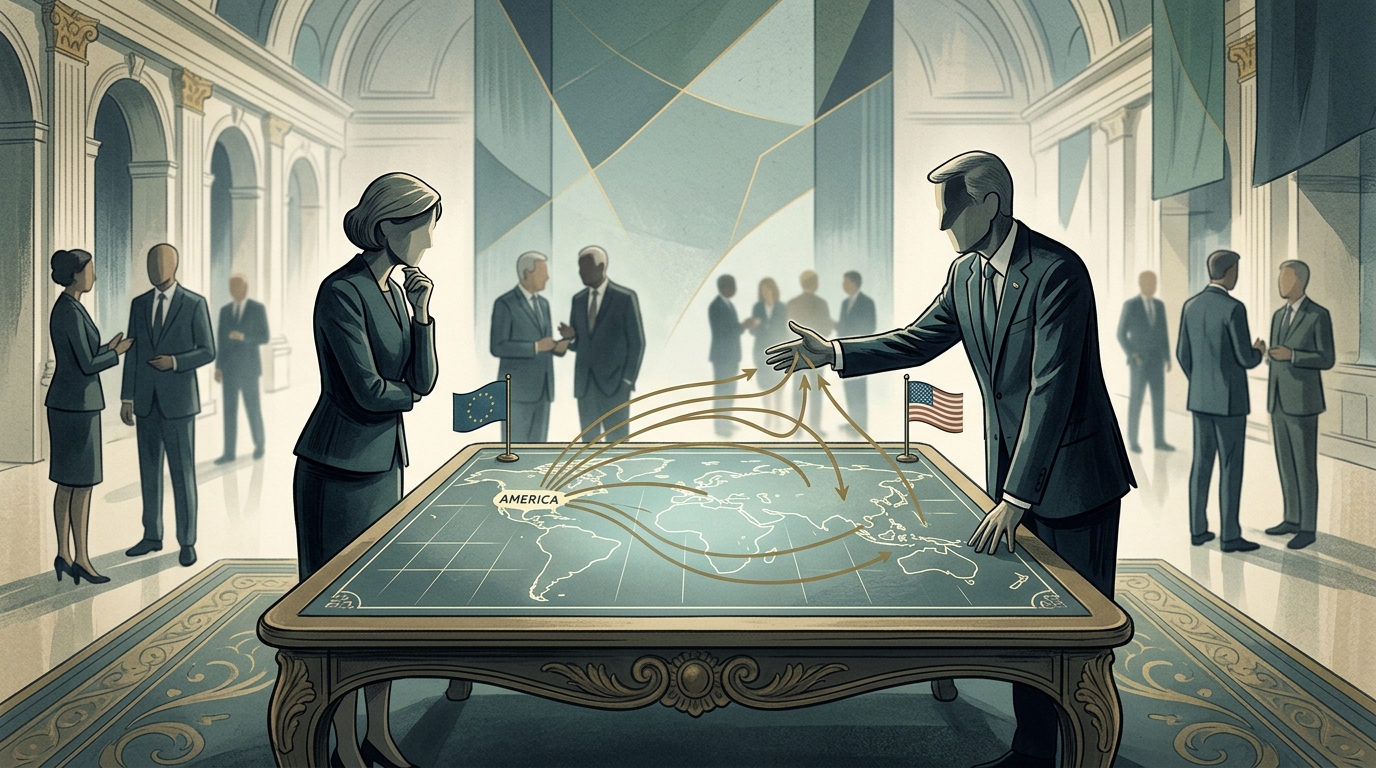
In early 2025, the image of Giorgia Meloni at Donald Trump's inauguration in Washington seemed to signal a new era for transatlantic relations. The Italian Prime Minister, who had managed to transform herself from a Brussels 'persona non grata' into a reliable Western interlocutor, appeared to be the natural bridge between the European Union and the new US administration. However, as we move through the summer of 2026, the 'political allure' of the early days has given way to a 'hard rock' of geopolitical rivalries and economic pressures.
The Illusion of Ideological Kinship
Meloni and Trump undoubtedly share common rhetorical ground: an emphasis on traditional values, border control, and a critique of the 'woke' agenda. For many analysts, Meloni was Europe’s 'Trump-whisperer,' the leader who could explain European sensitivities to the occupant of the White House. But foreign policy is rarely guided solely by ideology. Trump’s return to the 'America First' doctrine has brought a fundamental contradiction to the surface: US protectionism directly harms Italy's national interests, regardless of how 'right-wing' the government in Rome is.
The tariffs imposed by the Trump administration in early 2026 on European goods—ranging from Italian luxury cars to agricultural products—marked the first major fracture. Meloni found herself in the awkward position of having to defend Italian industry against a political ally who does not hesitate to sacrifice relationships with partners to boost domestic American production. Rome, which relies heavily on exports, sees its economic model threatened by the very source of its political inspiration.
The Thorn of Ukraine and NATO
Another point of friction is the stance toward Russia and the war in Ukraine. Throughout her tenure, Meloni has been one of Kyiv's staunchest supporters in Europe, earning praise from the Washington and Brussels establishment. In contrast, Trump’s approach of a 'quick fix' and his reluctance to continue unlimited military aid have put Rome in a difficult spot. Italy fears that a premature or unjust peace, imposed by Washington, would destabilize European security and leave the EU exposed.
- Trump's pressure to increase defense spending to 3% of GDP strains the already burdened Italian budget.
- Meloni is trying to balance Atlantic loyalty with European strategic autonomy.
- Rome is concerned about a potential US-Russia deal that ignores Italian interests in the Mediterranean.
Meloni realizes that her survival on the European stage depends on her cooperation with France and Germany, despite their ideological differences. When Trump threatens to weaken NATO, Meloni is forced to rally with her European partners, turning the 'bridge' into a fortress for defending European achievements.
The Internal Political Chessboard
Within Italy, the relationship with Trump is also a field of political contention. Matteo Salvini, Meloni’s coalition partner, remains an unrepentant admirer of Trump, pushing for a more submissive stance toward Washington. Meloni, however, has chosen the path of 'institutional realism.' She knows that a total break with Brussels, especially during a period of economic uncertainty, would be suicidal.
"Friendship between nations is based not only on shared values but also on mutual respect for economic realities," Meloni recently stated, in a clear jab at US protectionist policies.
In conclusion, the Meloni-Trump relationship in 2026 is a case study in how Realpolitik overrides ideological ties. The Italian Prime Minister is called upon to prove whether she can remain a 'sovereign' leader in a world where her greatest ally is only interested in his own sovereignty. The 'hard rock' has just begun, and its rhythm will determine not only the future of Italy but also the cohesion of the entire Europe in the face of an unpredictable America.




