For decades, Europe has watched from the sidelines as the digital revolution unfolded on the shores of California and in the laboratories of Shenzhen. From search engines to social networks, the Old Continent has primarily been a wealthy consumer and a strict regulator, but rarely a pioneering creator. Today, as Generative AI reshapes the global economy, the European Union seems to be saying "enough is enough." The pursuit of "digital sovereignty" is no longer an academic slogan in Brussels; it is an urgent strategic necessity.
The Geopolitical Risk Factor
The recent surge in activity across Europe isn't just driven by the fear of falling behind technologically, but by a deep-seated anxiety regarding the political stability of the United States. Analysts point out that the possibility of a second Donald Trump presidency is acting as a catalyst. The prospect of an America turning toward isolationism or weaponizing its technological dominance has rattled European capitals. If access to top-tier AI models from OpenAI, Google, or Anthropic were to be restricted or leveraged for political gain, European industry would find itself in a state of hostage-like dependency.
"We cannot base the future of our economy on the whims of a president in Washington or the eccentricities of a CEO in Silicon Valley," a European Commission official recently noted. This realization is pushing nations like France and Germany to invest billions into domestic infrastructure and startups.
The Vanguard of European Resistance
At the forefront of this effort are companies like France's Mistral AI and Germany's Aleph Alpha. Mistral, founded by former Meta and Google DeepMind researchers, has managed in a very short time to release models that rival GPT-4 in performance, while emphasizing open-source access and efficiency. Their approach is uniquely "European" in the sense that they seek to offer solutions that respect privacy and can run on local infrastructure, away from the clouds of American giants.
However, the venture is not without its hurdles. Europe suffers from a chronic lack of venture capital compared to the US. While an American startup can raise billions in a single funding round, its European counterparts must fight for much smaller sums. Furthermore, there is the issue of raw computing power. The dependence on Nvidia chips remains absolute, and Europe is now attempting, through the EuroHPC Joint Undertaking, to provide its researchers with access to world-class supercomputers like LUMI in Finland and Leonardo in Italy.
Regulation vs. Innovation: The Delicate Balance
The big question remains: Can Europe regulate and innovate at the same time? The EU AI Act is the world’s first comprehensive legal framework for AI. While Brussels promotes it as a "gold standard" that protects human rights, many in the European tech scene fear that the red tape will stifle local companies before they even have a chance to scale.
"Europe risks becoming the world's museum: a place with wonderful rules for technologies it no longer produces itself," critics warn.
Nevertheless, the strategic choice for "sovereign AI" seems irreversible. France, under the leadership of Emmanuel Macron, is striving to make Paris the "AI capital of Europe," offering tax incentives and attracting global talent. Germany, on the other hand, is focusing on integrating AI into its powerful industrial sector, the so-called "Mittelstand," where industrial production data is considered the new "black gold."
Conclusion
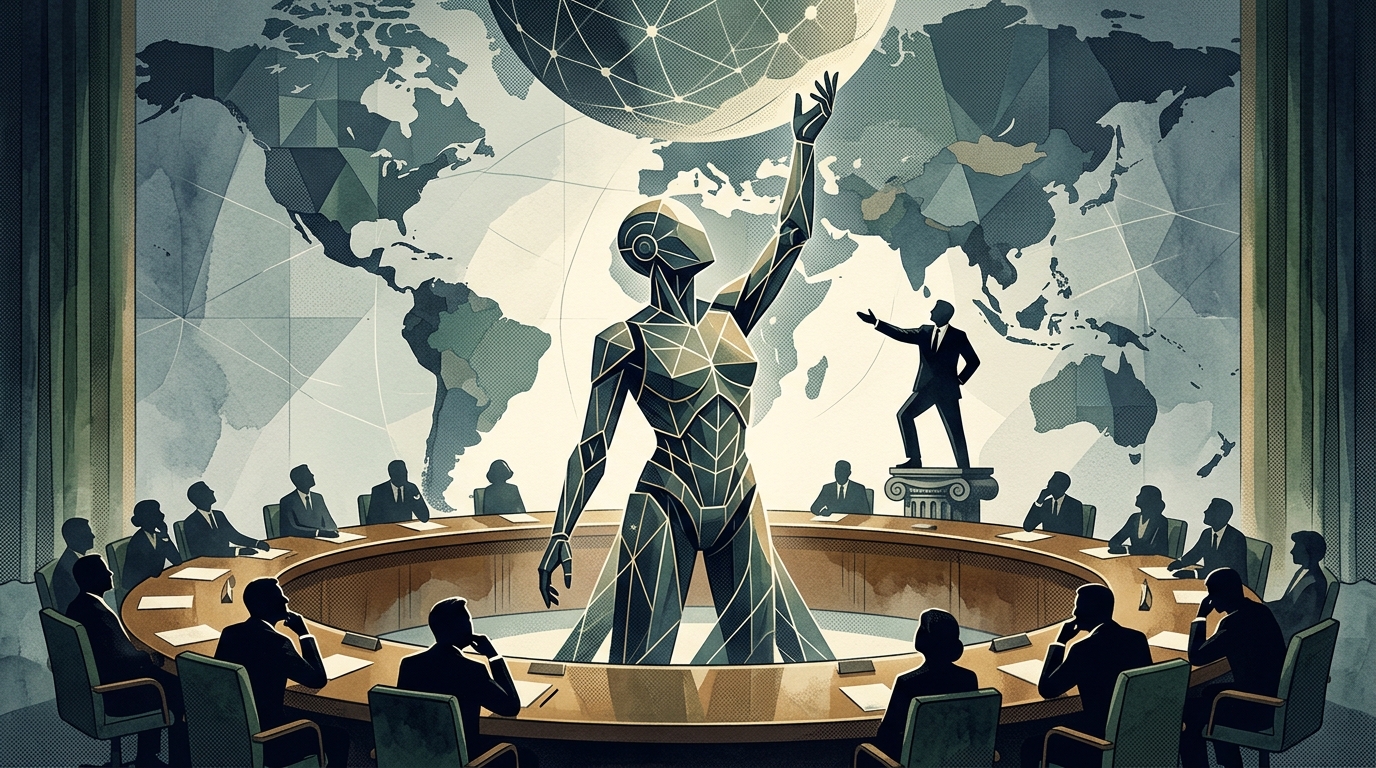
The battle for European AI is not just about algorithms. It is about cultural identity, economic survival, and geopolitical autonomy. If Europe manages to build an ecosystem that combines democratic values with technological excellence, it may finally stop worrying about who sits in the White House. The challenge is immense, but the cost of failure is even higher: the transformation of an entire continent into a digital colony.