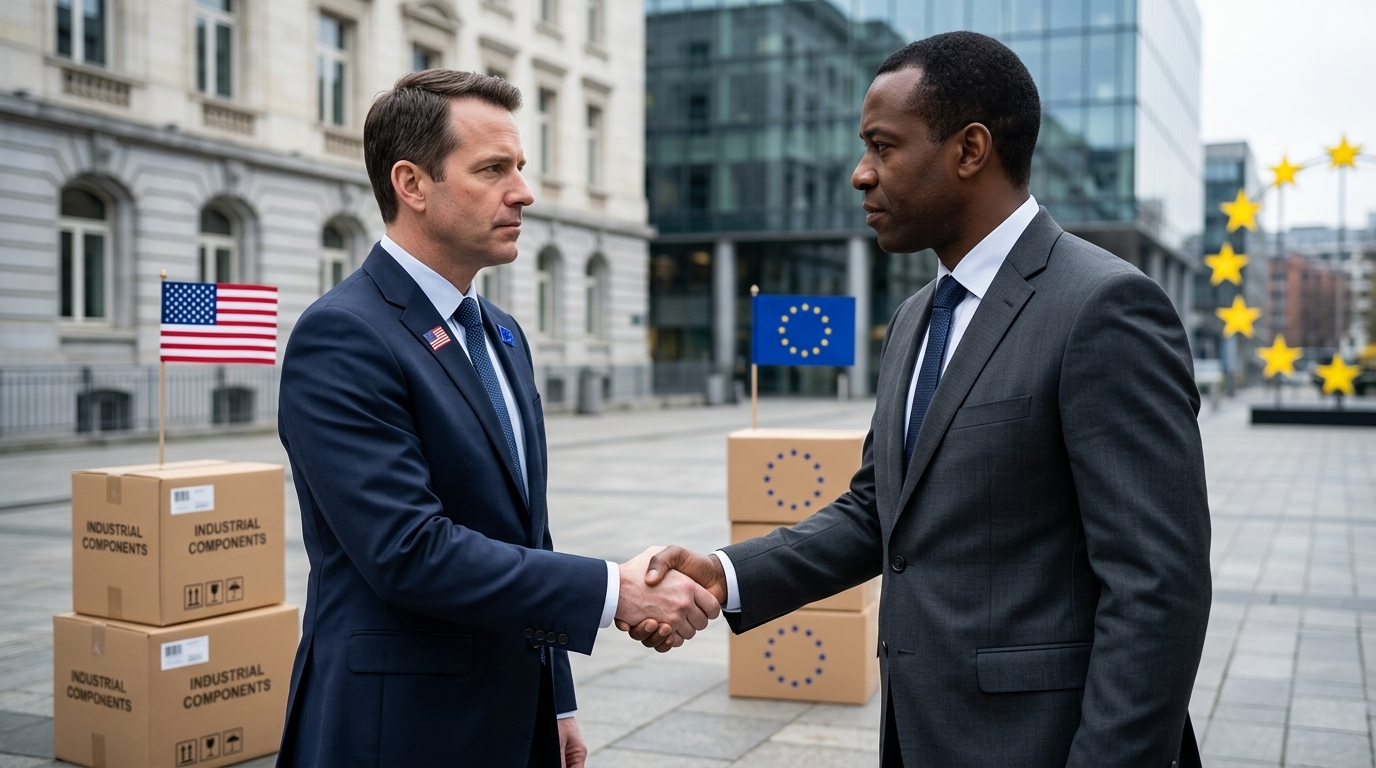
The announcement finalizing the agreement between the European Union and the United States to impose a horizontal 15% tariff on critical industrial sectors marks a new, albeit uncertain, era in transatlantic relations. After years of intense negotiations, WTO legal battles, and mutual threats of retaliation, the West's two largest economies appear to be choosing the path of "managed confrontation" over total rupture. However, behind the celebrations of diplomats lies a complex web of geopolitical stakes and economic challenges that are far from resolved.
The Architecture of 15%: Compromise or Necessary Evil?
The 15% tariff, which will primarily apply to steel, aluminum, and selected technology products, is not an arbitrary choice. It is the result of an exhaustive balancing act. For Washington, this tariff acts as a barrier against the import of cheap raw materials that threaten domestic production, while maintaining the spirit of "America First" which, despite changes in administration, remains at the core of US economic strategy. For Brussels, it is the price to be paid to avoid the catastrophic tariffs that threatened the European automotive industry and agricultural products.
This deal comes at a time when the global economy is searching for stability. Supply chains, still recovering from the crises of previous years, could not withstand another round of tariff retaliation. The "15% deal" offers businesses what they need most: predictability. Nevertheless, the cost of this stability will eventually be passed on to the consumer, reinforcing inflationary pressures at a time when households are already significantly squeezed.
The 'China Factor' and Strategic Autonomy
One cannot analyze the EU-US agreement without looking East. Common concerns over China's economic dominance acted as the catalyst that brought both sides to the negotiating table. The West is attempting to create an "economic fortress" where the rules of the game are defined jointly, excluding the state subsidy practices used by Beijing. The agreement includes clauses on subsidy transparency and intellectual property protection—areas where the EU and the US are perfectly aligned.
However, Europe finds itself in a delicate position. While it desires an alliance with the US, it fears total dependence. The concept of "Strategic Autonomy" promoted by Paris and Berlin is being severely tested. With the 15% tariff, the EU cedes part of its bargaining power, hoping that in return it will receive exemptions from the US Inflation Reduction Act (IRA), which offers massive subsidies to American green businesses, endangering European competitiveness.
Open Fronts: Green Transition and Digital Tax
Despite the agreement, many "thorns" remain. The first major front is the EU's Carbon Border Adjustment Mechanism (CBAM). The US views the carbon tax imposed by Europe on imports as disguised protectionism. Washington is pushing for exemptions, arguing that its own environmental standards are just as strict, even if they do not follow the same legal framework. If common ground is not found, CBAM could blow up the current truce.
The second front concerns the digital tax. European countries insist on imposing taxes on US tech giants (Big Tech) operating in their territory without returning proportional profits. The 15% agreement does not touch upon this issue, leaving it as a "time bomb" in transatlantic relations. Silicon Valley is exerting intense pressure on the White House to respond with new tariffs if Europe moves unilaterally to implement these taxes.
"This agreement is not the end of the road, but the beginning of a new management of our differences. In a fragmented world, transatlantic unity has a price, but fragmentation would cost much more."
In conclusion, the EU-US agreement on the 15% tariff is a victory of pragmatism over ideology. It is a recognition that neither side can survive alone in the global competition with China. But the "breather" it offers businesses is temporary. The structural problems of productivity in Europe and protectionism in the US remain. Whether this truce will evolve into a lasting peace or serve as a prelude to a new conflict will depend on the leaders' ability to find common ground in the green and digital economy of the future.