

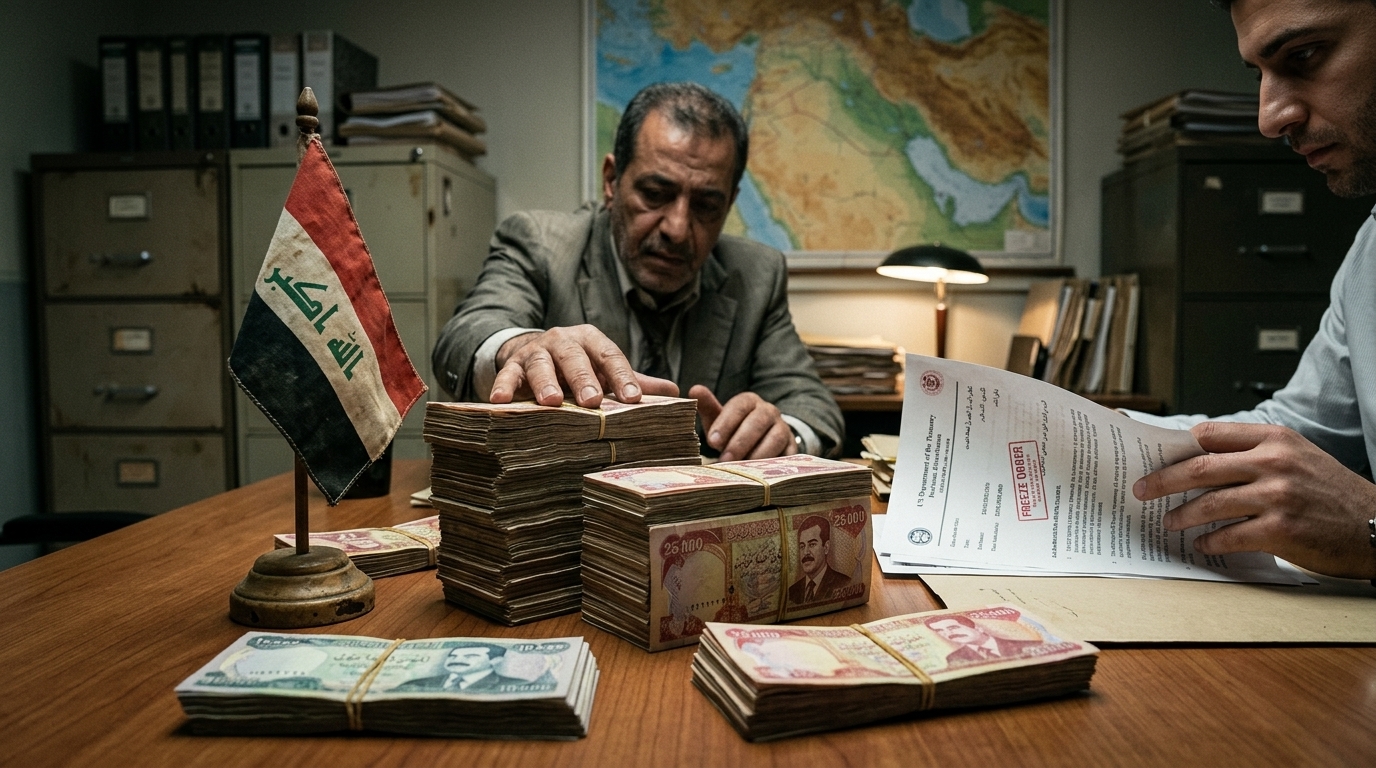
In a move reminiscent of the harshest eras of 'gunboat diplomacy,' but updated for the modern financial battlefield, the United States government under Donald Trump has moved to freeze $500 million in funds destined for Iraq. This decision is not merely a bureaucratic delay; it is a clear act of economic coercion, targeting the heart of Iraqi sovereignty and the fragile balance of power in the Middle East.
The Weaponization of the Dollar
Iraq finds itself in a unique, and increasingly dangerous, financial dependency on the US. Since the 2003 invasion, the country's oil revenues have been deposited into an account at the Federal Reserve Bank of New York. This arrangement, originally designed to protect Iraqi assets from international claims, has evolved into a 'financial leash' that Washington can tighten at will.
The $500 million freeze is the latest episode in a long series of pressures. Washington argues that this move is necessary to ensure that US dollars do not end up in the hands of Iran-linked entities or paramilitary groups (Hashd al-Shaabi) operating within Iraq. However, analysts point out that the real objective is to exert pressure on the Baghdad government to distance itself definitively from Tehran's orbit.
"The dollar is no longer just a medium of exchange; it is the most powerful weapon in the arsenal of American foreign policy," notes a Baghdad-based economic analyst.
The Iranian Factor and Energy Dependence
A primary point of contention is Iraq's reliance on Iranian natural gas and electricity. Despite US sanctions against Iran, Baghdad receives periodic waivers to continue these imports, as without them, the Iraqi power grid would collapse, likely triggering mass social unrest. The Trump administration is now using the fund freeze as leverage to force Iraq into signing contracts with American energy giants like GE and Honeywell, seeking to foster Iraq's 'energy independence' from Iran.
This strategy, however, carries immense risks. A reduction in dollar liquidity in the Iraqi market inevitably leads to the devaluation of the Iraqi dinar. This translates into rising prices for basic goods, most of which are imported, directly hitting the lower social strata. History has shown that economic hardship in Iraq serves as the ultimate breeding ground for extremism and instability.
Geopolitical Implications and China's Role
US pressure might yield the opposite of the intended effect. Instead of Baghdad yielding, it may seek alternative alliances. China is already closely monitoring these developments, offering infrastructure investments in exchange for oil through the 'Oil-for-Construction' agreement. If the US continues to use the financial system as a punitive tool, Iraq might be forced to accelerate its 'de-dollarization' process, turning toward the yuan or other currencies.
- Dollar shortages trigger inflation and widespread social discontent.
- Baghdad is caught between US demands and its proximity to Iran.
- The risk of an Iraqi economic collapse threatens regional stability.
- China and Russia are waiting in the wings to fill the influence vacuum.
In conclusion, the $500 million freeze is a clear signal that Washington does not hesitate to sacrifice the economic stability of an ally to serve broader geopolitical goals. The coming days for Iraq look grim, as the country struggles to survive in a world where money has become the new frontline of warfare.




