

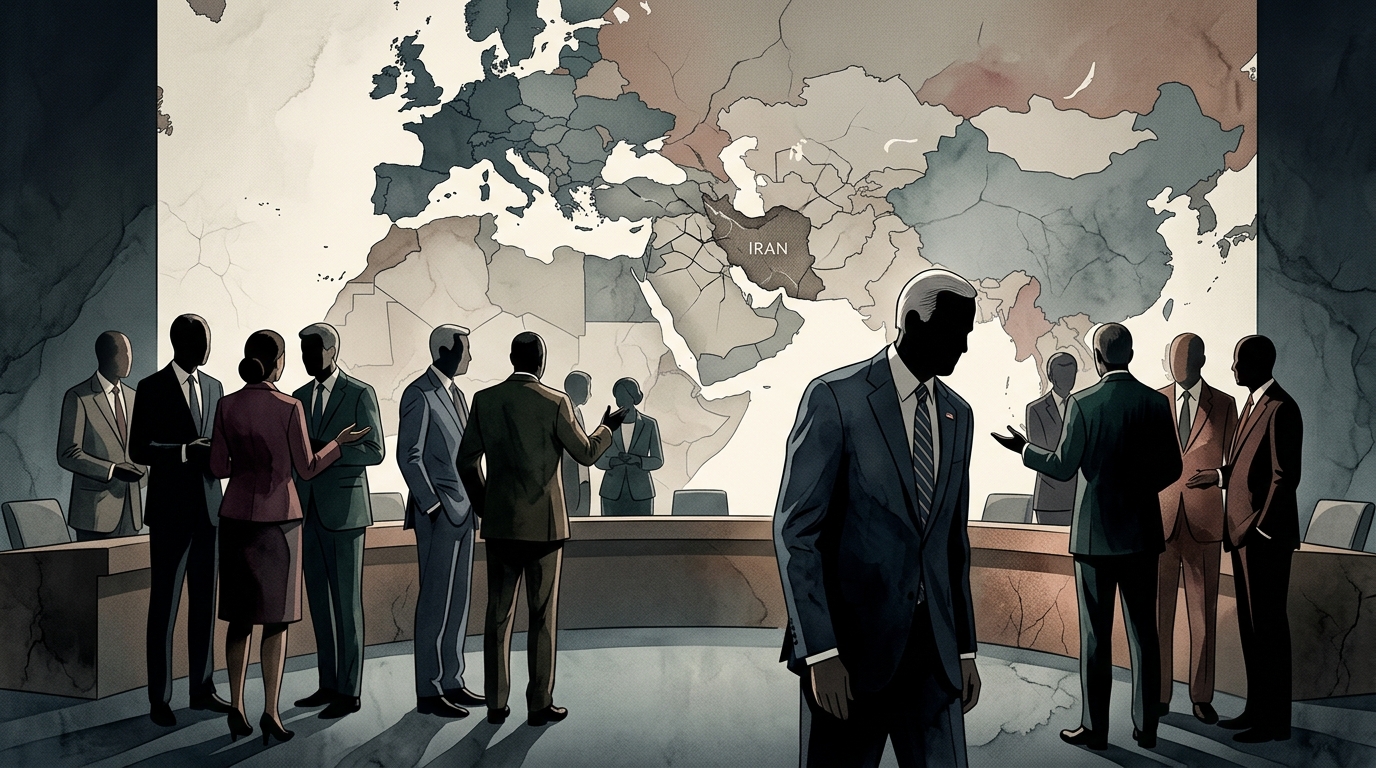
History will record the year 2026 as the tipping point where the concept of 'alliance' was violently redefined. While military operations in Iran continue with unabated intensity, another, quieter but equally destructive conflict is unfolding in the corridors of diplomacy. The United States, traditionally the guarantor of Western security, now finds itself in an unprecedented state of strategic loneliness, as its historic allies in Europe and the Middle East nurse the wounds of a partnership that seems to be on its last legs.
The Erosion of Transatlantic Trust
Washington's decision to proceed with unilateral military actions, bypassing warnings from Brussels and Paris, was not merely a tactical choice but a statement of intent. For European leaders, this move confirmed their worst fears: that American foreign policy has permanently decoupled from the collective values of NATO. Europe's 'strategic autonomy,' once a theoretical framework for academic debate, transformed overnight into an urgent necessity for survival.
The economic repercussions are equally severe. The imposition of secondary sanctions by the US on European companies maintaining energy ties with Tehran caused a rift that will be difficult to heal. Allies no longer feel like partners, but subjects of an economic policy that serves exclusively American interests. This resentment is not limited to governments; European societies, already strained by high energy prices, view US involvement in Iran as a destabilizing factor for which they are paying the price.
The Realignment of the Middle East
In the Middle East itself, the landscape is even more complex. Traditional allies such as Saudi Arabia and the United Arab Emirates, witnessing the unpredictable nature of American decision-making, have begun to seek alternative security guarantees. Rapprochement with Beijing and participation in frameworks like BRICS are no longer fantasy scenarios but active political choices. Washington appears to be losing its monopoly on influence in a region it once considered its own.
The use of advanced AI technologies and autonomous systems on the battlefield has also added a new layer of tension. The US has deployed algorithmic targeting systems that, according to reports, have caused significant collateral damage. Allies, called upon to support these operations morally and politically, find themselves embarrassed by a 'mechanized' form of warfare that lacks transparency and accountability.
"The era of blind trust in Washington's strategic umbrella has ended. We are entering a period of transactional diplomacy where every nation must fend for itself." — Anonymous EU Diplomat
The End of Pax Americana?
The question looming over international capitals is whether this crisis is reversible. Many analysts argue that the wounds are so deep that even a change in the White House administration would not be enough to restore the previous status quo. Trust, once lost at this level, takes decades to rebuild.
- The weakening of multilateral institutions (UN, NATO) as crisis resolution tools.
- The emergence of China as a 'sober' mediator in the region.
- The increasing reliance of allies on their own military capabilities.
- The risk of a nuclear arms race that is no longer limited to Iran.
In conclusion, the war in Iran may have started as an attempt to contain a regional threat, but it evolved into the catalyst for the disintegration of the Western front. The US may win battles on the field, but it risks losing the war for global leadership. The aftermath will find the world more fragmented, with former allies looking at each other with suspicion, seeking new balances in a world where power now trumps law.





