

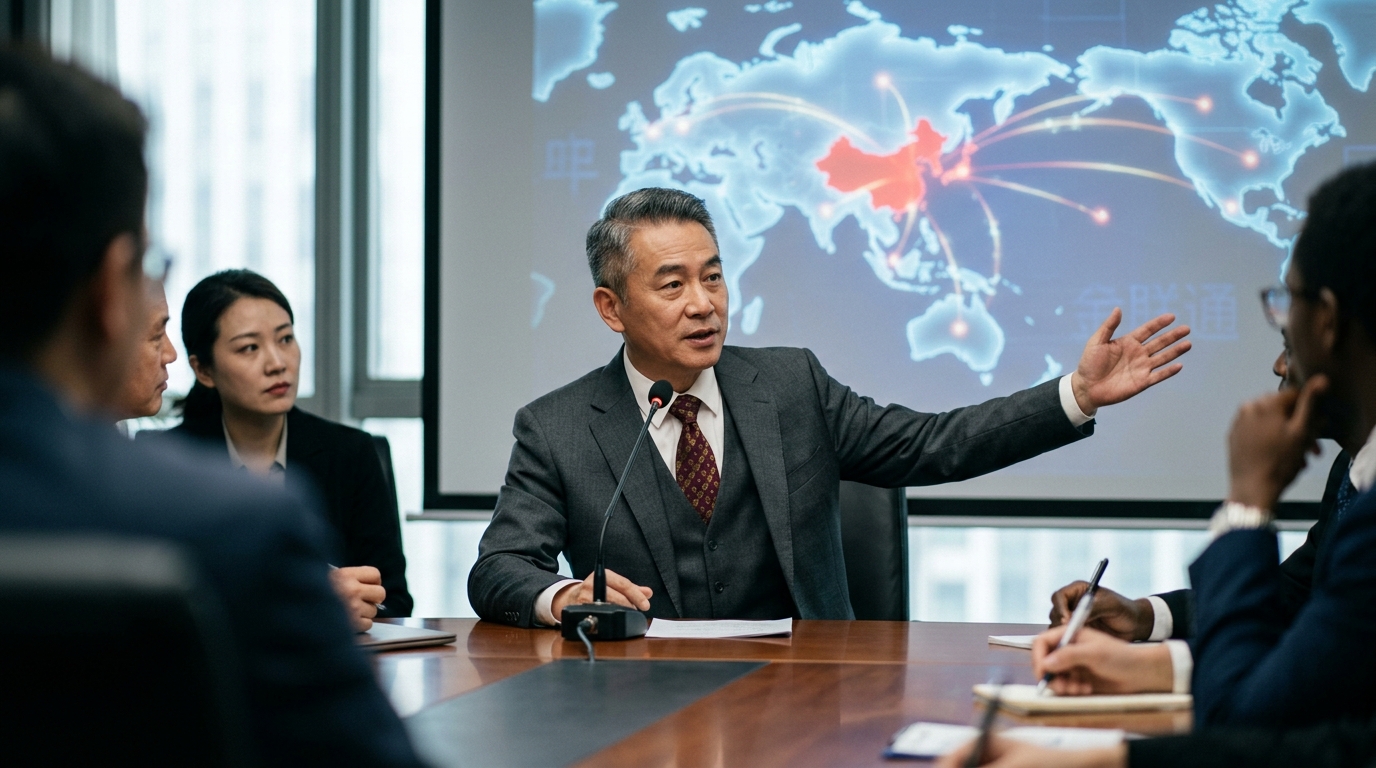
The global technological chessboard is undergoing a structural shift unlike anything seen since the Industrial Revolution. According to the latest data from the World Intellectual Property Organization (WIPO) and recent market analyses, Chinese entities now hold a staggering 60% of global patents in Artificial Intelligence (AI). This figure is not just a statistic; it is the official confirmation that the center of gravity for innovation has moved East, sending shivers through Western capitals.
China's rise was no accident. It is the result of a methodical, decade-long state plan that began with the "New Generation Artificial Intelligence Development Plan" in 2017. While the West relied primarily on private initiative and venture capital, Beijing treated AI as a national priority for survival and power, funneling billions into research, infrastructure, and talent development.
The Strategy of Quantity and the Challenge of Quality
One of the main arguments from Western analysts in previous years was that Chinese patents focused on "quantity over quality." They claimed many of these filings were marginal improvements to existing technologies, designed to satisfy state subsidy quotas. However, 2026 data upends this narrative. Chinese patents now dominate critical areas such as deep learning, natural language processing (NLP), and, most importantly, the application of AI in heavy industry and autonomous manufacturing.
Companies like Baidu, Tencent, Alibaba, and Huawei are no longer just filing paperwork; they are setting standards. Baidu, for instance, leads in autonomous driving and large language models tailored to the nuances of the Chinese language and market. Huawei, despite international sanctions, has managed to secure critical patents linking AI with 5G and 6G networks, creating an ecosystem that the West risks being locked out of.
- State Funding: The Chinese state acts as the ultimate Angel Investor, de-risking innovation for domestic firms.
- Data Access: A massive population and the absence of strict GDPR-style privacy rules provide the "fuel" for training algorithms.
- Educational Reform: China now produces more STEM PhDs than any other country, creating an inexhaustible pool of researchers.
Geopolitical Implications and the "Chip War"
Holding 60% of patents gives Beijing a powerful bargaining chip. In the ongoing trade war with the US, intellectual property is the ultimate weapon. If Chinese companies control the core methods by which AI functions, Western firms may eventually be forced to pay royalties to China to use technologies they once considered "theirs."
This development explains Washington's aggressive stance on restricting China's access to advanced semiconductors (chips). The US knows that China has the "brains" (algorithms and patents) but needs the "muscles" (hardware) to run them. However, the Chinese response has been to accelerate domestic chip production, with patents in AI-driven semiconductor design increasing at an exponential rate. The geopolitics of AI is no longer just about who has the best chatbot, but who controls the infrastructure of the 21st-century global economy.
"We are no longer in an arms race, but an intelligence race. Whoever controls the intellectual property of AI controls the rules of the future," says a leading strategic analyst in Beijing.
The Western Response and the Road Ahead
Europe and the US stand at a critical crossroads. While the EU focuses on regulation and AI ethics (the AI Act), it risks falling behind in raw innovation. The US, on the other hand, relies on the dominance of Microsoft, Google, and NVIDIA, but the lack of a centralized national strategy is beginning to show. The fragmented approach of the West stands in stark contrast to China's monolithic, targeted approach.
The question for 2026 and beyond is whether the quantity of patents will translate into absolute economic supremacy. History teaches us that intellectual property is the harbinger of economic power. If China continues to trademark the future at this rate, the West may find itself as a mere user of technologies designed and owned on the other side of the Pacific. The battle for AI is no longer science fiction; it is the harsh reality of modern diplomacy and economics.





