

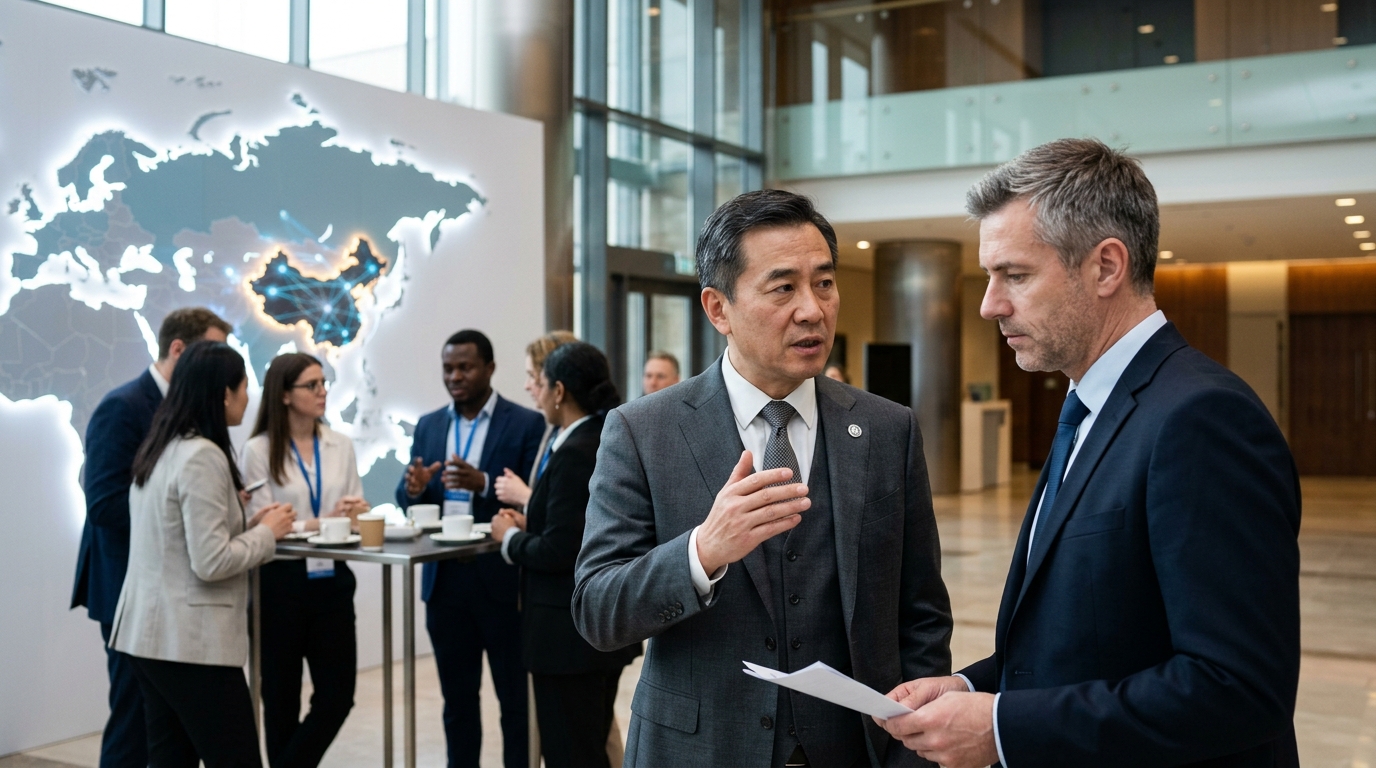
In a move reminiscent of the great industrial transformations of the 20th century, the People's Republic of China is undertaking a brutal but strategically calculated overhaul of its higher education system. The country's Ministry of Education recently announced the abolition of hundreds of undergraduate programs deemed "obsolete" or "incompatible" with the needs of the modern labor market, making way for an unprecedented mass introduction of degrees related to Artificial Intelligence (AI), quantum computing, and advanced robotics.
This move is not merely an educational reform; it is a geopolitical statement of intent. As technological competition with the West intensifies, Beijing realizes that the battle for global hegemony will not be decided solely in laboratories or on battlefields, but in lecture halls. The "AI+" strategy, now being integrated into every aspect of Chinese education, aims to create a new generation of scientists capable of serving the vision of "new productive forces"—a term introduced by Xi Jinping to describe an economy based on high technology and innovation.
The Purge of "Useless" Degrees
According to official data, more than 1,600 study programs have been scrapped across the country over the past two years. Among them are departments of business administration, public relations, traditional arts, and certain humanities deemed to produce graduates with low employability. China is facing a sharp youth unemployment problem, largely attributed to the mismatch between the skills offered by universities and the needs of tech giants in Shenzhen and Hangzhou.
Beijing's logic is relentlessly pragmatic: if a degree does not directly contribute to the country's technological autonomy, its funding is cut. In their place, departments of "Intelligent Manufacturing," "Data Science," and "AI Engineering" are mushrooming. This massive shift suggests a state-directed effort to avoid the "middle-income trap" through absolute specialization.
The Geopolitics of Knowledge and US Competition
This restructuring is taking place at a time when the US is imposing strict restrictions on China's access to critical semiconductor and AI software technologies. Beijing, recognizing that dependence on Western technology is an existential threat, is investing in domestic talent production. The university is no longer treated as a space for free speculative inquiry but as a "production unit of strategic capital."
Analysts point out that China already produces more STEM (Science, Technology, Engineering, Mathematics) graduates than the US and Europe combined. However, the quality and capacity for "out-of-the-box" thinking remain questions. By phasing out humanities, there is a risk of creating a generation of technocrats lacking the critical thinking required for true innovation, which is often born at the intersection of diverse scientific fields.
Social Reactions and the "Neijuan" Phenomenon
Internally, the pressure on students has reached breaking point. The phenomenon of "neijuan" (involution, or intense competition for no marginal gain) describes the situation where young people are forced to work and study harder just to maintain their position in an increasingly demanding market. The shift toward AI promises better salaries but requires a grueling dedication that many young people are beginning to reject through movements like "tang ping" (lying flat), a form of passive resistance to the culture of overwork.
Despite the backlash, the Chinese state seems determined. Education is the new "Great Wall" that will protect the economy from external pressures. The success of this experiment will determine whether China manages to become the first superpower of the AI era or whether excessive specialization will lead to social and intellectual sclerosis.




