

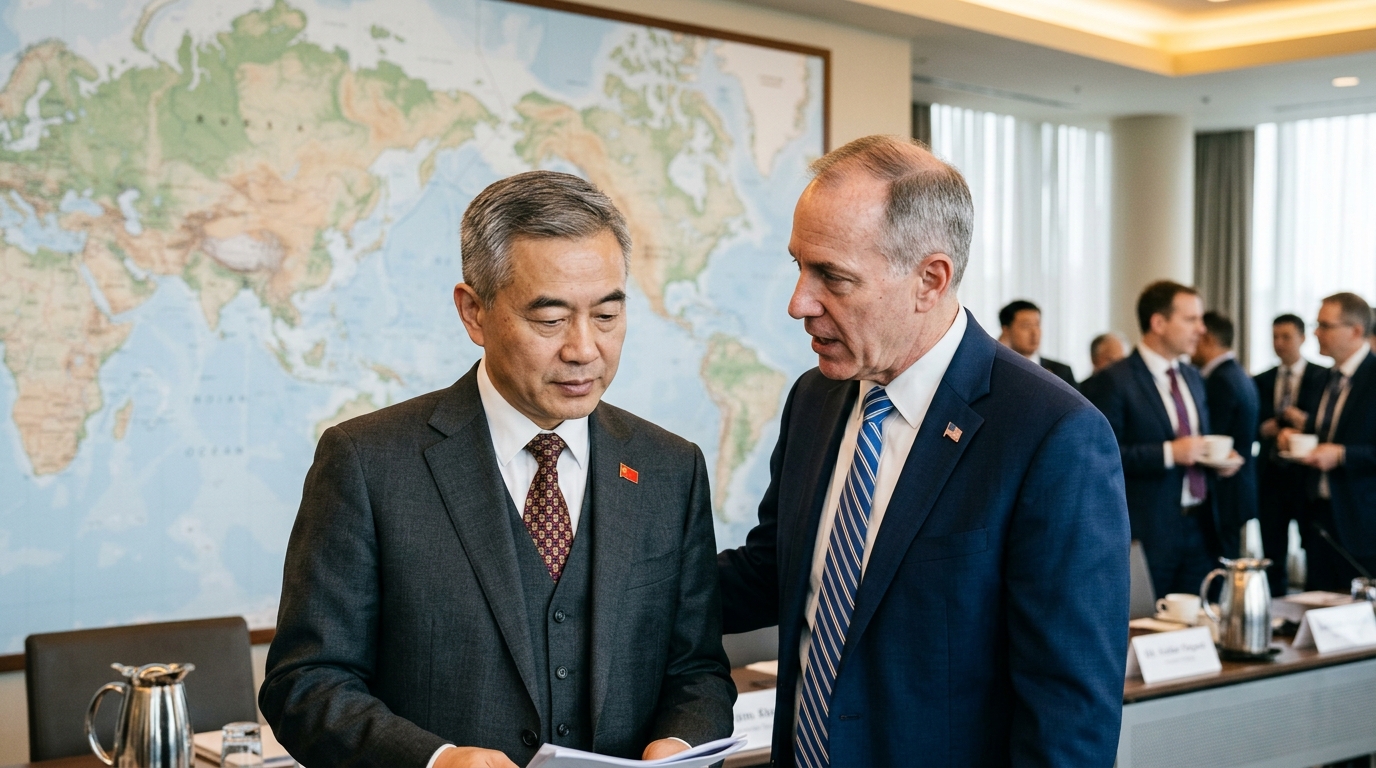
In a move set to redraw the map of global technology investment, the Chinese government today officially announced the cancellation of Meta’s $2 billion acquisition of the AI startup Manus. This decision, arriving at a highly sensitive moment, marks the latest chapter in the undeclared 'AI Cold War' between the United States and China. Manus, a Beijing-based startup specializing in agentic artificial intelligence, was considered the 'crown jewel' of Mark Zuckerberg’s plans to dominate the next generation of digital assistants.
The Rise of Agentic AI and the Stakes of the Manus Deal
To understand the gravity of this cancellation, one must first define agentic AI. Unlike traditional large language models that merely respond to prompts, 'agents' possess the ability to execute complex tasks autonomously: from booking flights and managing bank accounts to writing code and conducting scientific research without human intervention. Manus had developed a unique architecture that allowed these agents to operate with unprecedented precision and speed.
Meta, desperate to integrate these capabilities into its WhatsApp and Instagram ecosystems, saw Manus as a golden ticket to leapfrog OpenAI and Google. However, China’s State Administration for Market Regulation (SAMR) cited 'national security' and the 'protection of critical data' as grounds for the block, arguing that transferring Manus’s intellectual property into American hands would jeopardize the nation’s digital sovereignty. This move is not merely regulatory; it is profoundly political.
The Shadow of the Trump-Xi Summit
The cancellation comes just weeks before the highly anticipated summit between U.S. President Donald Trump and his Chinese counterpart, Xi Jinping. Analysts suggest that Beijing is using Meta as a bargaining chip. With the Trump administration signaling new tariffs and tighter restrictions on semiconductor exports, China is responding by demonstrating its power to cut off American Big Tech from its vast pool of talent and innovation.
“This is no longer about free markets; it’s about technological nationalism,” says Li Wang, a tech analyst at Peking University. “China is unwilling to let its brightest minds and most advanced algorithms fuel the American economy, especially when Washington is attempting to stifle the Chinese chip industry.”
Implications for the Global Tech Market
The consequences of this decision are already rippling through the markets. Shares of Chinese AI firms saw an uptick as investors bet on the state funneling additional capital to keep innovation within domestic borders. Conversely, Meta’s stock slipped 3.5% in pre-market trading, with analysts concerned that the company is losing a critical edge in the AI agent race.
Furthermore, the move creates a significant 'chilling effect' on any future attempts by Western conglomerates to acquire Chinese startups. The message is clear: Silicon Valley is no longer welcome to 'shop' in China. This accelerates the total 'decoupling' of the two ecosystems, where the West and the East develop parallel but incompatible AI technologies. The dream of a unified, global internet appears to be fading, replaced by a digital 'Silicon Curtain.'
The Future of Manus and Beyond
What becomes of Manus itself? Reports suggest the Chinese government is preparing an alternative funding package via state-backed investment funds to ensure the company continues its growth as a 'national champion.' For Meta, the search begins anew, likely turning its gaze toward European or domestic U.S. startups, which often come with higher valuations and may lack the specific technical edge found in Chinese models.
The Manus case serves as definitive proof that in 2026, artificial intelligence is no longer just a matter of code and data; it is the new battlefield of geopolitical power. Beijing’s decision to block Meta is a calculated move on a chessboard that forces Washington to rethink its strategy, while tech giants find themselves caught in the crossfire of two superpowers.





