

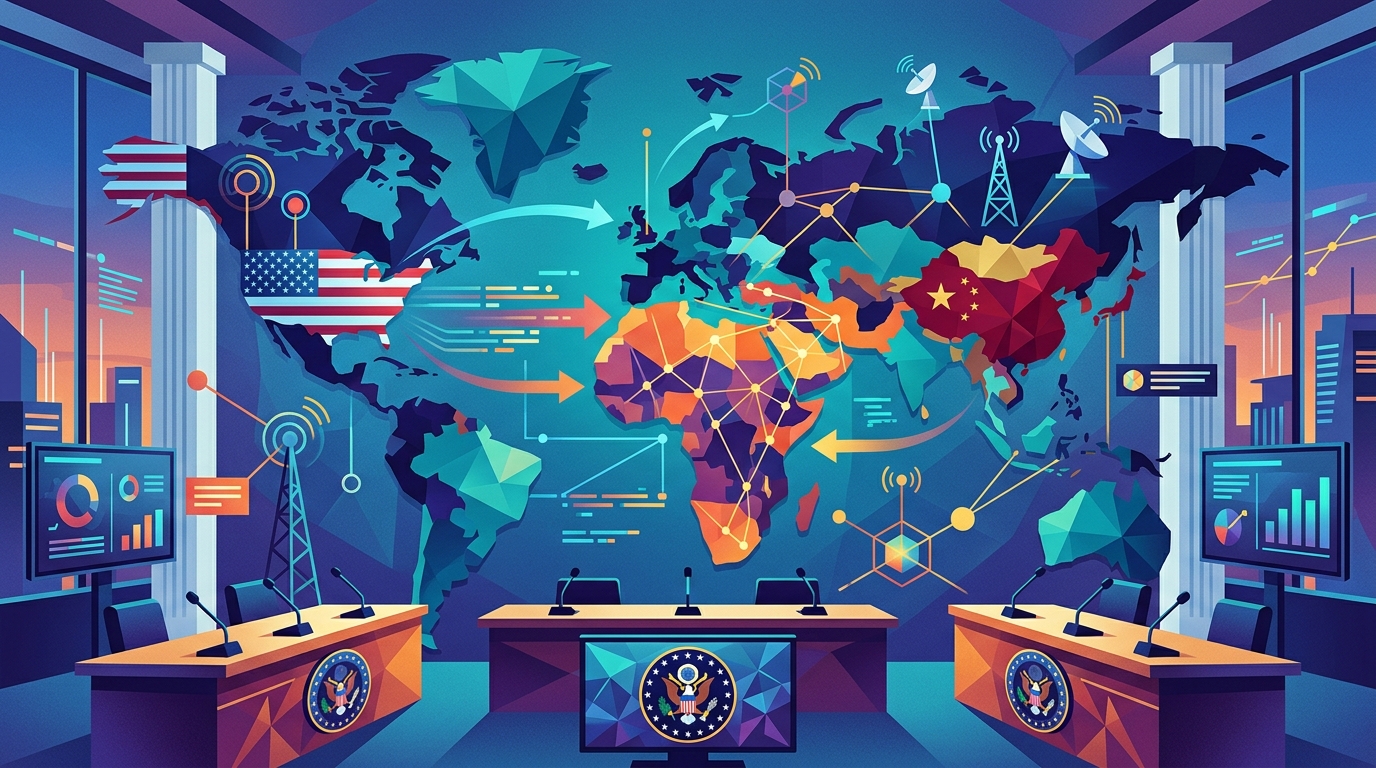
The geopolitical chessboard of the Middle East, defined for decades by the undisputed hegemony of the United States, is entering a new, highly complex phase. According to a recent analysis by Chatham House, the world-renowned British institute for international affairs, we are witnessing a structural shift where China is emerging as a pivotal player, yet without seeking—or being able—to fully replace Washington as the regional "security guarantor."
The End of Unipolarity and the Rise of Pragmatism
For nearly half a century, the Carter Doctrine dictated American foreign policy: any attempt by an outside power to gain control of the Persian Gulf region would be regarded as an assault on the vital interests of the United States. Today, this doctrine appears anachronistic. The Chatham House report highlights that Gulf monarchies, led by Saudi Arabia and the United Arab Emirates, no longer view the world through an East-West binary, but through the lens of their own "strategic autonomy."
China, the world’s largest importer of crude oil, has transformed from a mere trading partner into a diplomatic mediator with growing prestige. The historic deal to restore relations between Saudi Arabia and Iran in 2023, brokered by Beijing, was a wake-up call for American influence. However, the analysis warns: China lacks both the military infrastructure and the political will to assume the enormous cost of maintaining regional security.
The Chinese Approach: "Trade Without Strings"
Beijing pursues a policy that Chatham House describes as a "strategy of non-interference." While the US often links military aid or trade agreements to human rights issues or political reforms, China offers an alternative: economic cooperation without moralizing constraints. This model is extremely attractive to Gulf leaderships seeking to diversify their economies through "Vision 2030" and similar programs.
- Energy Dependency: Over 40% of Chinese oil imports originate from the Gulf.
- Technological Penetration: Huawei and other Chinese firms are building the region’s 5G networks and digital infrastructure, despite US warnings regarding espionage.
- Infrastructure: The Belt and Road Initiative (BRI) integrates Middle Eastern ports and supply chains into a global network under Chinese influence.
The American Dilemma and Military Supremacy
Despite the rhetoric of "pivoting" away from the Middle East toward the Indo-Pacific, the US remains the only player capable of power projection in the region. With dozens of military bases and the Fifth Fleet stationed in Bahrain, Washington controls the maritime routes upon which the global economy depends. Chatham House notes that this "power asymmetry" creates a paradoxical situation: the US provides the security that allows China to conduct its trade unhindered.
"China enjoys the benefits of regional stability without paying the price of enforcing it," the report states.
This balance is, however, fragile. The increasing tension in the Red Sea with Houthi attacks highlighted the limits of Chinese influence. Despite Beijing's close ties with Tehran, China appeared unwilling or unable to halt attacks affecting global trade, leaving the burden of military response once again to the US and its allies.
Conclusions: A Multipolar Reality
The new order in the Middle East will be neither purely American nor Chinese. It will be a hybrid state where regional powers play both sides. Chatham House concludes that the US must accept it is no longer the sole arbiter, while China will gradually have to assume responsibilities commensurate with its economic weight.
For Europe and the West, this shift means that the Middle East is no longer a zone of "fixed influence," but a space of intense competition where diplomacy and economic alliances will require constant reassessment. The region’s stability remains the key to global energy security, but the guarantors of this stability are now multiple, reluctant, and often at odds.





