

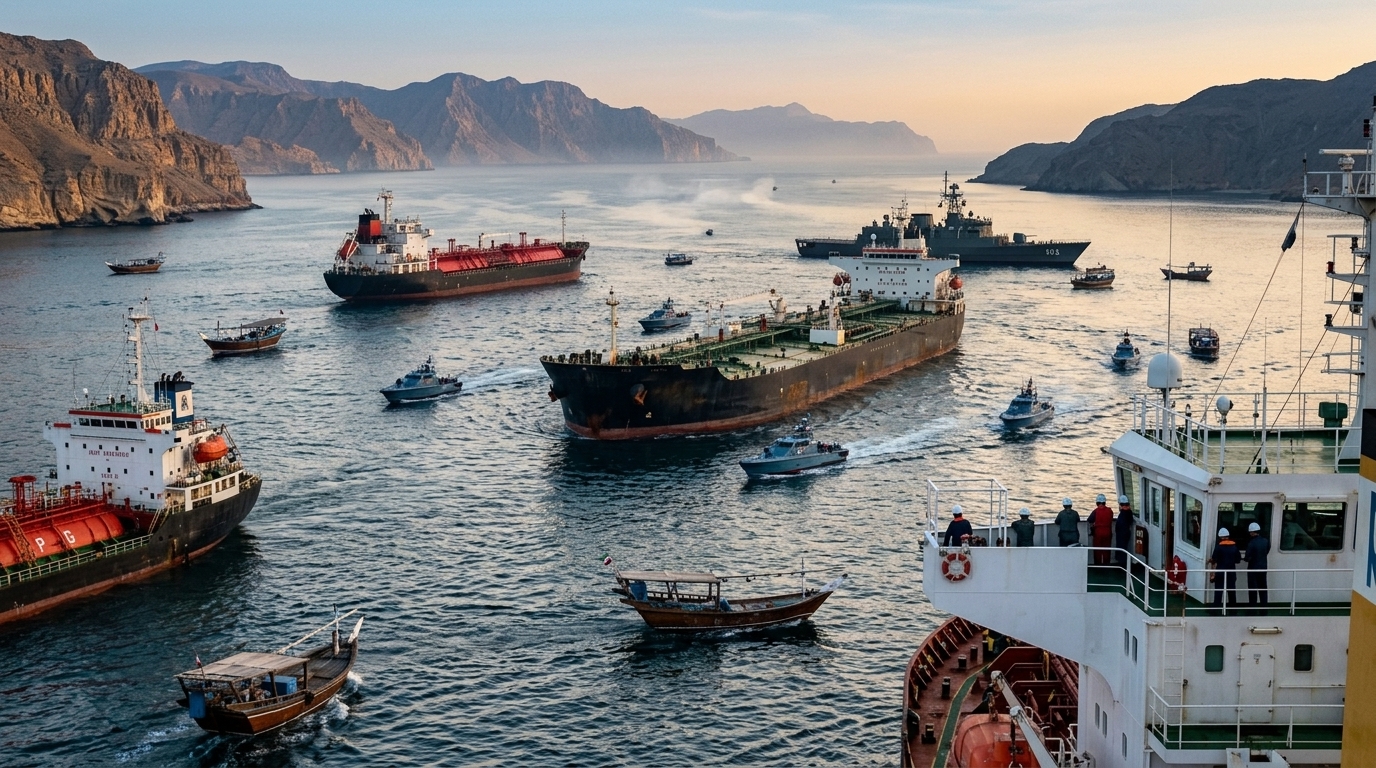
The Strait of Hormuz, a narrow stretch of water separating Iran from the Arabian Peninsula, has historically been the most sensitive flashpoint on the global energy chessboard. Recent reports of intermittent closures by Iranian forces, accompanied by accounts of gunfire and the harassment of commercial vessels, are not merely isolated incidents. They represent an orchestrated maneuver within Tehran's 'gray zone' strategy. Instability in this region does not only affect regional security; it threatens to destabilize international oil prices and global supply chains.
The Strategic 'Lung' of the Global Economy
To grasp the gravity of the situation, one only needs to look at the data: approximately 20% of the world's daily oil consumption passes through the Strait of Hormuz. It is the only maritime gateway from the Persian Gulf to the open oceans, making it indispensable for exporters like Saudi Arabia, the UAE, Kuwait, and Iraq. Iran's tactic of 'pulsing' the strait—periodically opening and closing it—creates a state of perpetual uncertainty. This uncertainty translates directly into increased war risk premiums for shipping and, consequently, higher energy costs for consumers in Europe and Asia.
Reports of gunfire underscore a transition from diplomatic threats to direct kinetic action. The Islamic Revolutionary Guard Corps (IRGC) utilizes fast attack craft and unmanned aerial vehicles (UAVs) to project power, often seizing tankers under the guise of legal infractions. This 'weaponization' of international law and geography serves as Tehran's most potent leverage against Western sanctions.
The Strategy of 'Controlled Escalation'
Tehran is acutely aware that a full and permanent closure of the Strait would be interpreted as an act of war, likely prompting an overwhelming response from the US 5th Fleet and allied forces. Instead, it opts for a strategy of 'controlled escalation.' By intermittently disrupting traffic, Iran sends a clear message to the international community: 'If we cannot export our oil due to sanctions, no one's security is guaranteed.'
- Increased transportation costs and insurance premiums (War Risk Surcharges).
- Creation of diplomatic leverage for future negotiations.
- Demonstration of strength to domestic audiences and regional rivals.
- Testing Western reflexes and the limits of international maritime coalitions.
The use of gunfire, even if characterized as warning shots, exponentially increases the risk of a miscalculation that could trigger a wider conflict. In an environment where vessels carry millions of barrels of crude oil, the slightest misunderstanding can lead to an environmental and economic catastrophe of unprecedented proportions.
Implications for Global Shipping and Greece
As the world's leading shipping power, Greece finds itself at the epicenter of this crisis. Greek-owned tankers represent a significant portion of the fleet traversing Hormuz. The safety of crews and vessels is a top priority for Piraeus. Greek shipowners must balance the profitability offered by high freight rates during crises against the immense risks of navigating a de facto combat zone. Greek diplomacy, in coordination with the EU and NATO, continues to advocate for the freedom of navigation, which remains the cornerstone of international trade.
"Freedom of navigation in the Strait of Hormuz is not just a legal abstraction; it is the backbone of global energy security. Any disruption there echoes in every petrol station and factory across the Western world."
In conclusion, the chaos in Hormuz is no accident. It is a stark reminder of the fragility of globalization and our dependence on geopolitical 'chokepoints.' As long as tensions between Iran and the West remain high, Hormuz will continue to be the hottest front in an undeclared economic war. The international community must decide whether to continue reacting to Tehran's provocations or to seek a sustainable framework for maritime security that transcends the current cycle of escalation.




