

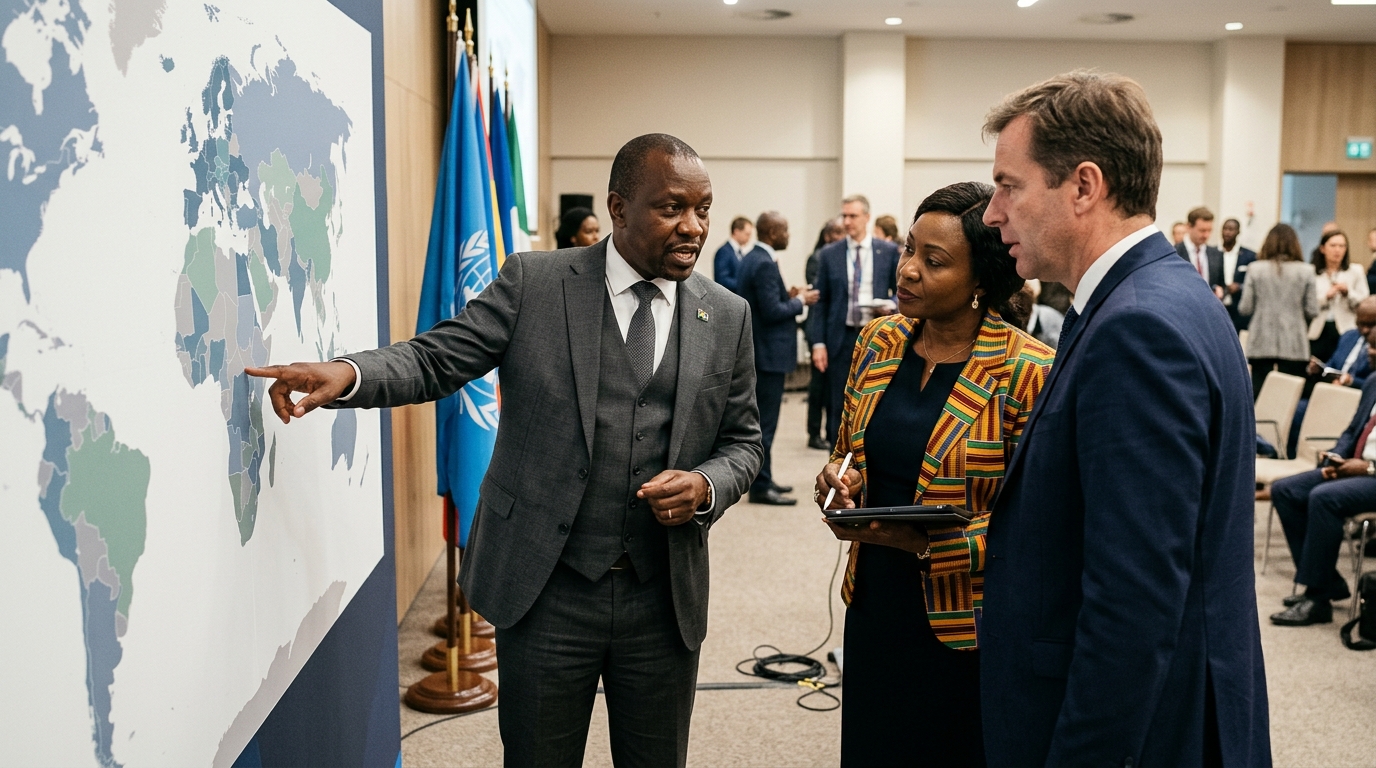
In the global arena of Artificial Intelligence (AI), Africa is frequently depicted as a passive recipient of technologies forged in Silicon Valley or Beijing. However, a new strategic philosophy is taking root across the continent, encapsulated in the phrase: "Borrow the ceiling while building the floor." This approach acknowledges that Africa cannot afford to wait decades to develop its own foundation models from scratch, yet it cannot rely solely on foreign infrastructures that remain blind to local contexts.
The 'Ceiling': Leveraging Global Innovation
To "borrow the ceiling" means utilizing existing AI tools—such as GPT-4, Claude, or Llama—to solve immediate, pressing problems. On a continent where doctor-to-patient ratios are often dire, or where agriculture is at the mercy of increasingly volatile weather patterns, waiting for a "purely African" Large Language Model (LLM) would be a luxury that citizens simply do not have. African entrepreneurs are already leveraging these "borrowed" tools to build applications in healthcare, education, and fintech.
However, this reliance comes with inherent risks. These models are predominantly trained on Western datasets, carrying cultural biases and often failing to comprehend the nuances of African languages and social structures. The "ceiling" provides immediate shelter, but it is not anchored in the continent's unique soil.
The 'Floor': The Necessity of Local Infrastructure and Data
"Building the floor" is about establishing the foundational elements that will allow Africa to command its own digital destiny. This involves three critical pillars: data, compute, and governance. Without localized data, AI in Africa will remain an alien entity. Initiatives like Masakhane are working to integrate African languages into AI models, ensuring that technology speaks the language of its users—literally and figuratively.
Computational power remains the most significant hurdle. Data centers require immense amounts of energy, a challenge on a continent where energy poverty is still widespread. The strategic play here is to link AI development with renewable energy projects, turning the need for infrastructure into an opportunity for green industrialization. The "floor" is what will prevent Africa from slipping into a new era of digital colonialism.
Geopolitics and Digital Sovereignty
On the geopolitical stage, Africa is navigating a delicate path to avoid being caught in the crossfire of the US-China tech rivalry. The African Union is developing a unified AI strategy that emphasizes data protection and ethical usage. The challenge lies in creating a regulatory framework that protects citizens without stifling the nascent innovation ecosystem.
"Artificial Intelligence is not a luxury for Africa; it is a tool for survival and development. But we must ensure this tool is sharpened for our specific needs," notes a senior analyst from ICTworks.
Building the floor also entails a massive investment in human capital. Africa possesses the youngest population globally. If this talent pool is equipped with AI skills, the continent could transition from a consumer of technology to a global hub for algorithmic development, exporting solutions rather than just raw materials.
Conclusion: A Dual-Track Strategy
Africa’s success in the AI era depends on its ability to walk two paths simultaneously. It must be pragmatic enough to use existing technology to solve today’s problems, while being visionary enough to invest in the infrastructure of tomorrow. Borrowing the ceiling is a temporary necessity; building the floor is the only guarantee of an independent and prosperous Africa in the 21st century.





