

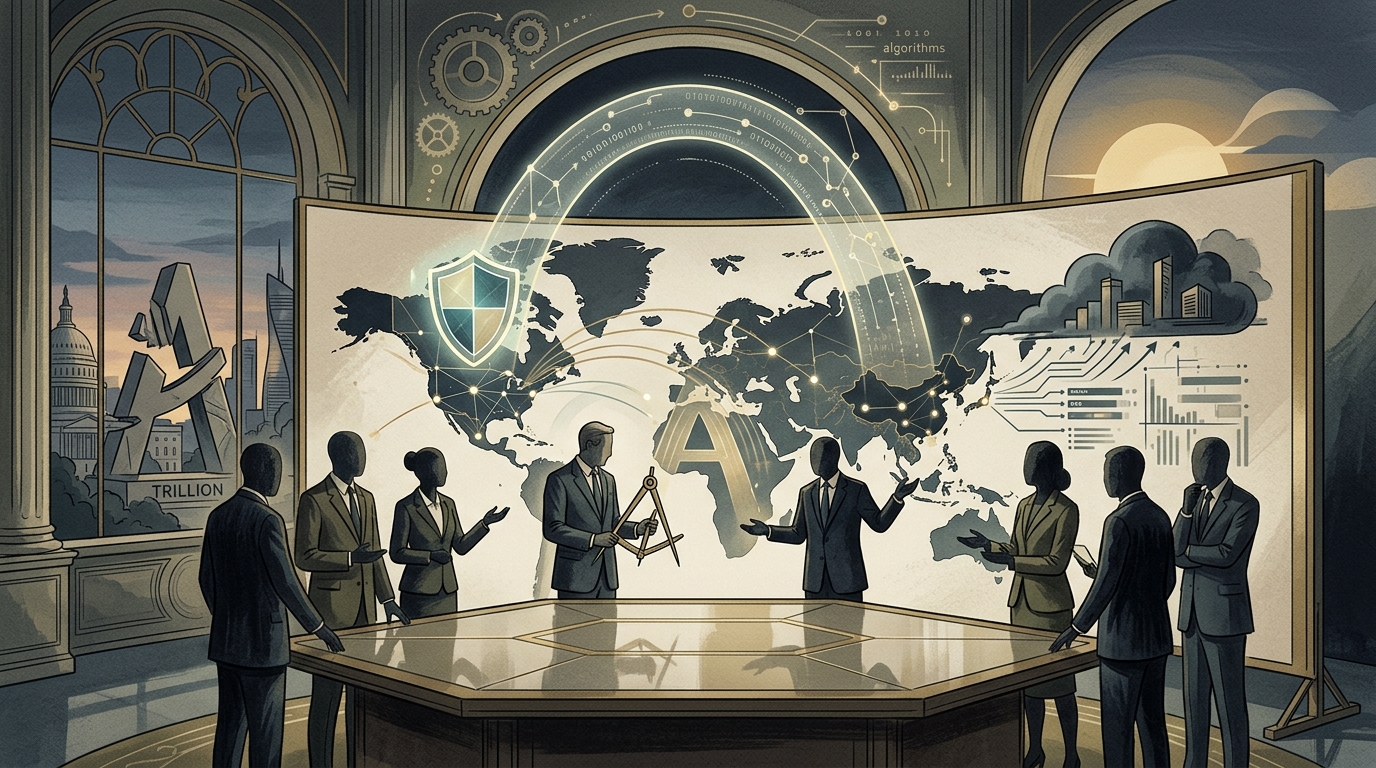
As Anthropic gears up for one of the most anticipated initial public offerings (IPOs) in tech history, a shadowy confrontation with Chinese giant Alibaba is sending ripples through Silicon Valley. The stakes aren't just about intellectual property, but the very concept of a "moat"—the competitive advantage that justifies multi-billion dollar valuations. At the heart of the dispute lies a critical question: can a frontier American AI company protect its secrets when its Eastern rivals possess both the compute and the methodology to "extract" the capabilities of its models?
Digital Espionage and the Art of Distillation
Recent reports that Alibaba’s Qwen model series has exhibited behaviors and response patterns strikingly similar to those of Claude 3.5 and the upcoming Claude 4 have sounded alarm bells at Anthropic. The process of "model distillation," where a smaller or competing model is trained using the outputs of a top-tier model as a "teacher," is the industry's Achilles' heel. Although Anthropic’s terms of service explicitly forbid using Claude to develop competing models, enforcing these rules globally—especially against Chinese state-backed entities—remains a legal chimera.
For investors, this represents an existential risk. If Alibaba or Baidu can "clone" Claude’s intelligence at a fraction of the R&D cost incurred by Anthropic, then the latter’s moat is nothing more than a shallow puddle. Anthropic’s ability to maintain its lead rests on the assumption that its architecture and training data remain unique. However, in the age of AI, the product is the knowledge itself, and knowledge, once made public via an API, becomes inherently leaky.
Washington’s Toolbox: Protection or Restriction?
The U.S. government is not standing idly by. Washington’s "toolbox" includes stringent export controls on semiconductors (Nvidia H100/B200) and restrictions on cloud service access. However, the effectiveness of these measures is being questioned. China has shown a remarkable ability to bypass restrictions through third-party countries or by developing domestic alternatives. Furthermore, protecting model "weights"—the digital DNA of AI—is the new national security frontier.
- Export license restrictions for advanced AI models.
- Tightened scrutiny of foreign investments in U.S. AI startups via CFIUS.
- Watermarking initiatives to track illicit use of model outputs.
These measures, while aimed at safeguarding American innovation, may act as a double-edged sword. By limiting the global reach of companies like Anthropic, Washington risks stifling their revenue and, consequently, their ability to fund the next generation of research. The balance between national security and commercial dominance is more precarious than ever.
The IPO and the Trillion-Dollar Bet
As Anthropic approaches the threshold of the public market, its valuation—whispered to be nearing or exceeding $50 billion—is predicated on the belief that it is one of the few "winner-takes-most" players. The clash with Alibaba is forcing Wall Street analysts to recalibrate risk. If China can neutralize the U.S. technological edge through model extraction, AI could quickly become a low-margin commodity.
"Artificial intelligence is not software in the traditional sense; it is a living statistical entity that can be mimicked without stealing a single line of code," says a senior investment banking executive.
Anthropic must now prove that its moat consists not just of code, but of an ecosystem of services, safety protocols (Constitutional AI), and trust that Alibaba cannot easily replicate. The outcome of this geopolitical and economic battle will determine whether the AI revolution leads to the creation of new monopolies or a fragmented world where innovation is ephemeral and easily duplicated.





