

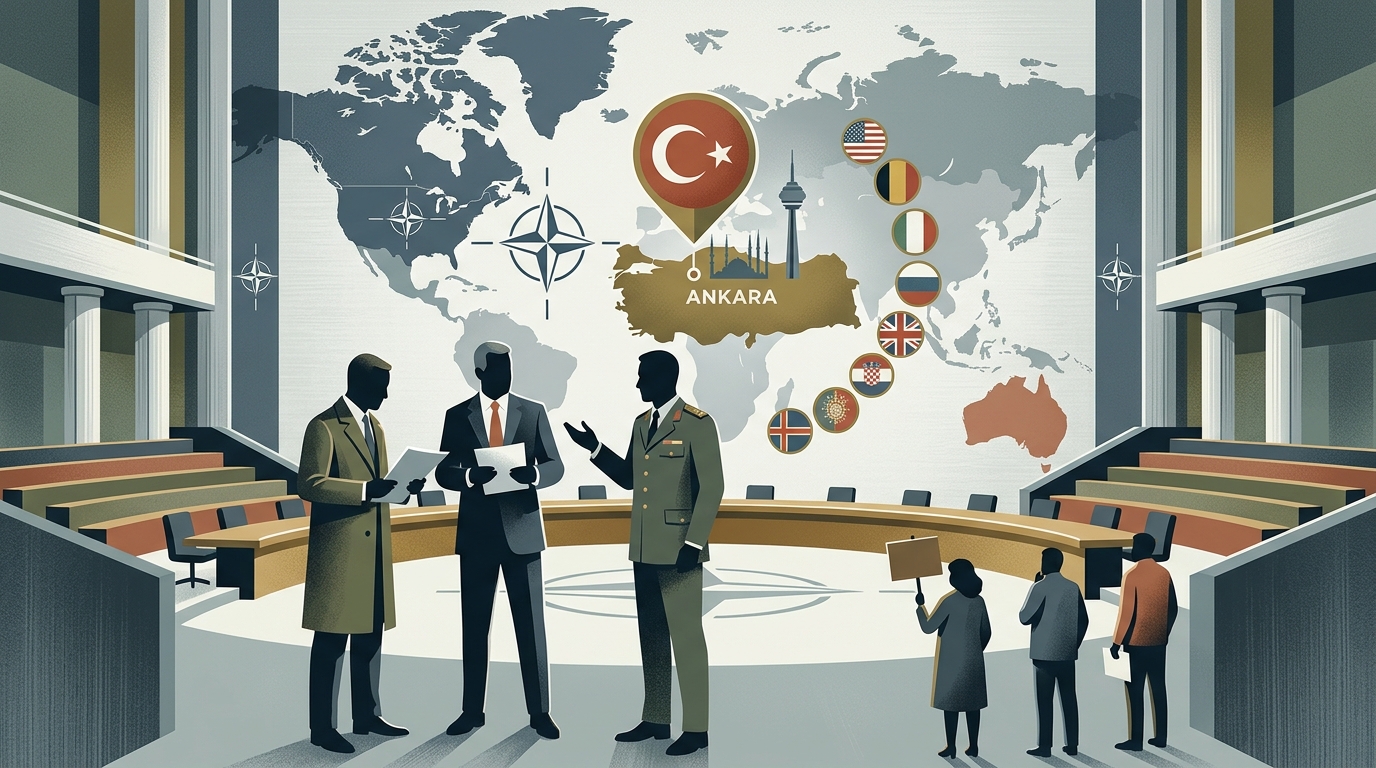
The Turkish capital, Ankara, is currently the center of an unprecedented "beautification" and security operation as it prepares to host the heads of state of NATO member countries. With a budget reaching 205 million euros, the government is attempting to present a facade of modernization and power on the international stage. However, behind the freshly painted facades and newly paved roads, the reality for the city's residents is starkly different, resembling a state of siege more than a celebration of diplomacy.
The Price of Prestige in Lean Times
The 205 million euro investment is not merely about aesthetic upgrades. It includes the installation of advanced surveillance systems, the renovation of government buildings, and the creation of specialized security zones to house delegations. In a country still grappling with hyperinflation and currency devaluation, spending such vast sums on a few days' summit is seen by many as provocative. Critics of the government point out that these funds could have been directed toward relief for those hit hardest by the economic crisis or toward strengthening crumbling social infrastructure.
Ankara, a city that historically symbolizes Kemalist modernization, is now being transformed into a "showcase" for the new Turkish foreign policy. The Erdogan administration seeks to use the Summit as a platform to reaffirm Turkey's role as an indispensable partner on the Alliance's southeastern flank, at a time when the balance of power in Ukraine and the Middle East remains fragile.
An "Open Prison": Daily Life Under Restriction
For the permanent residents of Ankara, the preparations have turned the city into what many are calling an "open prison." Security measures are draconian: entire neighborhoods have been cordoned off, vehicle traffic has been banned on major arteries, and the presence of police and special forces is stifling. Checks on public transportation have intensified, while the use of drones to monitor citizens has become a daily occurrence.
- More than 50,000 police officers have been deployed across the capital's streets.
- Special signal jamming systems (jammers) are affecting telecommunications over large areas.
- Access to public spaces and parks has been drastically restricted for "national security" reasons.
Resident anger is boiling over on social media, where many denounce the perceived arbitrariness of the authorities. "We can't get to work, we can't move in our own city, and all this so foreign leaders can feel safe while we go hungry," one user noted on X (formerly Twitter). The contrast between the luxury of the summits and the daily survival of the average Turkish citizen has never been more pronounced.
Geopolitical Stakes and Diplomatic Maneuvers
Beyond the domestic front, the Ankara Summit carries significant geopolitical weight. Turkey is tasked with balancing the demands of its Western allies with its own regional ambitions. The agenda includes critical issues such as Alliance enlargement, defense cooperation, and counter-terrorism. For Ankara, the success of the Summit is measured not just by joint communiqués, but by its ability to secure commitments for the modernization of its F-16 fleet and the lifting of defense restrictions from other NATO countries.
"The Ankara Summit is a test of Turkey's strategic autonomy. The government is betting heavily on the image of a stable and powerful country, even if the cost of that image is social discontent," notes an international relations analyst.
In conclusion, the 205 million euro "facelift" is an investment in Turkey's image as a global player. However, the success of this investment remains doubtful if the government fails to bridge the gap with its own citizens, who see their city transformed for the sake of an elite while their own needs remain marginalized.





