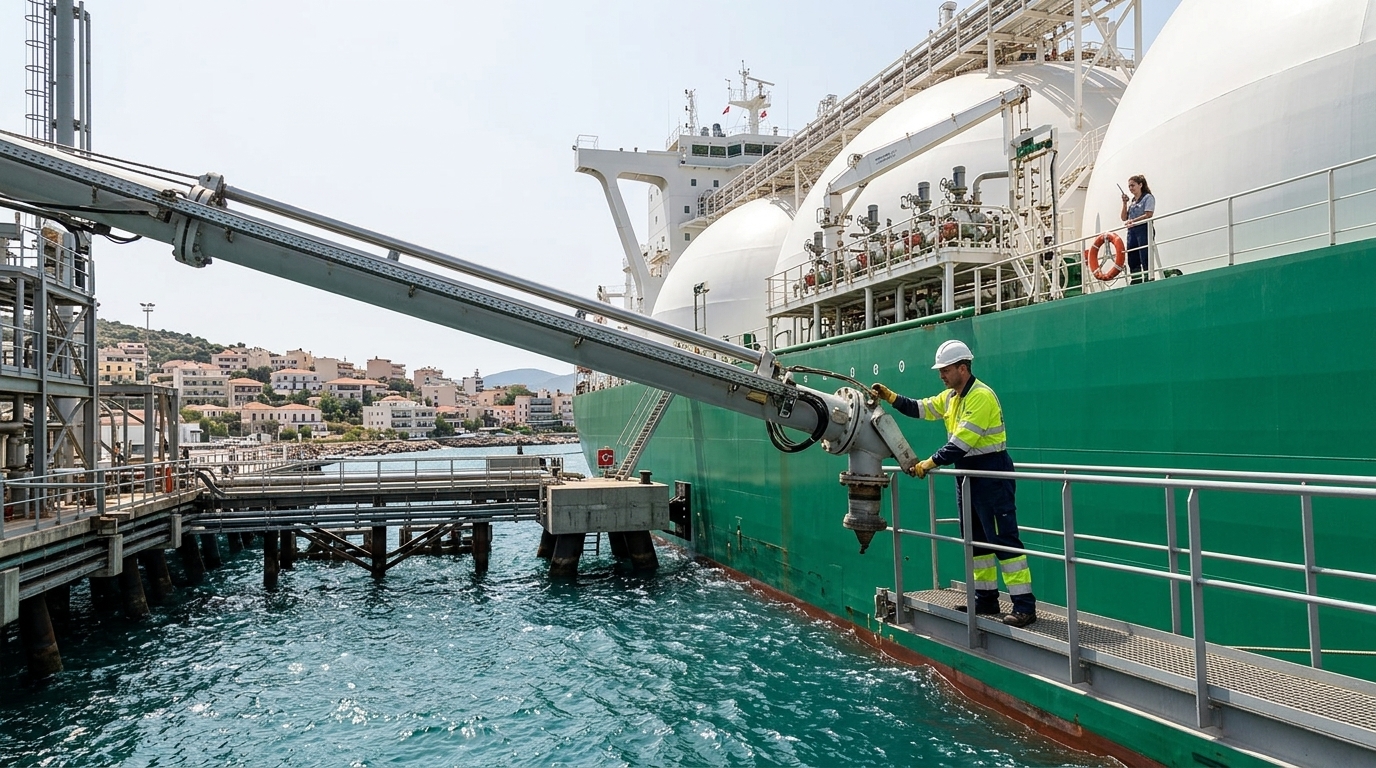
The announcement of a $9 billion agreement by Atlantic See LNG Trade for the supply of American Liquefied Natural Gas (LNG) to Albania and Bosnia-Herzegovina, centered on Greek infrastructure, is more than just a commercial headline. It represents a tectonic geopolitical shift that cements Greece's role as the primary energy gateway for the entire Balkan Peninsula. The deal, set to take full effect by 2030 and span two decades, significantly bolsters the "Vertical Corridor"—a network of pipelines and infrastructure connecting the South to the North, bypassing traditional routes of dependency.
The Strategic Significance of the Vertical Corridor
The Vertical Corridor is not a new concept, but its realization is gaining concrete momentum through such colossal contracts. The initiative aims to interconnect the natural gas transmission systems of Greece, Bulgaria, Romania, Hungary, Slovakia, Moldova, and Ukraine. By integrating Albania and Bosnia into the framework of US supply via Greece, this corridor gains a vital western branch that provides energy shielding for the Western Balkans.
Greece, equipped with the Revithoussa terminal and the new FSRU in Alexandroupolis, offers the necessary flexibility to receive US cargoes. The Atlantic See LNG Trade agreement highlights that Greece is no longer a mere consumer but a critical transit hub capable of guaranteeing the energy security of its neighbors.
Geopolitical Implications and Decoupling from Russia
The timing of this agreement is crucial. Despite Europe's efforts to reduce its reliance on Russian natural gas following the invasion of Ukraine, many Balkan nations remained vulnerable due to a lack of alternative infrastructure. The commitment to a 20-year supply of US LNG offers long-term stability, allowing the governments in Tirana and Sarajevo to plan their energy transitions without the fear of geopolitical blackmail.
"This agreement is a vote of confidence in Greek infrastructure and regional stability. It is the key to permanently disconnecting SE Europe from monopolistic practices of the past," market analysts note.
Furthermore, the involvement of American capital and resources strengthens the US presence in the region, creating a safety net that extends beyond economics. Washington views the Vertical Corridor as a strategic tool to curb the influence of other powers in the Balkans, utilizing energy as a primary diplomatic instrument.
Challenges and Infrastructure Requirements
Despite the optimism, the path to 2030 requires substantial investment in interconnecting pipelines. Albania and Bosnia need to upgrade their internal grids to absorb the volumes stipulated in the agreement. Greece, for its part, must maintain the competitiveness of its transit fees and ensure its infrastructure remains operational and cutting-edge.
- Expansion of pipeline networks toward the Western Balkans.
- Increasing LNG storage capacity on Greek shores.
- Harmonizing regulatory frameworks among participating nations.
In conclusion, the $9 billion deal is the culmination of years of Greek energy diplomacy. It transforms Greece into a central player on the European energy chessboard and ensures that the Balkans will remain tethered to the Western energy sphere for decades to come.