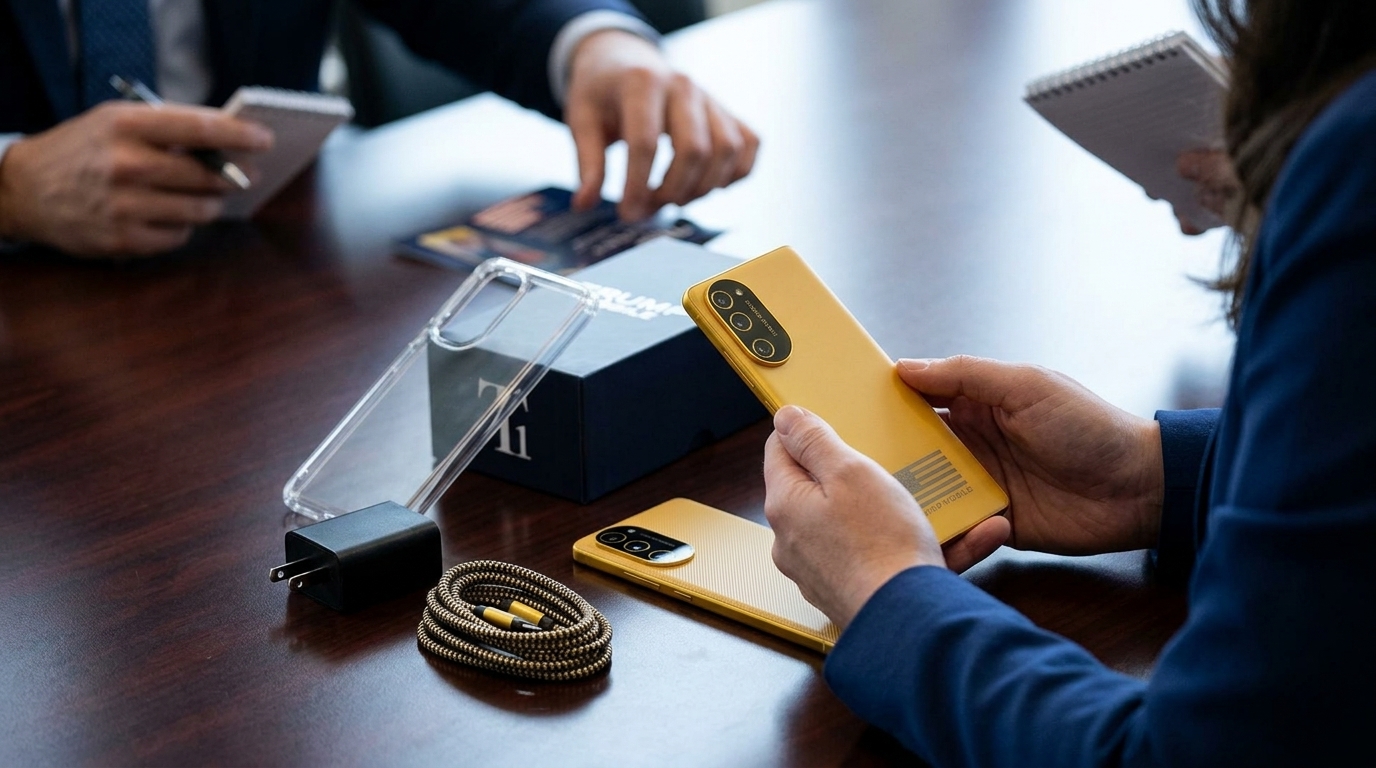
In an era where technology and political ideology are increasingly intertwined, the release of the Trump Mobile T1 represents more than just a new entry into the smartphone market. It is the latest bastion in what supporters call the "parallel economy"—an ecosystem of products and services designed to cater to those who feel marginalized by the mainstream trends of Silicon Valley. With the price set at $499 and the announcement that the device is now available for immediate purchase without a deposit, the question remains: are consumers buying a communication tool or a symbol of loyalty?
The Enigmatic Nature of the Hardware
Despite the marketing fanfare surrounding the T1, its technical specifications remain partially shrouded in mystery. As observed in previous attempts at "freedom phones," the device appears to be based on an OEM (Original Equipment Manufacturer) model, likely of Chinese origin, rebranded with the Trump Mobile identity. For the average user, $499 is a price point that places the T1 in the mid-range category, competing with devices like the Google Pixel A-series or the iPhone SE. However, the T1's value is not judged by gigabytes of RAM or camera resolution, but by the promise of a digital experience free from what its creators term "Big Tech censorship."
The device reportedly runs a modified version of Android, stripped of Google Mobile Services (GMS) and replaced with alternatives prioritizing privacy and access to platforms like Truth Social. While this choice is attractive to those advocating for data protection from major corporations, it creates significant usability hurdles, as many everyday applications rely on the Google ecosystem to function correctly. The absence of the Play Store means users must navigate a fragmented landscape of third-party app stores, which often carry higher security risks.
The Irony of Delays and Open Sales
One of the most controversial aspects of the Trump Mobile T1 launch is the gap between promise and delivery. While the company has opened sales to the general public, reports from The Verge and other tech analysts indicate that many who pre-ordered the device months ago are still waiting for their packages. This strategy—seeking new capital through open sales while old orders remain unfulfilled—raises questions about the supply chain and the financial stability of the venture.
In the tech world, reliability is everything. When a company asks for $499 "right now," it enters into a moral and legal commitment. For Trump Mobile, the challenge is to prove it can operate as a legitimate technology firm rather than just a fundraising mechanism. The lack of transparency regarding the number of units actually shipped reinforces the skepticism of critics, who see the T1 as another attempt to monetize political enthusiasm for speculative purposes. If early adopters feel abandoned, the brand equity of the "parallel economy" could suffer a significant blow.
Politics as a Consumer Product
The Trump Mobile T1 is not the first "political" phone, but it is certainly the most high-profile. It reflects a broader trend where consumption becomes an act of political protest. In the United States, polarization has led to the creation of separate markets for coffee, clothing, and now, telecommunications. The emerging question for the future is whether this fragmentation of the technology market is sustainable. Smartphones are exceptionally complex products requiring constant software support, security updates, and service infrastructure.
If the T1 fails to provide these basic services, it risks becoming an expensive relic of a specific political moment rather than a functional tool. Furthermore, the reliance on Chinese manufacturers for hardware creates an interesting contradiction with the "America First" rhetoric championed by Donald Trump. Technological sovereignty requires control over the entire value chain, something Trump Mobile does not yet appear to possess. Building a truly independent phone requires billions in R&D, not just a custom Android skin and a famous name.
Conclusion: A $499 Risk
For the loyal supporter, the Trump Mobile T1 is an opportunity to disconnect from a system they perceive as hostile. For the tech analyst, it is a device of questionable value and an uncertain future. As the phone enters the open sale phase, the true test will not be the initial sales figures, but the device's ability to survive daily use and protect its users in an ever-changing digital landscape. Ultimately, freedom in technology costs more than $499; it requires transparency, innovation, and consistency—elements that Trump Mobile has yet to prove it can deliver at scale.