

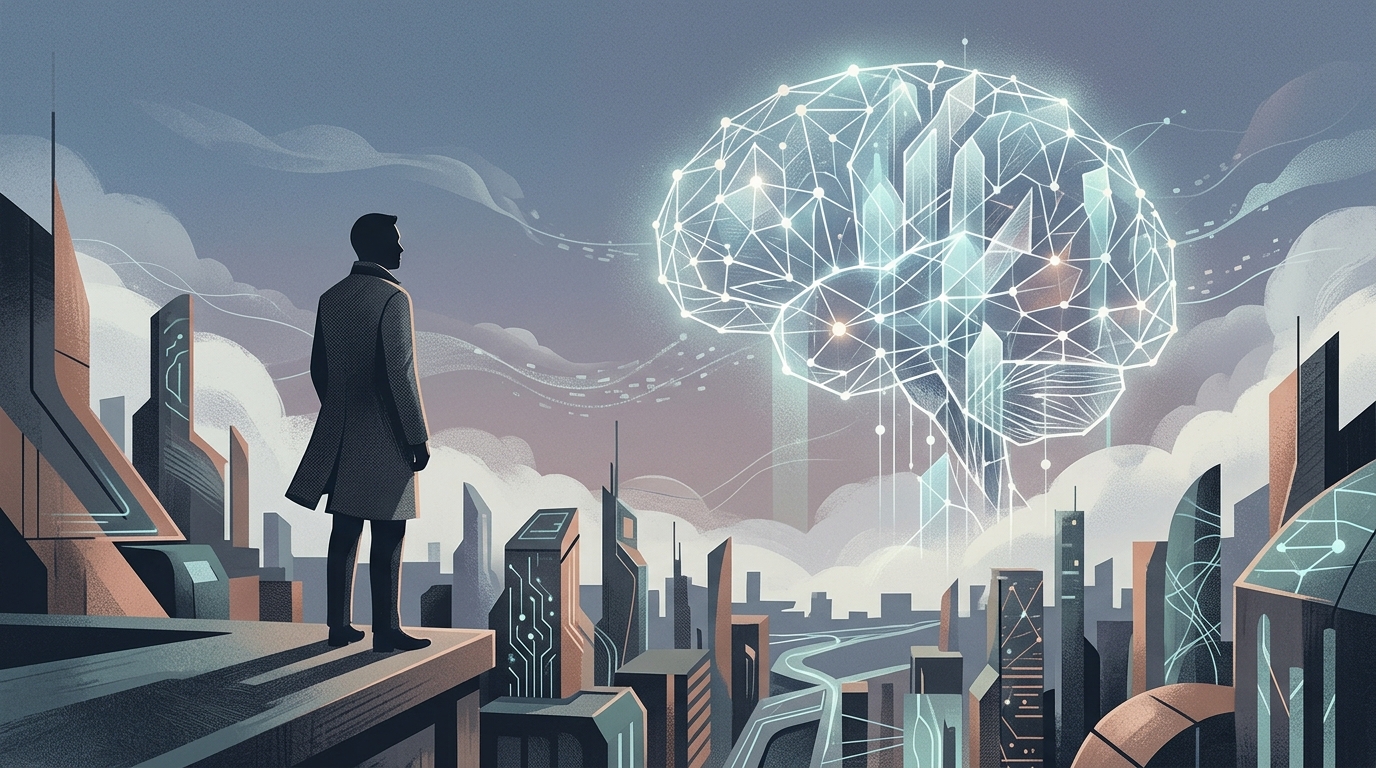
In the grand tapestry of human progress, there are moments where scientific curiosity intersects with existential responsibility. In 1945, Robert Oppenheimer witnessed the first atomic test in New Mexico, famously recalling verses from the Bhagavad Gita. Today, eighty years later, the stage has shifted from the American deserts to the glass-and-steel towers of London and Silicon Valley. The 'Oppenheimer' of our era is not building a bomb, but something potentially more profound: Artificial General Intelligence (AGI). At the heart of this narrative stands Demis Hassabis, the co-founder of Google DeepMind, whose trajectory is scrutinized in Sebastian Mallaby’s latest exploration.
The Architect of Intelligence
Demis Hassabis is not your typical Silicon Valley CEO. A chess child prodigy, video game developer, and PhD in neuroscience, he represents a rare convergence of disciplines. The founding of DeepMind in 2010 wasn't aimed at creating just another app, but with the audacious mission to "solve intelligence" and then use it to "solve everything else." This approach, blending academic rigor with entrepreneurial velocity, has positioned him as the de facto leader in the race for AGI.
As Mallaby notes, Hassabis is distinguished by a nearly monastic focus on his goal. While other AI leaders, such as OpenAI’s Sam Altman, have become public faces of a political and cultural firestorm, Hassabis remains the "scientist-general." The success of AlphaGo in 2016 wasn't just a victory in a game; it was the empirical proof that machine learning could surpass human intuition in domains previously thought unreachable by algorithms.
The Creator’s Dilemma
The comparison to Oppenheimer is not accidental. Oppenheimer believed that science had to move forward, yet he was haunted by the consequences of his success. Hassabis and his peers face a similar paradox. On one hand, AI promises solutions to climate change and the eradication of diseases (as demonstrated by AlphaFold’s breakthrough in protein folding). On the other, the creation of an entity that surpasses human cognition carries risks ranging from societal destabilization to existential threats.
"We must take the risks seriously, but we must not let fear stop the progress that will save millions of lives," Hassabis has stated.
This balance is where ethics collide with market reality. DeepMind, despite starting as an independent lab with strict ethical charters, was absorbed by Google. This created a permanent tension: can the pursuit of "truth" coexist with the necessity for quarterly earnings and search engine dominance?
The Geopolitics of Intelligence
In the Bloomberg analysis, another dimension emerges: AI as the new national "Manhattan Project." The United States and China are locked in a relentless competition for AI supremacy, with Hassabis occupying a position where his decisions influence Western technological hegemony. Mallaby argues that the personal motivations of these "titans" are no longer private matters but issues of national security.
- The ability of AI to accelerate scientific discovery is the new metric of power.
- The ethical framing of AI by the West will determine global standards.
- The role of key individuals (Hassabis, Altman, Amodei) is disproportionately large compared to institutions.
Hassabis seems to grasp this weight. Unlike the "guru culture" of Silicon Valley, he maintains a British understatement, which nonetheless masks an unwavering conviction: that AI is humanity's most important invention. If Oppenheimer gave humanity the power of self-destruction, Hassabis aspires to give it the tool for self-transcendence.
The Future of a Legacy
As we move toward 2030, the question remains: will we remember Hassabis as the man who unlocked the secrets of the universe or as the one who opened Pandora’s box? Sebastian Mallaby’s narrative reminds us that technology is never neutral. It is driven by the vision, fears, and egos of its creators. Hassabis, with the coolness of a grandmaster, plans his next moves, knowing that in this game, the stakes are not a title, but the very future of our species.





