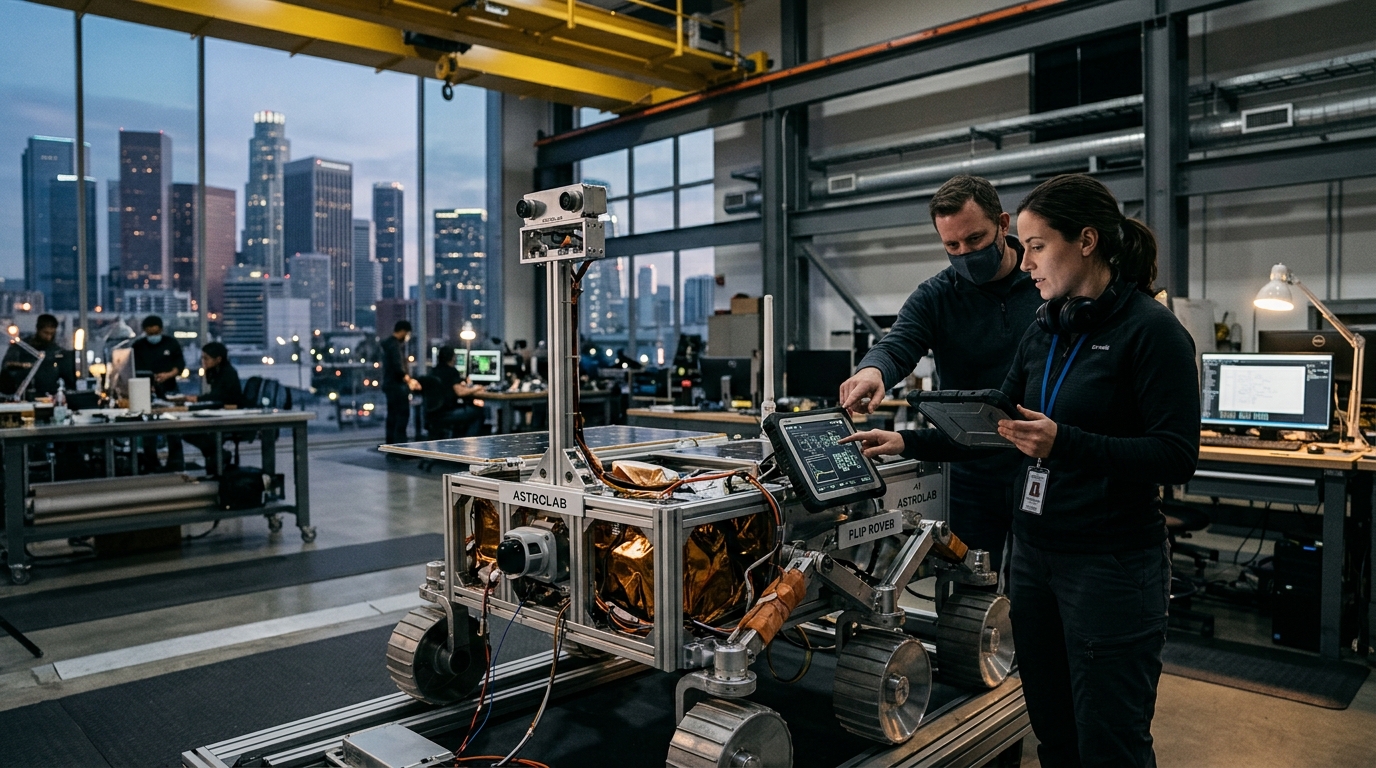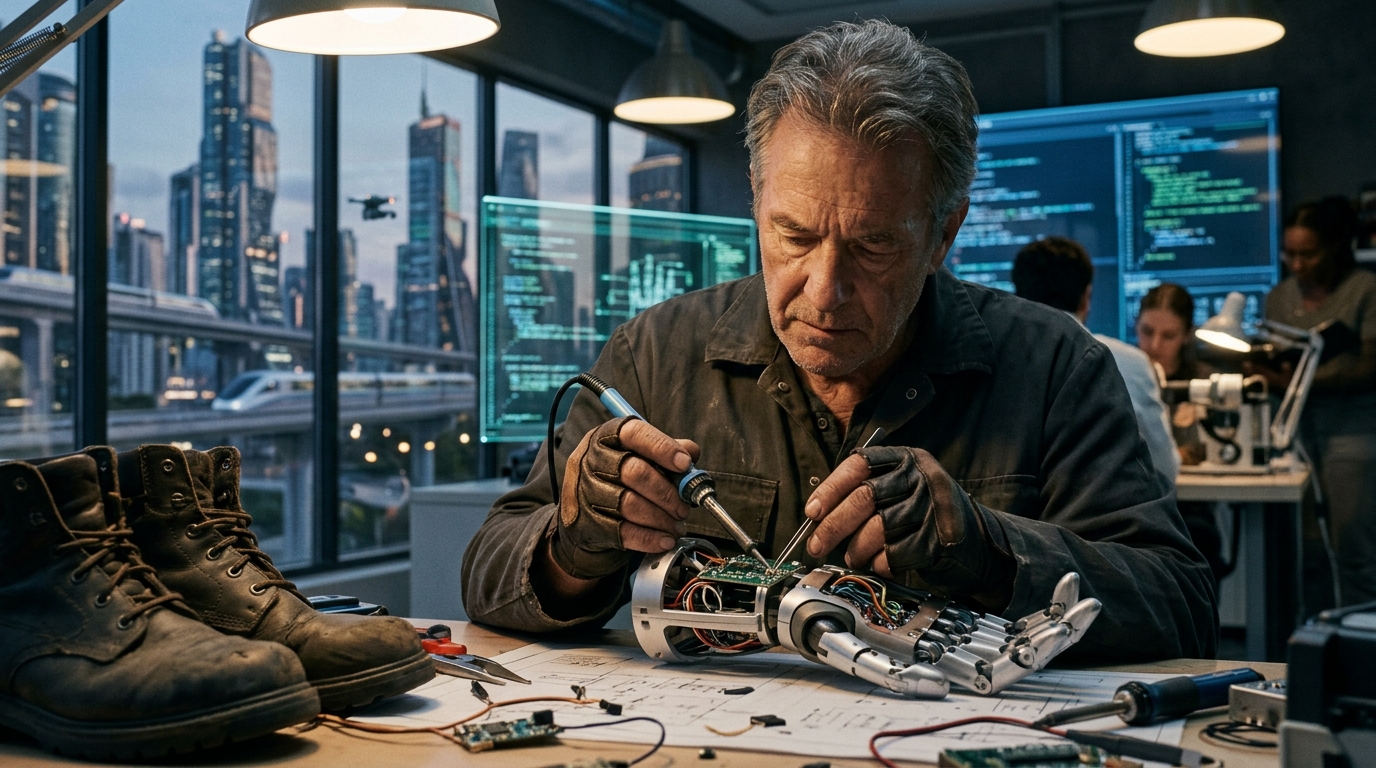
At the dawn of the fourth industrial revolution, humanity finds itself facing an unexpected irony. For decades, the prevailing belief was that automation would first replace factory workers and manual laborers, leaving "intellectual" workers untouched. However, 2026 finds us in a completely different reality: Large Language Models (LLMs) and generative AI have put lawyers, programmers, and analysts at risk, while plumbers, electricians, and specialized construction technicians enjoy unprecedented job security and economic prosperity.
This shift is not accidental. It is based on what scientists call "Moravec's Paradox": the fact that high-level reasoning requires very little computation, but low-level sensorimotor skills require enormous computational resources. It is much easier for an AI to pass the bar exam than for a robot to replace a blown fuse in an old electrical panel or locate a leak in a labyrinthine piping network.
The Paradox of Manual Intelligence
The work of skilled tradespeople requires a complex interaction between vision, touch, and judgment in non-standardized environments. Every home, every breakdown, and every construction site is unique. Artificial Intelligence triumphs in structured digital environments but "paralyzes" in the face of the physical world's chaos. An electrician doesn't just connect wires; they solve problems in three dimensions, adapt to worn materials, and communicate with the client to understand the context of the fault.
In many developed economies, the shortage of skilled technical personnel has reached a breaking point. Young people, who for years were pushed exclusively toward university degrees, are now beginning to turn toward apprenticeship schools. Demand is so high that the wages for a good HVAC technician or a master carpenter often exceed the salaries of middle managers in multinational corporations. It is a "revenge of reality" against the digital world.
The Gen Z Shift and the "New Collar"
We are observing a global trend where Generation Z is redefining the meaning of success. After years of remote work and isolation in front of a screen, many young people are seeking jobs that offer tangible results. The satisfaction of fixing something with your hands, combined with the avoidance of exorbitant student loans and immediate professional placement, makes technical professions extremely attractive.
- Autonomy: Most tradespeople operate as freelancers, setting their own schedules.
- Crisis Resilience: Essential infrastructure (water, electricity, heating) requires maintenance regardless of the economic climate.
- High Earnings: The scarcity of skills leads to price increases that outpace inflation.
What we call "New Collar jobs" is the convergence of technical expertise with modern technology. Today's technician uses thermal cameras, diagnostic software, and digital measurement tools, but the final decision and physical intervention remain exclusively human.
Social and Political Implications
The rise of technical professions is expected to reshape social stratification. The traditional distinction between "blue" and "white" collar is blurring. When a specialized underwater welder earns triple what a junior analyst does, social status begins to follow economic power rather than academic titles. Governments worldwide must seriously invest in vocational education, which for decades was considered "second class."
"AI can write a poem about a dripping faucet, but it cannot stop the leak. That is where our new power lies."
In conclusion, the work that resists AI is not the one that requires less brainpower, but the one that requires more bodily coordination and practical wisdom. In the future, the ability to navigate the physical world and repair its infrastructure will be the ultimate luxury and the most secure career investment.