

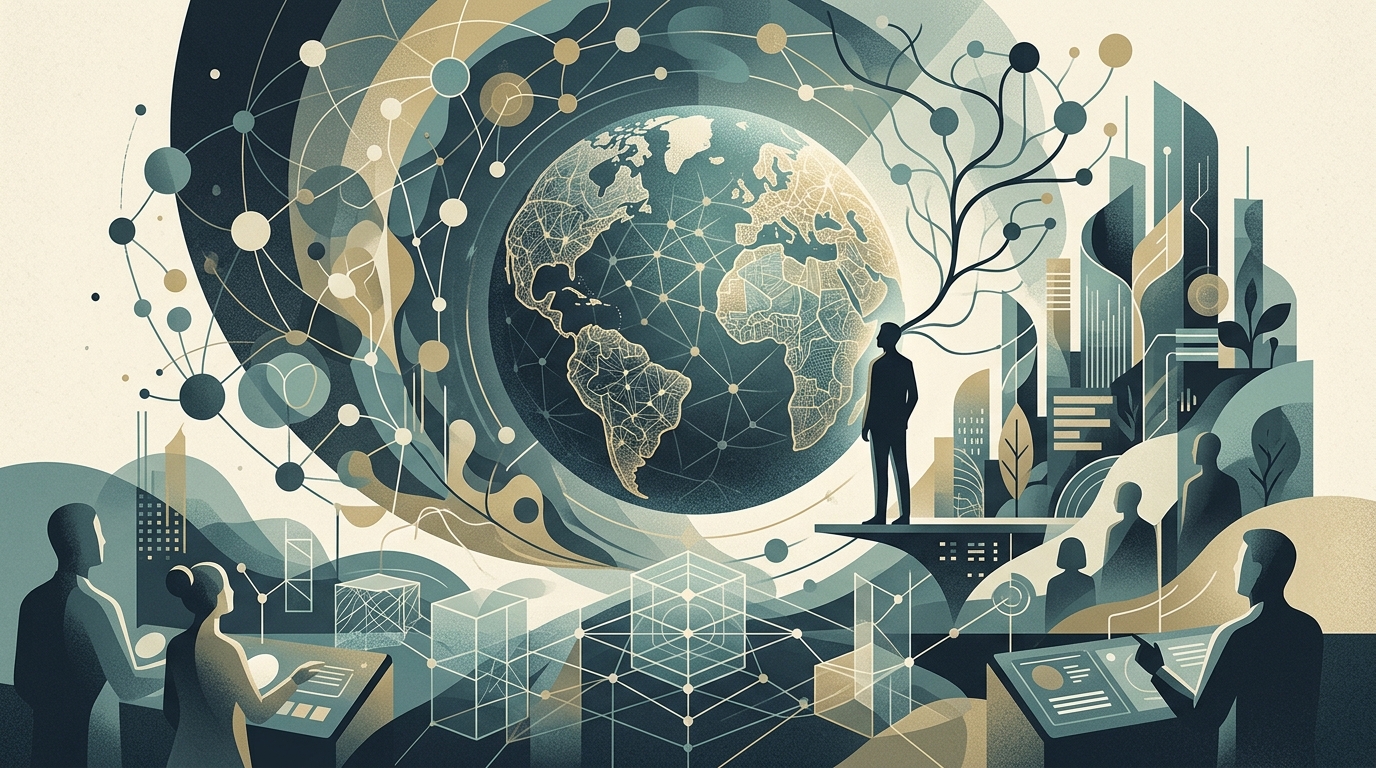
As we navigate the summer of 2026, the discourse surrounding Artificial Intelligence (AI) has shifted from the initial awe of Large Language Models (LLMs) toward a more existential and necessary direction: Planetary Intelligence. A recent feature in Time Magazine highlights a critical truth that the global community has been slow to grasp. AI cannot merely be a digital assistant for drafting emails or generating images; it must become the Earth's "nervous system," capable of managing the complex crises threatening our future.
The Transition from Individual to Planetary Intelligence
For decades, computing development focused on enhancing human cognitive capacity at an individual or corporate level. However, the climate crisis, the collapse of biodiversity, and the depletion of natural resources demand a different approach. The concept of "Planetary Intelligence" refers to the ability of technological systems to operate in harmony with the planet's biological processes, processing vast amounts of data from satellites, ocean sensors, and terrestrial networks.
The challenge is no longer about creating a machine that "thinks" like a human, but a machine that "feels" the planet. This means AI must be integrated into the so-called "Technosphere" in a way that reduces its ecological footprint, rather than burdening it with the massive energy consumption required by today's data centers. Planetary Intelligence presupposes a symbiotic relationship between technology and the biosphere, where the former serves the stability of the latter.
Digital Twins and the Management of Global Commons
One of the most promising applications of this new philosophy is "Digital Twins" of the Earth. These are highly detailed simulations of the planetary system that allow scientists and policymakers to test intervention scenarios before they are implemented in reality. For example, how would reforestation in a specific region of the Amazon affect rainfall in sub-Saharan Africa? AI can provide answers that the human mind fails to grasp due to the complexity of interdependencies.
- Real-time monitoring of carbon emissions from every factory on the planet.
- Predicting extreme weather events with neighborhood-level precision.
- Optimizing global supply chains to minimize waste.
- Protecting endangered species through acoustic sensors that identify illegal activity.
However, technology alone is not enough. As the analysis points out, Planetary Intelligence requires a new form of governance. The data collected must not belong to a few tech giants but must constitute a "global public good." The concentration of AI power within national frameworks leads to a new type of "techno-nationalism," which is incapable of addressing problems that know no borders.
The Ethics of Symbiosis and the Future
The shift toward Planetary Intelligence also requires a philosophical reassessment of our place in the world. Instead of viewing AI as a tool for dominance over nature, we must see it as an opportunity for reintegration into the natural world. AI can help us understand the "languages" of other species or perceive the rhythms of geological changes, fostering a deeper empathy for the environment.
"Artificial intelligence will not save us unless we program it to save the planet, not just our profits."
In conclusion, 2026 represents a turning point. Humanity now possesses the tools to create a collective intelligence that transcends the human species. The question remains: will we use this power to sustain life on Earth, or will we continue to develop algorithms that merely optimize consumption on a collapsing planet? Planetary Intelligence is not an option; it is a necessity for survival.




