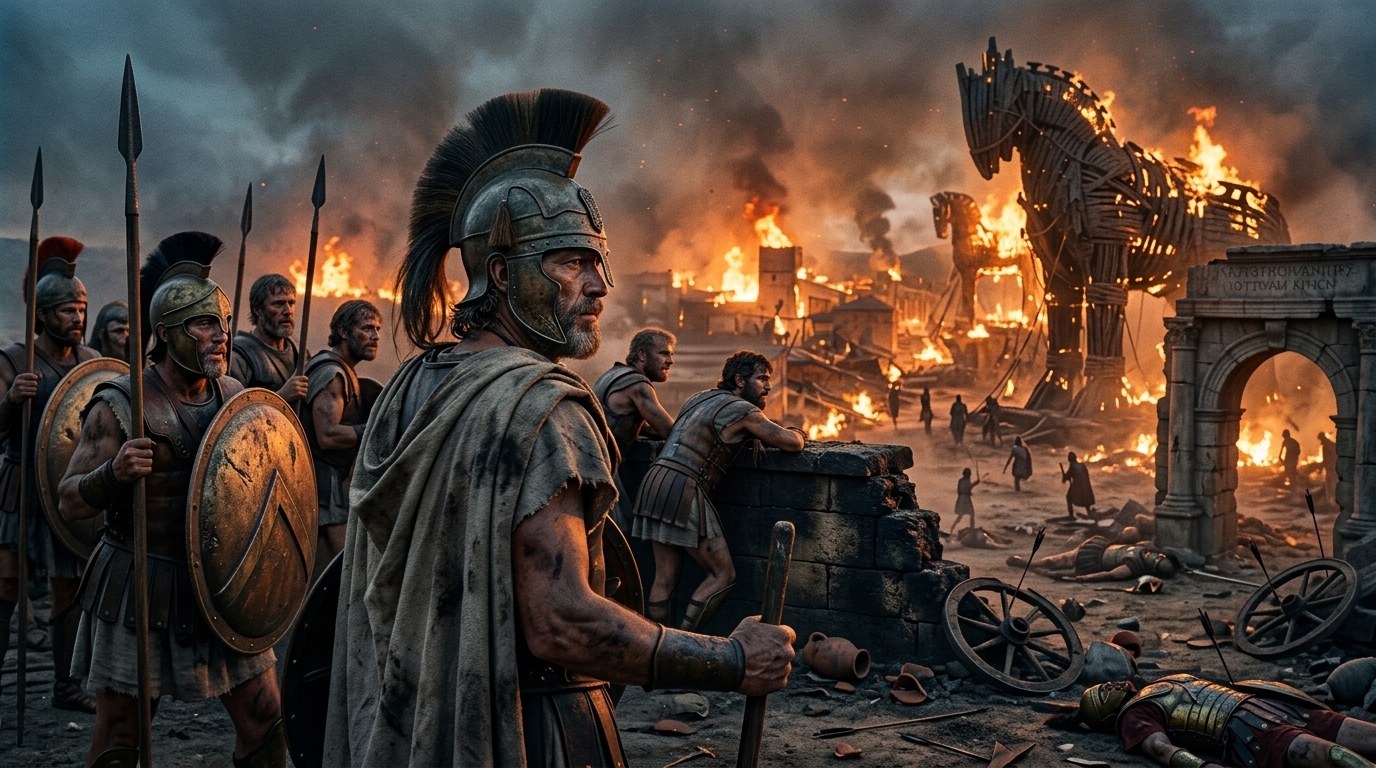
The summer of 2026 is defined by an unprecedented cinematic clash: two radically different interpretations of Homer’s ‘Odyssey’ are meeting on screens. On one side stands Christopher Nolan’s ‘The Odyssey,’ a $250 million Universal Pictures blockbuster featuring real-world locations and a star-studded cast. On the other, startup Fountain 0 has unveiled ‘Odysseus: The Fall,’ a 135-minute feature created almost entirely with AI tools for a mid-five-figure budget.
A Digital Odyssey Without Cameras
Directed by Ash Koosha, ‘Odysseus: The Fall’ was produced without conventional filming, physical sets, or movie cameras. The film’s entire visual universe was constructed using generative AI models, including China’s Kling for video generation and Google’s Nano Banana for keyframes and visual compositions. Despite the automated nature of the visuals, human creative labor remained at the core; the script, direction, and voice acting were all human-led, utilizing the likenesses of actors who consented to AI representation.
From Heroic Myth to Psychological Trial
Fountain 0’s production eschews a linear adaptation of the epic. Instead, the story is told through the fragmented memories of a man drowning in his final moments. The journey to Ithaca is transformed into a psychological trial where monsters and trials are linked to Odysseus’s own moral choices. This darker, introspective version serves as a deliberate contrast to Nolan's grand-scale production, highlighting the different storytelling capabilities of AI.
The Production Stack
To maintain visual consistency across the feature-length runtime, Fountain 0 employed proprietary software to control character placement and motion precisely. Koosha, who previously gained recognition at the 2026 Tribeca Festival for the $2,000 AI film ‘Dreams of Violets,’ argues that AI does not replace the creator. Instead, he views it as a tool that bridges the gap between a storyteller’s vision and the massive capital usually required to realize it on screen.