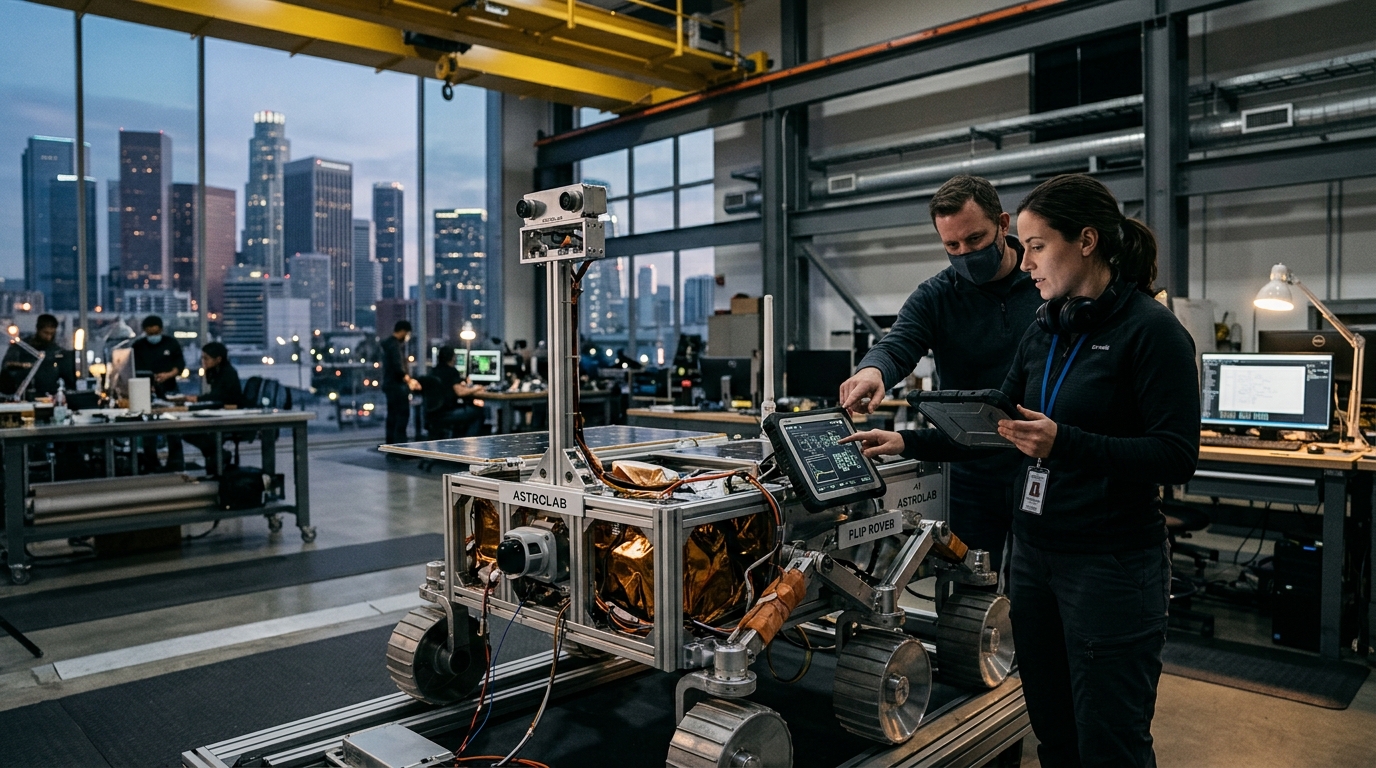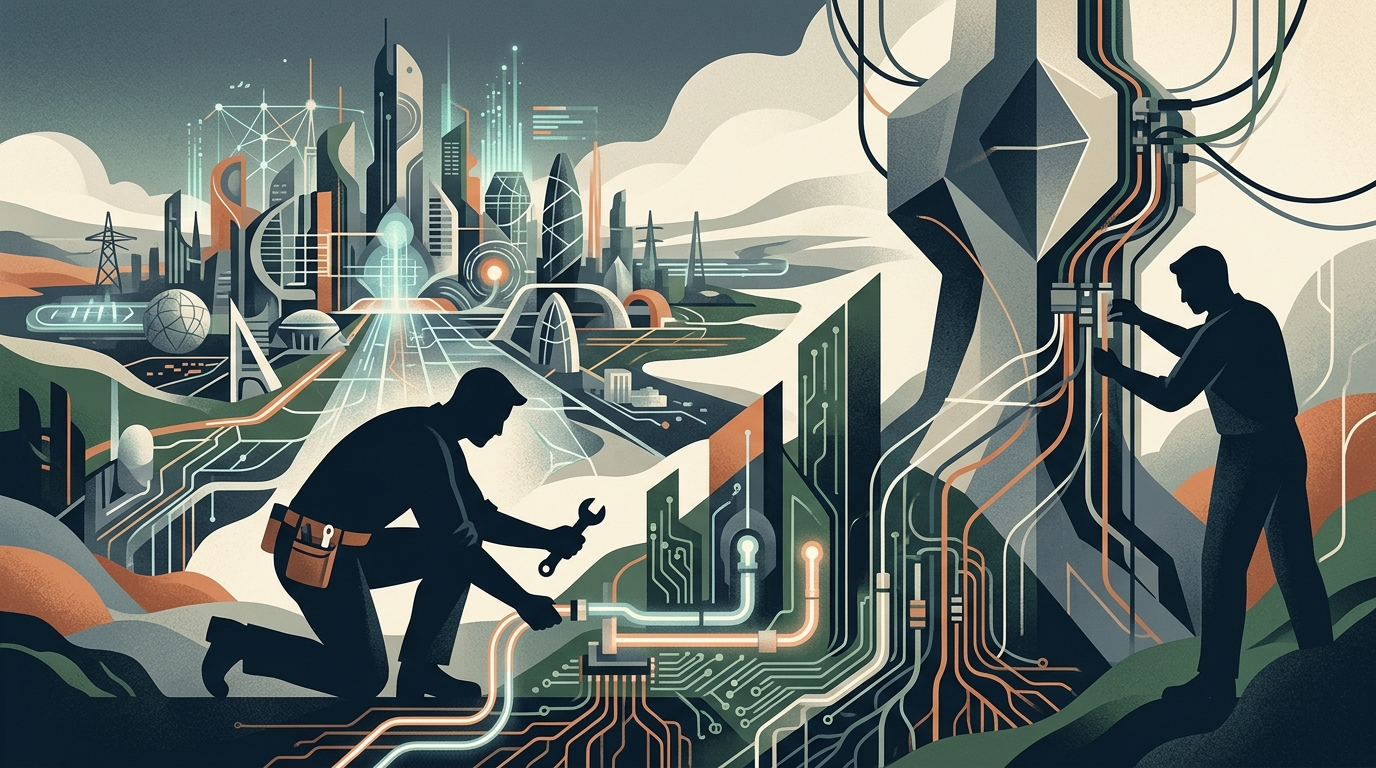
In an era where most analysts focus on Artificial Intelligence's ability to write code, compose music, or analyze data, Jensen Huang, the visionary leader of Nvidia, is shifting our focus to something far more tangible. According to his recent statements, the new global economy emerging from the AI revolution won’t just need computer scientists, but hundreds of thousands of electricians, plumbers, and skilled tradespeople. This is a statement that upends the dominant narrative of the last few decades, which positioned university education as the only path to prosperity.
The Physical Reality of the Digital World
Artificial Intelligence is often presented as something ethereal, living in the "cloud." However, the reality is much heavier and more metallic. The data centers powering ChatGPT and future autonomous systems are massive industrial facilities that consume vast amounts of energy and generate incredible heat. Huang points out that building and maintaining these "AI factories" requires an army of skilled workers who can manage complex cooling systems and high-voltage electrical grids.
As the Nvidia CEO explains, a plumber today isn't just dealing with a household leak; they are called upon to design and maintain the closed-loop liquid cooling systems that prevent expensive GPUs from melting. Similarly, electricians are the architects of the energy stability required by these data centers, which often consume energy equivalent to an entire city. This "manual" labor is, ironically, the only type that AI struggles to automate.
Gen Z and the Shift to "New-Collar" Jobs
We are witnessing a significant social shift. While previous generations were pushed en masse toward liberal arts degrees and business administration, Generation Z is beginning to recognize the value of skilled trades. In the United States, enrollment in vocational training schools increased by 16% in 2023, while salaries in these sectors have simultaneously skyrocketed into six-figure territory. The term "blue-collar" is gradually being replaced by "new-collar," describing workers who combine technical skill with an understanding of high technology.
In countries like Greece, this trend has particular interest. For years, vocational training was considered "second-class." However, the lack of specialized personnel for major investments in data centers and energy infrastructure is forcing the market to re-evaluate these professions. The demand for technicians who understand industrial protocols and digital interfaces is already outstripping supply.
The Paradox of Automation
The big question remains: Why can't AI replace a plumber? The answer lies in "Moravec's Paradox." It is relatively easy to make a computer exhibit adult-level skills on intelligence or strategy tests, but it is extremely difficult or even impossible to give it the motor skills of a one-year-old child. Navigating an unstructured space, using tools in tight corners, and making decisions based on touch and sight in real-time are fields where humans remain unsurpassed.
Jensen Huang isn't downplaying technology—that would be absurd. Instead, he highlights that technology is the tool, but infrastructure is the foundation. Without the electrical grid built by the electrician and the cooling system installed by the plumber, the most advanced AI model is nothing more than a lifeless pile of silicon. The future labor market won't just belong to those who know how to talk to the machine, but also to those who know how to build it, connect it, and keep it cool.
Implications for Education and Policy
Huang's warning serves as a wake-up call for governments. The obsession with "academic excellence" at the expense of "technical mastery" has created an imbalance that threatens growth. We need a radical overhaul of curricula so that the artisans of the future are trained not just in the tools of yesterday, but in the requirements of tomorrow's digital infrastructure. The dignity of manual labor is returning, not as a necessity for survival, but as a strategic pillar of technological sovereignty.