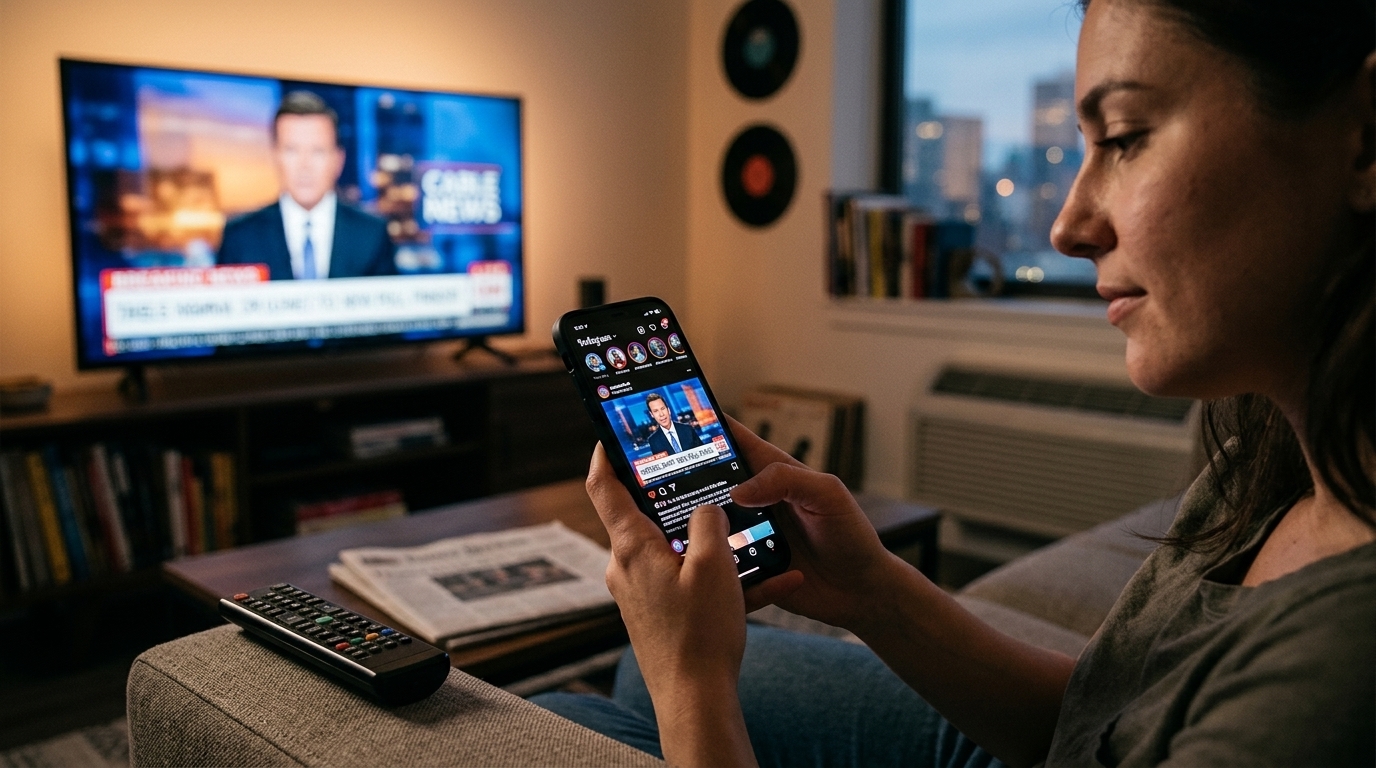
The history of news consumption has been marked by pivotal moments: the invention of the printing press, the advent of radio, and the undisputed reign of television. Today, we are witnessing another such historic turning point. According to the latest Digital News Report 2024 from the Reuters Institute for the Study of Journalism, social media and video platforms have officially dethroned television as the primary source of news globally. This evolution is not merely a change in medium; it is a profound shift in how society perceives reality, authority, and truth.
The Decay of the Small Screen and the Generational Divide
Traditional television news, which for decades served as the "communal table" around which citizens gathered to learn about the day's events, is facing a terminal decline. The fall is not sudden, but it is steady and, as it appears, irreversible. 2024 marks the landmark year where the social media trend line intersected and surpassed that of television in news consumer preferences.
The divide is primarily generational, but not exclusively so. While older generations (Baby Boomers and Gen X) still maintain a connection with the 8 o'clock news bulletins, Gen Z and Millennials have almost entirely disconnected from linear programming. For a 20-year-old today, the concept of waiting for a specific time to be informed seems anachronistic, if not absurd. News is now on-demand, fragmented, and seamlessly integrated into the entertainment flow.
The Video Onslaught: TikTok, YouTube, and Instagram
The dominance of social media is not uniform across all platforms. We are observing a clear shift from text-based platforms (such as Facebook and X/Twitter) toward video-centric platforms. TikTok, in particular, is recording explosive growth, not just as a medium for entertainment but as a search tool for information. YouTube remains a news giant, while Instagram Reels is gaining significant ground among younger demographics.
- The Rise of Content Creators: Citizens now trust individual influencers and independent commentators more than traditional journalists.
- Visualizing the News: Information must be brief, visually engaging, and emotionally evocative to "survive" the algorithm.
- Algorithmic Curation: It is no longer the editor-in-chief who decides what the citizen sees, but an opaque algorithm based on their previous interests.
This pivot toward video has created a new generation of "news personalities" operating outside the ethical frameworks of traditional news organizations. While this offers a sense of authenticity, it simultaneously opens the floodgates for misinformation and propaganda.
The Trust Crisis and the Global Implication
The shift is fueled by a deepening crisis of trust. In many countries, trust in traditional media is at historic lows, pushing users toward social networks. The perception that major broadcasters serve specific political or corporate interests has led to a "digital migration," where Facebook and YouTube become the primary arenas for news and political discourse.
"Trust is not lost because social media is inherently better, but because traditional media has failed to convince the public of its objectivity," the Reuters analysis suggests.
However, this transition carries significant risks. Social media tends to create "echo chambers," where users are exposed only to views that confirm their existing biases. Television, despite its flaws, provided a common baseline of facts. In the fragmented world of social media, the very concept of an objective fact is increasingly called into question.
The Future: Journalism in a World Without Gatekeepers
The challenge for the future is immense. News organizations are forced to adapt to an environment where they no longer control distribution. They must become "digital-first," adopt the language of video, and regain public trust through radical transparency.
Simultaneously, society must develop robust digital literacy. In a world where news delivery is changing hands—from professionals to algorithms and influencers—the citizen's ability to filter information becomes the most critical skill for the preservation of democracy. Television may never fully die, but the era in which it set the daily agenda is gone forever.