

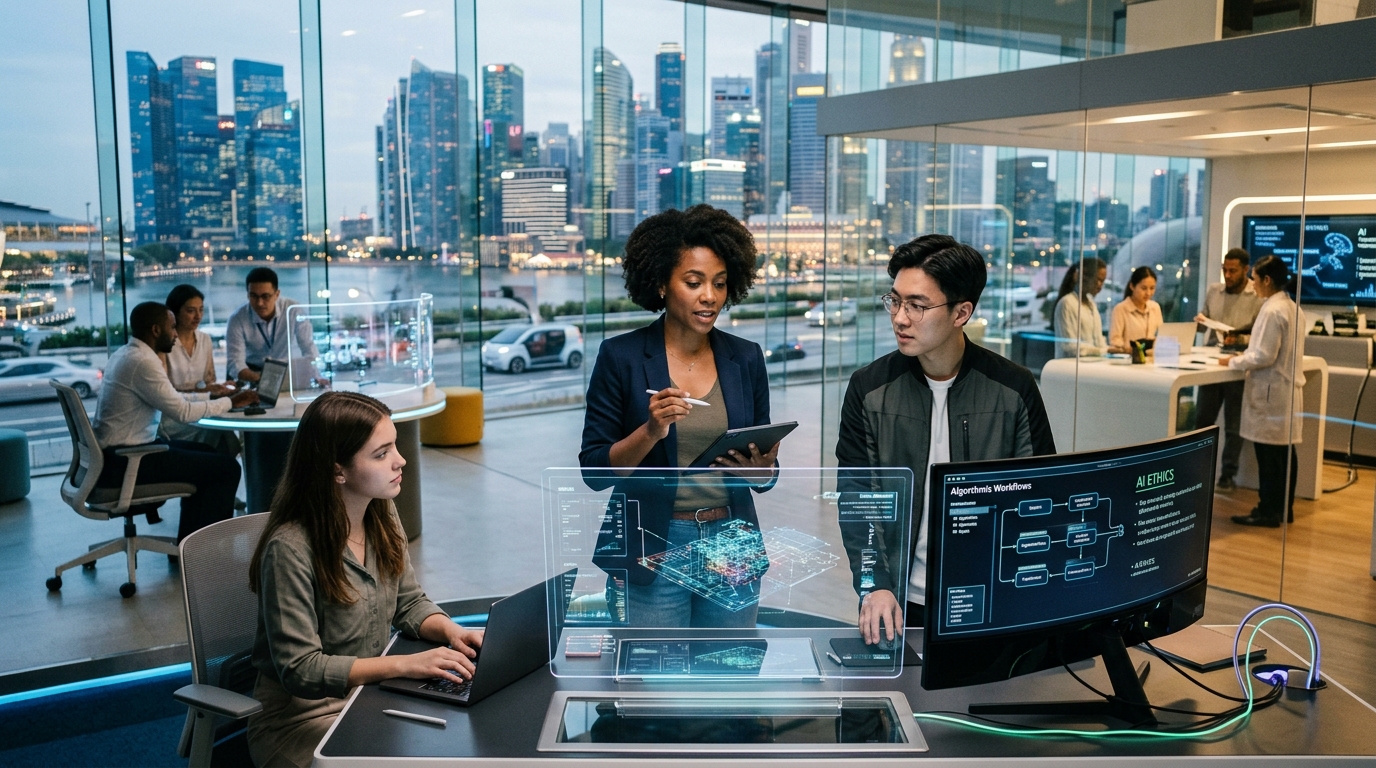
The history of humanity is a continuous sequence of technological revolutions, each of which initially caused awe and fear regarding the end of work as we knew it. From the Luddites of the Industrial Revolution to the accountants who looked askance at the arrival of electronic computers, the concern about the replacement of humans by machines has remained constant. However, in 2026, we find ourselves at a turning point where Artificial Intelligence (AI) is ceasing to be a threat and is transforming into a "factory" producing new, specialized roles.
The current disruption in the labor market no longer concerns only manual labor but penetrates the core of white-collar jobs. Data analysis shows that while some positions are declining, a gap is being created that requires new skills, combining technical training with critical thinking and ethical judgment.
The Architecture of New Work: From Prompt Engineers to AI Ethicists
One of the first specialties to emerge was that of the Prompt Engineer. Although initially considered a passing fad, it is now evolving into a profound science of communication with Large Language Models (LLMs). This professional does not just "write commands" but designs the logical structure through which AI can produce reliable and safe results for business applications.
At the same time, the need for AI Ethicists has skyrocketed. With the implementation of the European Union's AI Act, companies are now obliged to ensure that their algorithms do not contain biases and do not violate human rights. These professionals bridge the gap between philosophy, law, and computer science, acting as the guardians of digital integrity.
Data Curation and Human Oversight
Another area experiencing a boom is Data Curation. AI is only as good as the data it is trained on. Data Curators are not mere information collectors but scientists who evaluate the quality, validity, and context of data. Without them, AI risks sliding into "hallucinations" that can cost a business millions.
- AI Trainers: Professionals who teach models how to behave in specific professional environments (e.g., medicine or law).
- AI System Maintainers: Technicians who ensure the continuous operation and security of the infrastructure hosting the models.
- Human-Machine Mediators: Executives who help a company's workforce integrate AI tools into their daily routines.
"Artificial Intelligence will not replace humans. But humans who use Artificial Intelligence will replace those who do not."
The Challenge of Re-skilling and the Global Context
The challenge is universal. Economies worldwide are called to adopt these technologies to remain competitive. Upskilling and reskilling are becoming the keywords for the next decade. Universities and training providers must move at a speed we are not accustomed to, introducing programs that combine humanities with technology.
In conclusion, the labor market is not dying; it is transforming. The professions brought about by AI require a new form of "digital literacy" that is not limited to knowing how to use a computer but to understanding the logic of algorithms. Creativity, empathy, and strategic thinking remain the strongest human advantages, which AI comes to enhance, not abolish.




