

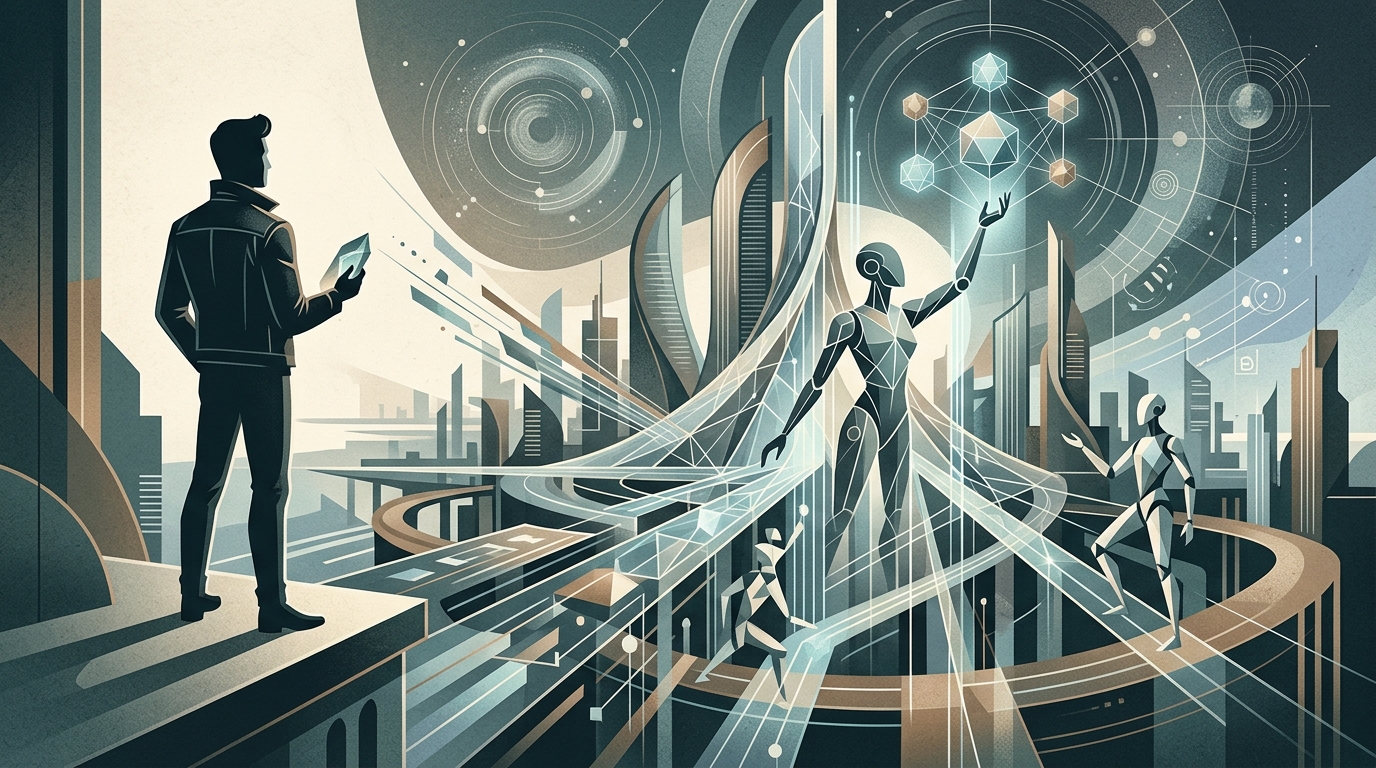
At the threshold of a new era where digital intelligence takes on physical form—or rather, metal and circuitry—Jensen Huang, the visionary leader of Nvidia, has made a statement that has shaken the foundations of the global market. During his recent addresses, Huang didn't stop at analyzing the chips powering ChatGPT; he turned his gaze toward the next great frontier: humanoid robots. According to him, this market isn't just an extension of technology, but a multi-trillion dollar economic entity that will fundamentally change how we produce, consume, and work.
The Convergence of Nvidia and Tesla: A Marriage of Necessity?
Huang’s specific mention of Tesla’s Optimus was no accident. While Elon Musk often faces criticism for over-promising, Nvidia recognizes that Tesla possesses something most others lack: mass manufacturing capability and a massive database of real-world movement derived from its FSD (Full Self-Driving) fleet, which can be adapted for robotic locomotion. "Physical AI," as Huang calls it, requires three things: immense computing power, sophisticated simulation models, and physical agents capable of interacting with the human environment.
Nvidia, through its Isaac platform and the new Blackwell chips, provides the "brain" and the "nervous system," while Tesla aims to provide the "body." This symbiosis creates a new ecosystem where AI is no longer confined to a screen or a chatbot but gains the ability to perceive gravity, friction, and spatial geometry. Huang argues that humanoid robots will be the easiest to adopt because our world is designed by humans for humans—from the height of countertops to the shape of manual tools.
The Multi-Trillion Dollar Economic Footprint
Why does Huang speak in terms of trillions? The answer lies in the scale of global labor. At a time when developed economies face acute demographic crises and labor shortages in manufacturing and logistics, automation via humanoids offers a way out. If a robot can perform 30% of factory tasks at an operating cost of a few dollars per hour, productivity will soar to levels unseen since the first steam engine.
- Reshoring Production: Western nations can bring factories back home, as labor costs will no longer be a prohibitive factor.
- Safety and Risk: Robots will take over the "3D" jobs (Dirty, Dull, Dangerous), reducing workplace injuries and fatalities.
- Personalized Service Provision: From elderly care to domestic help, the scope of application is virtually limitless.
However, this transition is not without its hurdles. The energy consumption of these systems is massive, and data infrastructure requirements will force nations to invest billions in 6G networks and next-generation data centers to support real-time robotic coordination.
The Ethical and Social Dimension
"We are not just building machines. We are building humanity's future partners," Huang stated, attempting to mitigate fears of mass unemployment.
The reality, however, is more complex. Introducing millions of humanoids into the labor market will necessitate a new social contract. If the value of human labor decreases dramatically, how will social security systems be sustained? While Huang and Musk envision a world of post-scarcity and abundance, political analysts warn of an unprecedented concentration of wealth in the hands of those who own the algorithms and the hardware.
In conclusion, Jensen Huang’s prediction is more than just a business forecast. It is a herald for the end of labor as we know it and the beginning of an age where productivity will be completely decoupled from the human biological rhythm. Whether Optimus becomes Tesla’s "savior" or remains an expensive experiment is yet to be seen, but the direction Nvidia is pointing is unmistakable: the future is humanoid.





