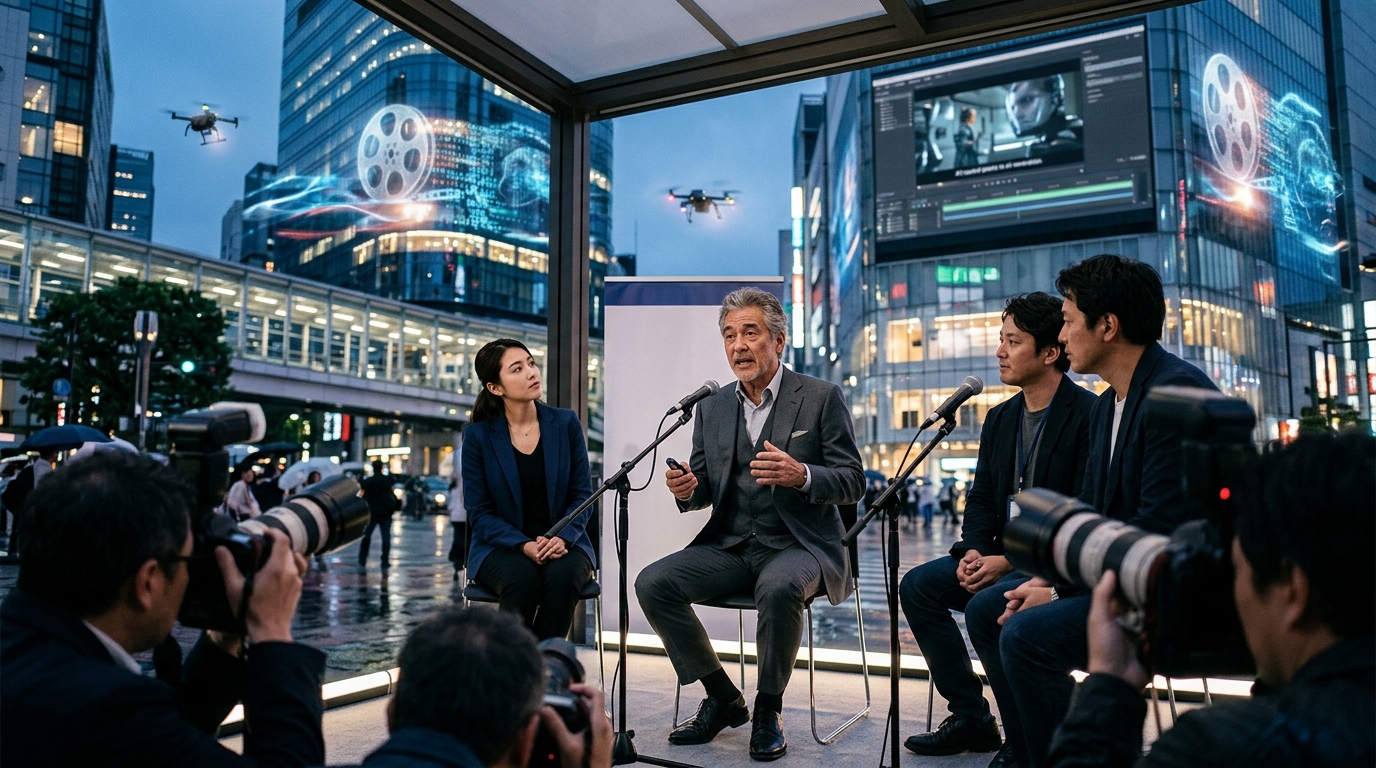
The history of cinema is a chronicle of technological revolutions. From the advent of sound and color to digital editing and CGI, the Seventh Art has always embraced the new to expand the boundaries of human imagination. However, the current rise of Artificial Intelligence (AI) is not just another addition to the creator's toolkit; it represents a fundamental shift in how stories are conceived, produced, and consumed.
Revolutionizing Pre-production and Scriptwriting
The process begins long before the cameras roll. Today, Large Language Models (LLMs) are already being used to analyze thousands of successful scripts, helping producers predict the commercial viability of an idea. AI can suggest improvements to plot structure, identify logical gaps in the narrative, or even generate dialogue in specific styles. Although the recent Hollywood writers' strikes (WGA) set strict limits on AI usage, the technology remains a powerful assistant for brainstorming and production organization.
Furthermore, AI is transforming storyboarding. Image generation tools like Midjourney allow directors to visualize their scenes in seconds, converting text into detailed boards that guide cinematography and lighting. This drastically reduces pre-production costs, allowing independent creators to access visual tools that were previously the exclusive privilege of major studios.
Visual Effects and the Era of Generative Video
The most spectacular change is occurring in the field of visual effects (VFX). Traditionally, creating a digital world required hundreds of artists and thousands of hours of processing. With the advent of models like OpenAI’s Sora or Runway Gen-3, producing photorealistic video from simple text descriptions is becoming a reality. This "Generative Video" technology promises to slash the cost of special effects, enabling the creation of scenes that would be impossible to film in reality.
Another area is Digital De-aging and the digital resurrection of actors. We have seen Harrison Ford return as a young Indiana Jones and Mark Hamill as a young Luke Skywalker. AI analyzes older footage of the actor and reconstructs their face with incredible precision, overcoming the imperfections of old CGI. However, this raises serious ethical questions: Who owns the rights to an actor's likeness after their death? How are living actors protected from being replaced by digital replicas?
Ethical Dilemmas and Human Identity
The use of AI in cinema is not just a matter of efficiency, but also of ethics. The creation of "digital twins" allows actors to "lend" their likeness to productions without being present on set. While this offers flexibility, there is a risk of fully automating acting. Actors fear that production companies will buy the rights to their image once and use it indefinitely, eliminating the need for future hires.
"Artificial intelligence can mimic style, but it cannot feel the pain or joy required for a truly soul-stirring performance," many critics argue.
Furthermore, the authenticity of art is being questioned. If a film is written by an algorithm, directed by an AI, and stars digital avatars, does it remain a human expression? The industry is called upon to find a balance between technological innovation and the preservation of artistic integrity.
The Democratization of Creation
Despite the risks, AI offers a unique opportunity: the democratization of cinema. Today, a teenager with a laptop can create visual effects that ten years ago would have cost millions of dollars. This means that new voices from around the world, who lacked access to Hollywood's closed system, can now tell their stories with high production quality. Cinema ceases to be the playground of the few and wealthy and becomes a field where creativity is the only real currency. AI will not replace the director; it will become their "smart brush," allowing them to paint worlds that until now existed only in their dreams.