For decades, the narrative of Artificial Intelligence (AI) in healthcare has been dominated by what we call "moonshots" — ambitious projects aimed at curing incurable diseases, decoding the human genome in seconds, or performing robotic surgeries without human intervention. However, as we reach mid-2026, the reality on the front lines of hospitals reveals something far more immediate and perhaps more critical. AI is not acting as a deus ex machina of miracles, but as an essential pressure valve for a system on the brink of collapse.
The Burnout Crisis and Administrative Bloat
Global healthcare faces a crisis that isn't just about viruses; it's about the very structure of the system. Doctors and nurses now spend more time typing into Electronic Health Records (EHRs) than looking patients in the eye. This phenomenon, often described as "death by a thousand clicks," has led to unprecedented rates of burnout. This is where AI steps in, not to replace diagnosis, but to vaporize bureaucracy.
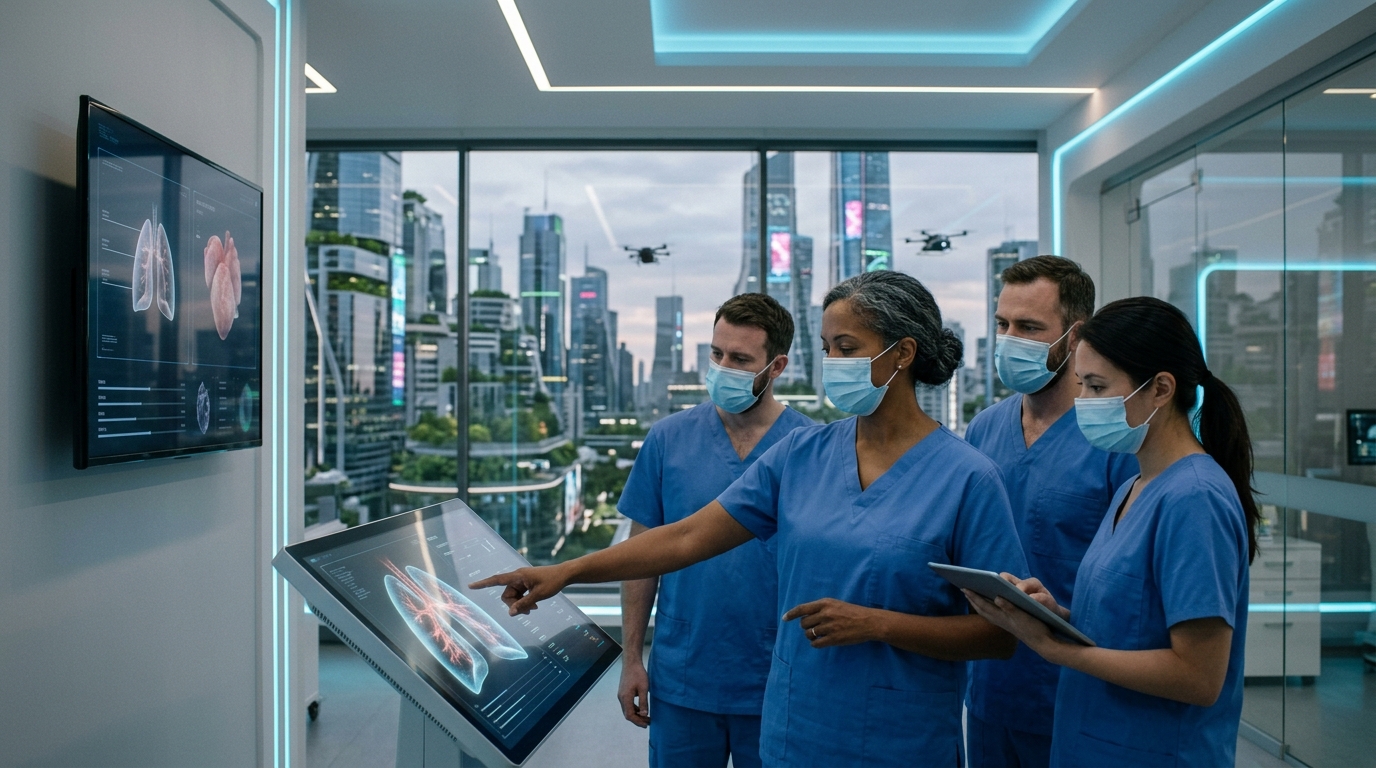
Ambient Intelligence technologies represent the vanguard of this shift. Through sophisticated voice recognition and Natural Language Processing (NLP), AI can now monitor the conversation between doctor and patient and automatically draft a complete clinical note. What once required two hours of work at the end of a shift is now completed in real-time. This "valve" allows clinicians to breathe, reducing stress and increasing job satisfaction.
From Data Management to Operational Excellence
Beyond the clinical room, AI is being deployed to solve the logistical nightmares that paralyze hospitals. Predicting patient flow, optimizing operating room schedules, and automating insurance authorizations are areas where AI offers an immediate return on investment. In an environment where resources are finite, an algorithm's ability to predict that an emergency department will be overwhelmed in three hours allows for proactive staff reallocation.
- Automated Coding: Converting medical procedures into billing codes is now done with 99% accuracy, drastically reducing insurance claim denials.
- Predictive Staffing: Algorithms analyze historical data and even weather patterns to forecast patient surges.
- Patient Triage: LLM-based chatbots conduct initial screenings, directing patients to the appropriate level of care before they even reach the hospital door.
The Ethics of the "Pressure Valve"
Despite the benefits, using AI as a pressure valve raises significant questions. There is a risk that hospital administrations might use the gained efficiency not to give doctors more time with patients, but to force them to see even more patients. If AI saves 10 minutes per appointment, will those minutes be used for quality of care or for squeezing an extra slot into an already packed schedule? The answer to this question will determine whether AI becomes the savior of humanistic medicine or the tool for its further commodification.
"Technology should not be a wall between the doctor and the patient, but a bridge that brings them back together," notes the MarketScale report.
In conclusion, while AI "moonshots" continue to evolve in research labs, the real revolution is happening quietly in clinic corridors. Decompressing the system is the necessary foundation upon which future medical breakthroughs will be built. Without a functional and healthy medical workforce, no amount of technological progress will be able to reach the ultimate recipient: the human being.