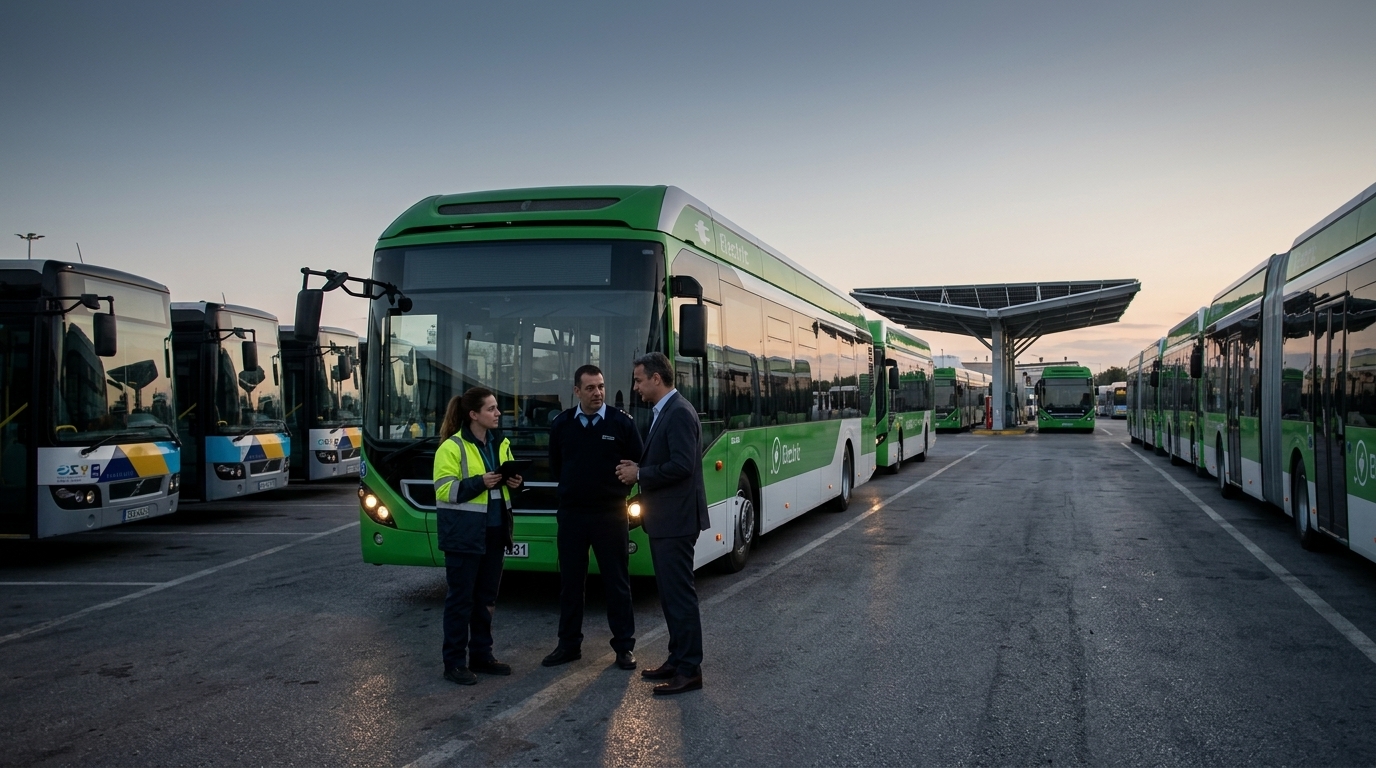
The image of old, polluting buses struggling to climb the streets of Athens and Thessaloniki is finally becoming a relic of the past. With a horizon stretching to 2028, the Greek government and the Ministry of Infrastructure and Transport are implementing an ambitious plan to procure 1,700 new buses, marking the largest intervention in the urban transport sector in decades. This is not merely a vehicle replacement; it is a structural shift in the philosophy of mobility, centered on electrification, natural gas, and digital upgrades.
The Roadmap for Renewal
The strategy for fleet renewal is unfolding in phases, with the first 250 electric buses having already joined the daily lives of citizens since 2024. However, the goal of 1,700 vehicles by 2028 requires a steady stream of tenders and deliveries. According to the planning, the mix of the new fleet includes electric buses for central urban routes, compressed natural gas (CNG) buses for longer distances, and Euro VI anti-pollution technology vehicles. This choice is deliberate, responding to the diverse geographical and operational needs of the Attica basin and the Thessaloniki urban complex.
The financing of the project relies on a combination of national resources, funds from the Recovery and Resilience Facility (RRF), and the NSRF (ESPA). The total cost of the investment is expected to exceed 1 billion euros, making it one of the largest "green" transition programs in the country. The project's significance is twofold: on one hand, it improves schedule reliability by reducing breakdowns and delays, and on the other, it contributes decisively to reducing the environmental footprint of cities.
Electrification and Infrastructure: The Charging Challenge
The transition to electromobility is the cornerstone of the new era. Electric buses offer zero emissions and a drastic reduction in noise pollution, which immediately upgrades the microclimate of burdened urban centers. However, the challenge lies not only in purchasing the vehicles but also in creating the necessary infrastructure. The depots of OSY (Athens) and OASTH (Thessaloniki) are being transformed into modern charging and maintenance centers, with the installation of powerful chargers and energy management systems.
- Installation of smart telematics systems for real-time autonomy monitoring.
- Training of personnel (drivers and technicians) in the specifics of electric propulsion.
- Upgrading the electrical grid in depot areas to avoid overloads.
Furthermore, the integration of next-generation CNG buses works complementarily. These vehicles offer high autonomy and lower operating costs compared to diesel, while their emissions of particulates and nitrogen oxides are extremely low. The diversity of technologies ensures that the transport system remains resilient and flexible.
Social and Economic Impact
Beyond numbers and technologies, fleet renewal has a profound social impact. For the average citizen, using a modern bus with air conditioning, accessibility for people with disabilities, USB charging ports, and free Wi-Fi is not a luxury, but a prerequisite for choosing Public Transport over a private car. Increasing ridership is the only way to decongest road axes and reduce travel time for everyone.
"Investing in transport is an investment in the democracy of movement. Every new bus that hits the road removes dozens of cars from traffic and offers time and quality of life to the worker and the student."
Economically, modernizing the fleet is expected to yield significant resource savings in the long run. Old buses required huge amounts for fuel and spare parts, while the frequency of breakdowns made scheduling an uncertain exercise. With the new vehicles, maintenance costs drop sharply, allowing resources to be redirected toward further service improvements.
The 2028 Bet
As we head toward 2028, the bet remains consistency in implementation. The history of Greek transport is full of announcements that remained on paper, but this time the pressure from the European Union and the commitments of the Green Deal leave no room for backtracking. The integration of the 1,700 buses must be combined with the completion of the Thessaloniki Metro and the expansion of Line 4 in Athens, creating a unified, interoperable transport network.
In conclusion, the "green revolution" in transport is a necessity that was delayed but is now in full swing. If the plan is followed, by 2028 Greece will possess one of the youngest and most environmentally friendly fleets in Europe, radically changing the daily experience in major urban centers.