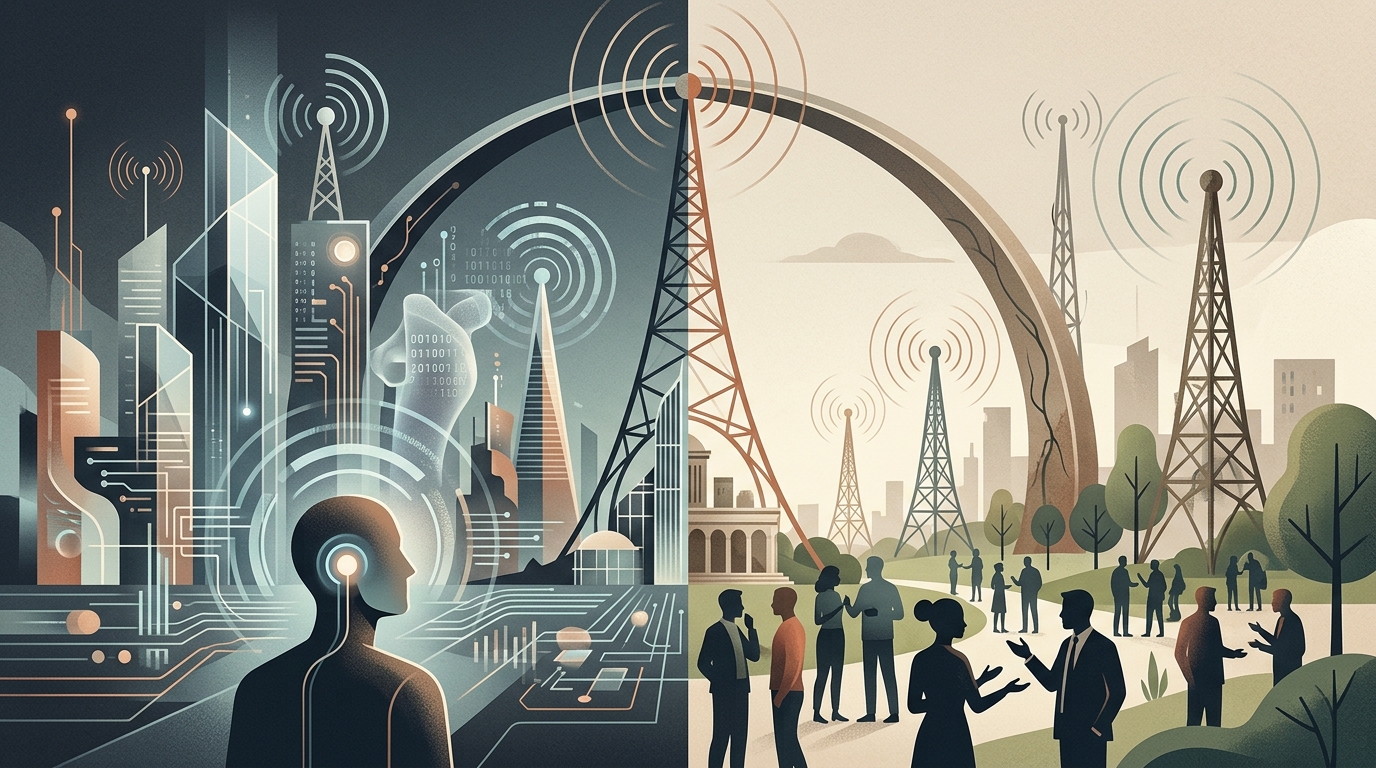
Radio, perhaps the most resilient of all traditional mass media, stands today at a critical juncture. For over a century, its strength has lied in its intimate nature—the warm, human voice that keeps company with the commuter, the worker, or the lonely listener. However, the advent of Generative AI promises—or threatens—to completely reshape this landscape, replacing live human presence with algorithmically generated content and synthetic voices.
The Rise of AI DJs and the Quest for Digital Authenticity
The emergence of platforms like RadioGPT has already offered a glimpse of the future. These systems can scan social media trends, compose real-time news updates, and broadcast them using voices that are increasingly difficult to distinguish from human ones. For radio station owners, the allure is obvious: drastic operational cost reductions, the ability to broadcast 24/7 without staffing needs, and absolute control over output.
However, the lingering question is whether 'authenticity' can be simulated. The listener's relationship with a radio host is built on trust and shared experience. When a host comments on the weather, traffic, or a political event, the listener knows there is a conscious entity on the other side. Using AI risks turning radio into a sterile stream of information, stripping away the soul that kept it relevant against the onslaught of television and the internet.
Hyper-Personalization: The Holy Grail of Advertising
Beyond voice synthesis, AI offers unique capabilities in personalization. Imagine a radio program that adapts dynamically to each listener's tastes. While the music remains within the station's format, the news, advertisements, and announcements could be different for every user listening via an app. This model of 'hyper-local' and 'hyper-personal' information is the new battlefield for advertising revenue.
- Dynamic ad insertion based on precise geographic location.
- Automated content translation for multicultural audiences.
- Predictive analytics to maintain audience retention during commercial breaks.
The Ethics of Transparency and Audience Trust
The biggest gamble for the future of the medium is transparency. Experts warn that if stations use synthetic voices without explicit disclosure, the eventual revelation of such practices could lead to a mass exodus of listeners. Trust is a capital built over decades that can vanish in an instant. In an era of deepfakes and misinformation, radio has the opportunity to emerge as a 'beacon of truth,' provided it uses technology as a tool to enhance, rather than replace, human judgment.
"AI can write a script and voice it, but it cannot feel the anxiety of a city in crisis or the joy of a local festival. That is precisely where radio's survival lies."
In conclusion, the radio of the future will undoubtedly be hybrid. AI will take over repetitive and energy-consuming processes, allowing human creators to focus on meaningful communication. The danger is not the technology itself, but the potential greed for total automation that could permanently alienate the audience.