

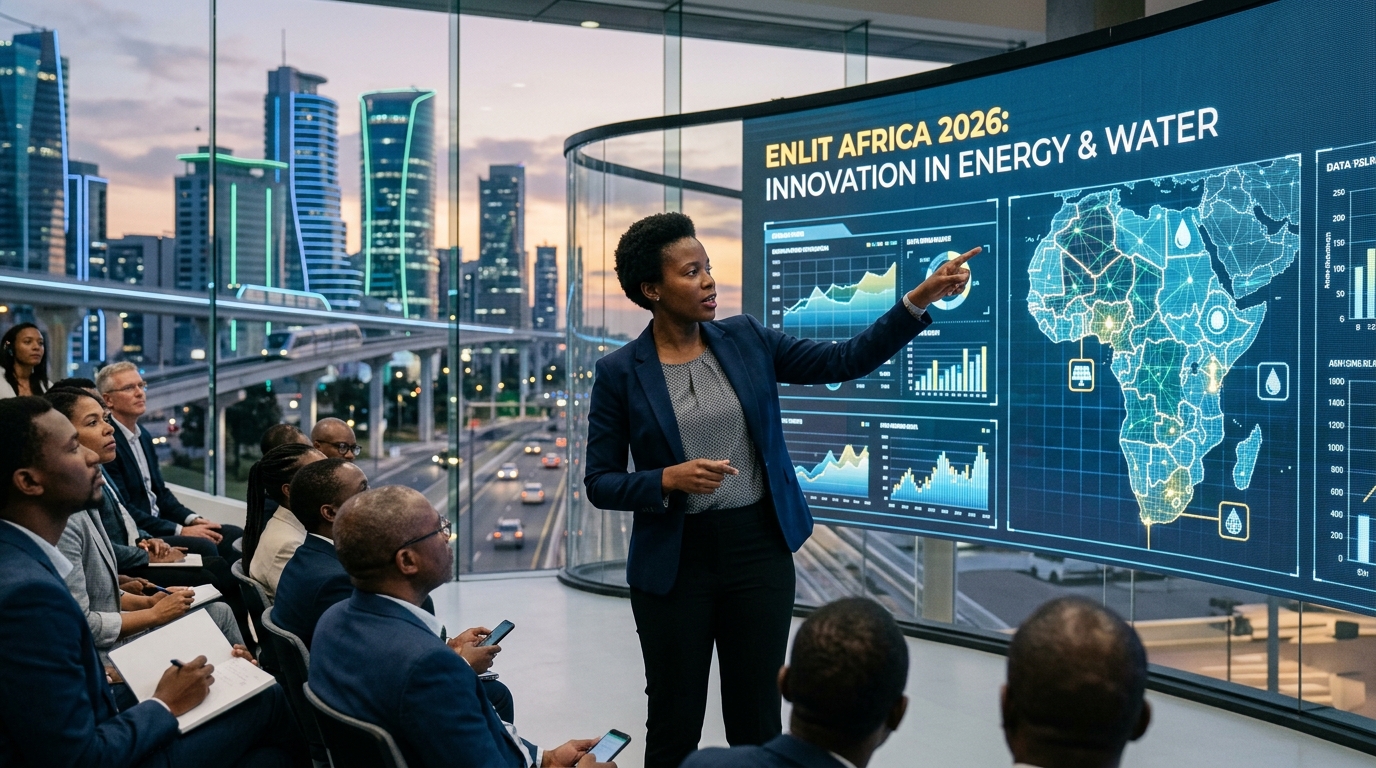
In the heart of Cape Town, where tradition meets technological ambition, Enlit Africa 2026 has opened its doors, posing a compelling question: Can Artificial Intelligence (AI) bridge the gap between Africa's burgeoning needs and its strained infrastructure? This year's event moves beyond theoretical hype, focusing on the "AI reality," grid constraints, and the critical energy-water nexus.
Moving from Hype to Practical Reality
For years, AI in Africa was viewed as a distant promise or a tool suited primarily for Western markets. However, 2026 marks a 180-degree turn. Keynote speakers at Enlit Africa emphasized that AI is no longer a luxury but a necessity for the survival of energy utilities. With transmission grids under constant pressure from aging components and surging demand, "intelligent" management has become the only way to avert widespread blackouts.
Predictive maintenance powered by machine learning algorithms now enables technicians to identify transformer failures before they occur, saving millions of dollars and preventing the social unrest triggered by power shortages. As highlighted, Africa is "leapfrogging" stages of technological evolution, directly adopting digital control systems in regions where traditional grids never reached.
Grid Constraints and the Rise of Microgrids
A central theme of the conference is the inability of national grids to absorb energy from renewable sources. While the continent possesses abundant solar and wind resources, the transmission infrastructure remains the primary bottleneck. AI steps in here through the management of Virtual Power Plants (VPPs) and microgrids. These systems allow remote communities to generate, store, and consume their own power, using algorithms to balance loads in real-time.
"We are not just building grids; we are building nervous systems for our cities," stated one of the keynote speakers.
The use of AI to optimize energy flow reduces transmission losses, which in some African nations reach as high as 20%. This "digital retrofitting" is often more cost-effective and faster than constructing thousands of kilometers of new physical cabling.
The Energy-Water Nexus: An Existential Challenge
Perhaps the most innovative aspect of Enlit Africa 2026 is the focus on the relationship between energy and water. Energy production requires water, and water treatment requires vast amounts of energy. On a continent severely impacted by climate change, this interdependence is volatile. AI is now being deployed to optimize desalination plants and irrigation systems, ensuring that every kilowatt-hour consumed yields the maximum possible amount of clean water.
Large-scale data analytics allow for drought prediction and the adjustment of energy production from hydroelectric dams, preventing the total depletion of reserves. This holistic approach differentiates this year's event; technology is not treated as an isolated tool but as the connective tissue of sustainable development.
Conclusions and Future Outlook
Enlit Africa 2026 sends a clear message: Africa is no longer a passive recipient of technology but a hub of intense innovation driven by necessity. Integrating AI into core infrastructure offers a unique opportunity for the continent to bypass its structural problems. However, the challenge remains in financing and training the workforce required to manage these complex systems. The digital energy revolution is here, and it is the only path forward for a continent hungry for power and water.





