In the heart of Los Angeles, where Frank Gehry’s architectural genius meets the pulse of the digital age, something unprecedented is being born. Dataland is not just another museum; it is the world’s first permanent institution dedicated exclusively to Artificial Intelligence (AI) art. Guided by internationally acclaimed artist Refik Anadol and the Refik Anadol Studio (RAS), this space aspires to be ground zero for the new aesthetic language of the 21st century.
The Architecture of Information
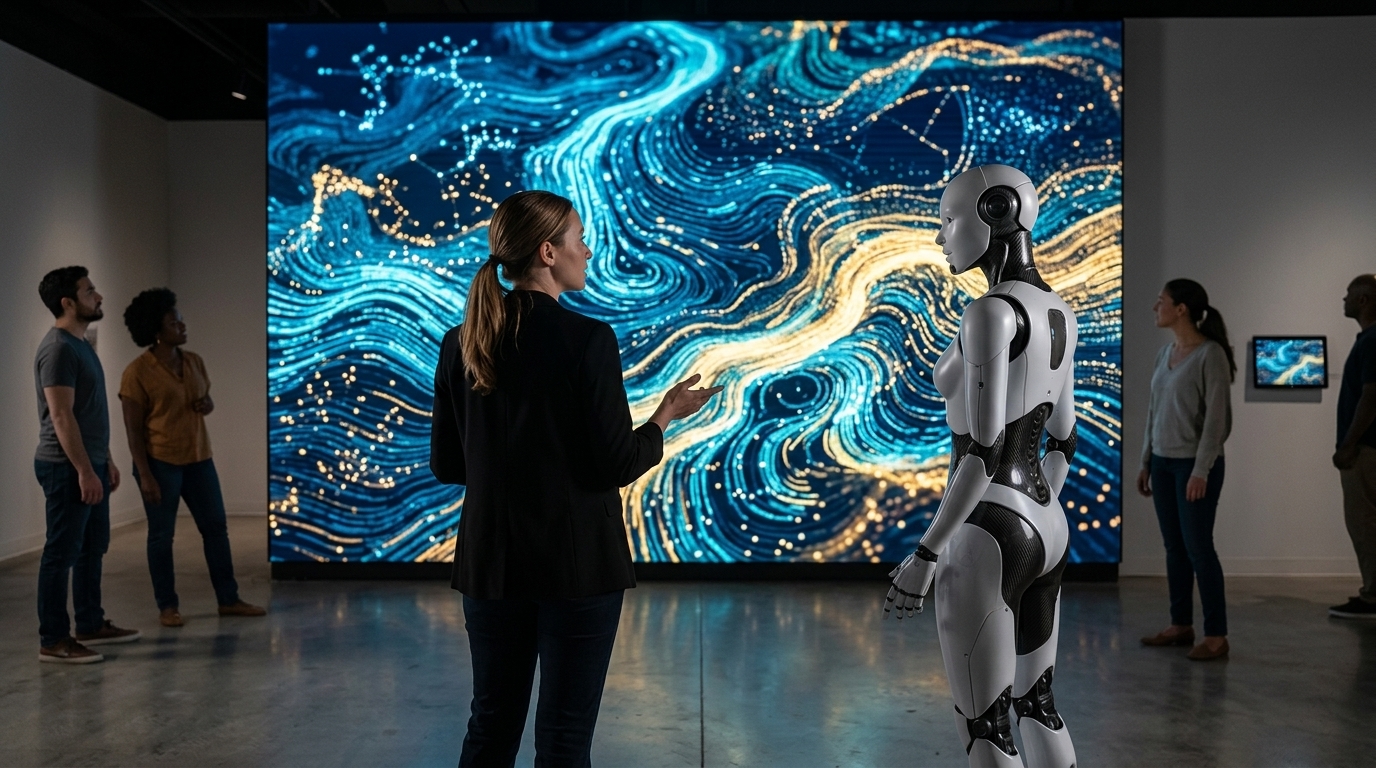
Dataland is housed within The Grand LA, an iconic complex designed by Gehry, marking a symbolic convergence of physical and digital architecture. For Anadol, who has spent over a decade turning data into "pigment," this museum represents the culmination of a vision where information ceases to be abstract and gains material substance. Visitors will not merely watch images on screens. They will enter environments that "breathe," react, and evolve in real-time, utilizing vast datasets processed by sophisticated machine learning algorithms.
This venture comes at a time when the conversation about AI in art is more intense than ever. While many fear the replacement of the human creator, Anadol proposes a model of collaboration. In Dataland, AI is not the artist, but the tool that allows humans to visualize the invisible — from the neural synapses of the brain to the complexities of climate change.
The Large Nature Model (LNM)
The heart of Dataland beats to the rhythm of the "Large Nature Model" (LNM), the world's first open-source AI model based solely on nature data. Unlike traditional models trained on internet text, the LNM draws information from research institutions such as the Smithsonian and the Royal Botanic Gardens, Kew. This allows the museum to create "living archives" of the planet's biodiversity.
- Utilization of data from oceans, forests, and weather phenomena.
- Collaboration with scientists for accurate ecosystem representation.
- Ability for visitors to interact with virtual environments simulating nature with unprecedented detail.
This approach gives Dataland an educational and ecological character. It is not just about aesthetic pleasure, but about raising awareness through technology. Anadol argues that AI can help us "re-remember" nature in an era where we are increasingly distanced from it.
A Multisensory Experience
Dataland goes beyond the boundaries of sight. Its spaces are designed to activate all senses. Through advanced sound systems, thermal sensors, and even artificial scents created by AI, the experience becomes holistic. Imagine walking through a "digital storm" where you can smell the earth after rain or feel the temperature change as the artwork shifts from a desert to a glacier.
"The art of the future will not be something we look at on a wall, but something we experience with our entire being," Anadol states.
This emphasis on experience is what differentiates Dataland from traditional galleries. Here, the viewer ceases to be a passive observer and becomes part of the work. Data collected from visitor movement can, in some cases, influence the evolution of the artworks themselves, creating a continuous feedback loop between human and machine.
Sustainability and Data Ethics
One of the biggest questions raised by AI art is its energy footprint. Processing billions of data points requires massive computing power. Dataland aims to address this issue by using exclusively renewable energy sources for its servers and partnering with tech companies investing in green infrastructure. Furthermore, the museum sets strict standards for the ethical use of data, ensuring that model training respects intellectual property and privacy.
In conclusion, Dataland is not just an art museum; it is an experiment in how we will live in the future. In a world overwhelmed by information, Refik Anadol shows us that data can be more than just numbers: it can be poetry, memory, and ultimately, a new form of life.