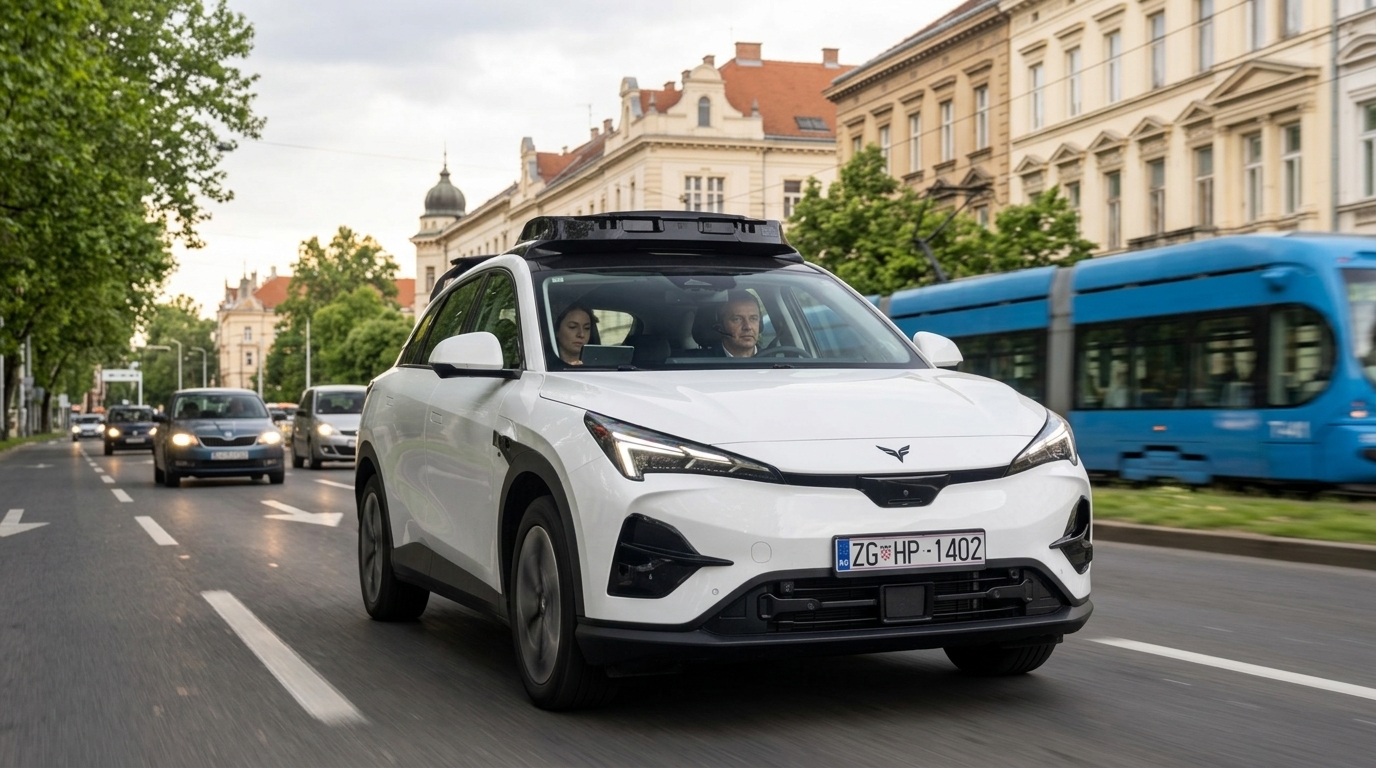
On the historic streets of Zagreb, where tradition meets modernization, a silent revolution is underway. Verne, the Croatian startup born from the vision of Mate Rimac—the man many call the "Elon Musk of Europe"—has begun pilot testing Europe's first purpose-built robotaxi. This is not merely an electric car with cameras, but a radically redesigned mobility ecosystem that promises to change how we perceive vehicle ownership and public transportation.
A Design That Eliminates the Driver
The Verne vehicle, named after the visionary author Jules Verne, looks like no other production car. Designed from the ground up as a Level 4 autonomous vehicle, it lacks a steering wheel and pedals. Designers opted for a two-seater layout, based on statistics showing that the vast majority of taxi rides involve only one or two passengers. This choice allowed for the creation of an interior space that feels more like a luxurious lounge or a hotel suite than a traditional car cabin.
Passengers enjoy massive legroom, fully reclining seats, and a 43-inch screen for entertainment or work during the journey. Verne is betting on the "experience" rather than just the commute. Through an app, users can customize lighting, temperature, and even the cabin's scent before the vehicle even arrives at the pickup point. This level of personalization aims to bridge the gap between the comfort of a private car and the convenience of a taxi.
Mobileye Technology and the "Mothership"
At the heart of Verne's autonomy lies the Mobileye Drive system. The partnership with Intel-owned Mobileye provides the vehicle with a sophisticated suite of sensors, including cameras, radar, and LiDAR, allowing it to navigate Zagreb's complex urban environment safely. However, the innovation doesn't stop at the vehicle itself. Verne is introducing the concept of the "Mothership," a central hub where robotaxis return daily for cleaning, maintenance, and charging.
This infrastructure is critical for maintaining service quality. Unlike ride-hailing platforms where cleanliness depends on the individual driver, Verne guarantees a sterile and pristine environment for every passenger. This model aims to solve the scaling problem faced by many autonomous driving companies by combining high technology with operational discipline. The Mothership concept ensures that the fleet remains in top condition, maximizing uptime and customer satisfaction.
Cost and the Economic Dimension
One of the most critical questions for the success of robotaxis is the cost. According to the company's announcements, the price of a ride with Verne in Zagreb will be competitive with existing services like Uber and Bolt. However, the long-term benefit comes from the elimination of the driver's cost, which represents the largest portion of expenses in traditional transport. By removing the human element, Verne can achieve higher margins while keeping prices affordable for the public.
Verne argues that its service will allow many urban residents to abandon private car ownership, saving thousands of euros annually on insurance, fuel, and maintenance. Furthermore, the use of the EU Recovery and Resilience Facility to fund part of the project (approximately €180 million) underscores the strategic importance Europe places on developing its own technological champions in the mobility sector. This public-private partnership is a cornerstone of Croatia's bid to become a high-tech hub.
Challenges and the Future of European Autonomy
Despite the excitement, the road ahead is not without obstacles. The regulatory framework in Europe remains strict and fragmented compared to the US or China. Verne must prove that its technology is not only functional but also significantly safer than a human driver in real-world conditions. Choosing Zagreb as the first city serves as a living laboratory before expanding to other European capitals and the Middle East.
Verne's success will determine whether Europe can stand its ground against Google's Waymo or Tesla's Cybercab. With Mate Rimac at the helm (metaphorically, as the vehicle has none), Croatia is transforming from a tourist destination into a global technological hub, proving that innovation knows no geographical boundaries. The next few years will be crucial as the pilot expands and the public's trust in autonomous systems is put to the ultimate test.