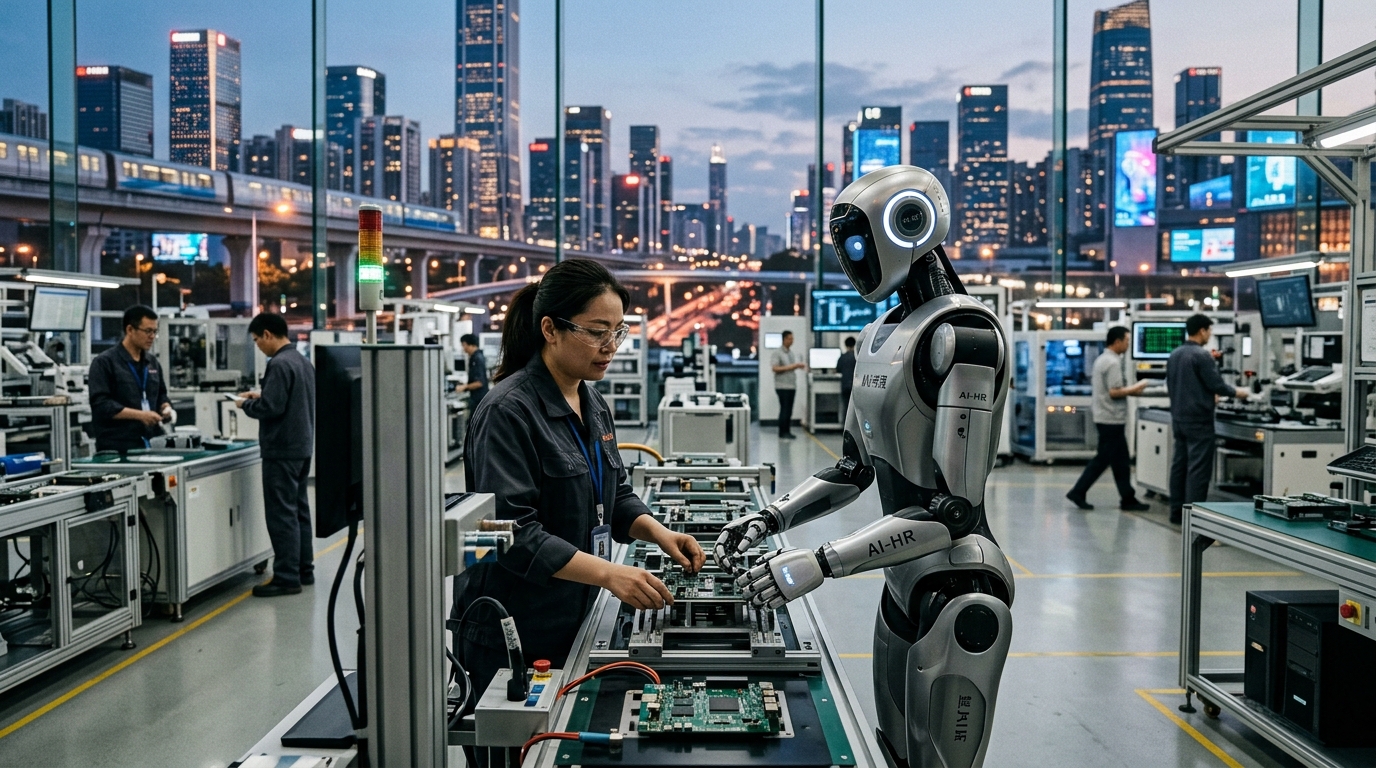
As we navigate the mid-point of 2026, the global economic landscape is bracing for a transformation that analysts have termed 'China Shock 3.0.' While the first shock (2001) was defined by China’s entry into the WTO and a flood of low-cost manufactured goods, and the second (2020-2024) by its dominance in EVs and green energy, this third wave is fundamentally different: it is powered by AI-driven humanoid robotics.
Beijing is no longer content with being the 'world's factory' through human labor. Instead, it aims to become the world’s primary exporter of automation itself. This strategic pivot is not merely a response to geopolitical friction but a structural necessity for a nation facing a demographic precipice and a shrinking workforce. By automating its own domestic industry first, China is creating the blueprint for a global robotic takeover.
From Electric Vehicles to Intelligent Machines
The leap from manufacturing electric vehicles to building humanoid robots is shorter than many realize. The supply chains China cultivated for EVs—advanced batteries, LiDAR sensors, high-torque motors, and sophisticated power management—are the exact components required for high-performance robotics. Chinese firms like Unitree, UBTECH, and Xiaomi are leveraging this ecosystem to produce humanoid models at a fraction of the cost of Western competitors like Tesla’s Optimus or Boston Dynamics’ Atlas.
The Chinese Ministry of Industry and Information Technology (MIIT) has explicitly targeted 2025-2027 for the mass production of humanoid robots. They view robotics as a 'disruptive technology' on par with the internet or mobile phones. Unlike the specialized industrial arms of the past, these new robots use generative AI to learn tasks through visual observation, making them versatile enough for everything from assembly lines to elderly care.
The Demographic Imperative and the Automation Solution
China's aggressive push into robotics is driven by a stark reality: its working-age population is declining. To maintain its GDP growth and manufacturing edge, the Communist Party has embraced automation as a form of 'digital migration.' This internal demand creates massive economies of scale. Once China perfects these robots for its own factories, it will export them globally, potentially undercutting any Western manufacturer by 50% or more.
This sets the stage for a new era of protectionism. Governments in Washington and Brussels are already debating how to handle this influx. If they impose high tariffs on Chinese robots, they risk making their own domestic industries less competitive and slower to innovate. If they allow them in, they risk a total dependency on Chinese hardware and software for their core industrial infrastructure.
Geopolitical and Social Consequences
The implications of 'Shock 3.0' extend far beyond trade balances. We are looking at a potential redefinition of labor itself. If China can export a robot that costs less than a year's minimum wage in the US or Europe, the pressure on Western labor markets will be unprecedented. Furthermore, the 'Global South'—countries like Vietnam, India, and Mexico that have traditionally relied on low-cost labor to attract investment—may find themselves unable to compete with a fully automated Chinese manufacturing model.
At The AI Chronicle, we are closely monitoring the development of 'General Purpose Robotics' (GPR). The ability of a machine to perform multiple, varied tasks without specific reprogramming is the industry's ultimate goal. Because China possesses the world's largest and most diverse manufacturing sector, it has access to the richest datasets to train these AI models, giving it a significant 'data advantage' over its rivals.
Conclusion
The third China shock is not a distant threat; it is a current reality. It arrives not in boxes of plastic goods, but in the form of intelligent hardware and sophisticated neural networks. The global economy must now adapt to a world where industrial power is no longer measured by the size of the workforce, but by the efficiency of the algorithm and the precision of the actuator. The challenge for the West is to innovate faster than Beijing can automate, or face an era where the tools of production are entirely controlled by its greatest rival.