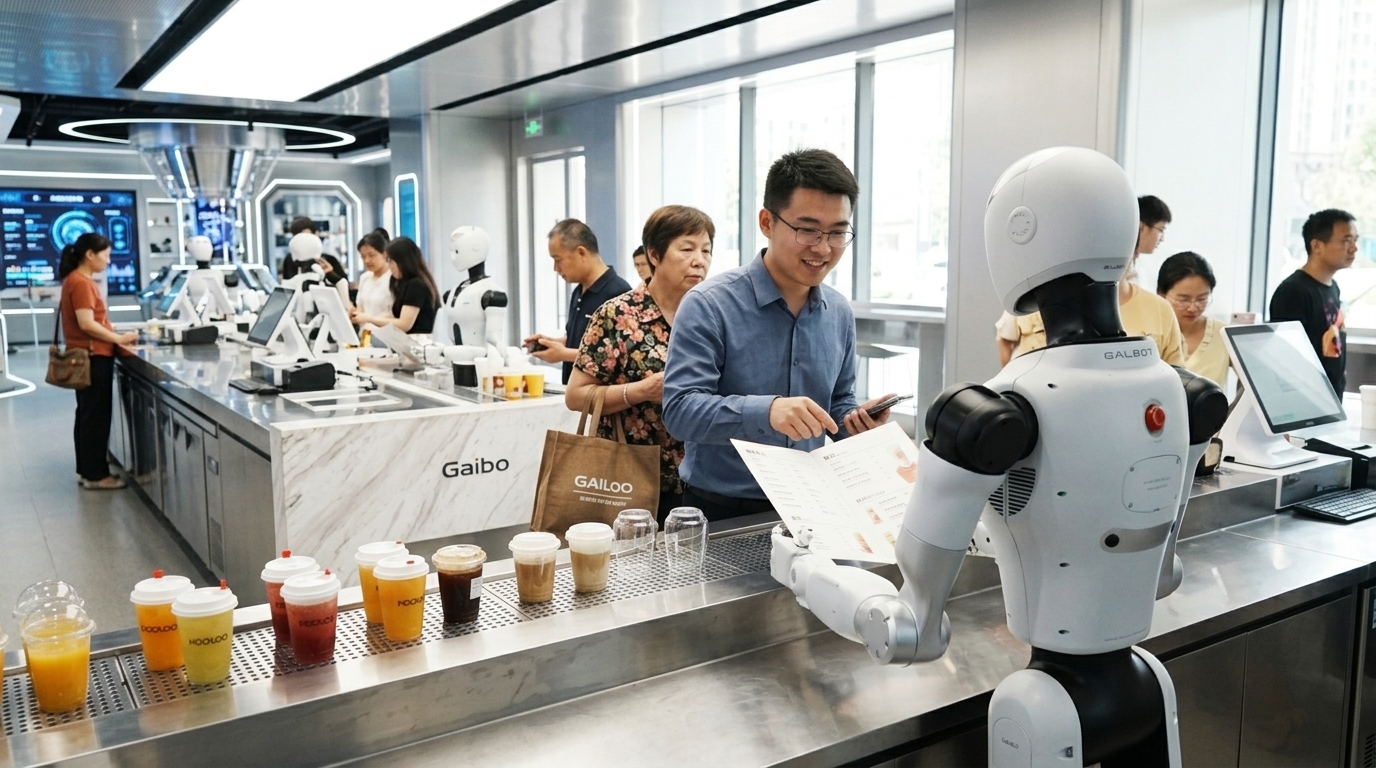
In the heart of Anhui province, East China, the future of the global economy is no longer just a topic for closed-door conferences; it is being sold in storefronts. The inauguration of the Robot 9N Center in Hefei marks a milestone that transcends technological display. It is the world's first specialized 'department store' for humanoid robots, a space where science fiction meets retail and corporate strategy. This move is not accidental; it is the culmination of a national strategy aimed at making China the undisputed leader in the humanoid market by 2027.
From the Lab to the Showroom: The Strategy of Robot 9N
The Robot 9N Center functions as a comprehensive ecosystem hub. It does not merely offer exhibition spaces for industry giants like UBTECH, Unitree, and Agibot, but also includes after-sales service centers, research and development departments, and real-world testing zones. For the first time, a potential buyer—whether a manufacturer looking for assembly line workers or a healthcare provider—can compare different humanoid models side-by-side, evaluating their kinematics, autonomy, and intelligence.
The choice of Anhui as the location for this venture is strategic. The province has evolved into a dynamic high-tech hub, already hosting significant semiconductor and electric vehicle industries. Integrating robotics into this industrial fabric creates economies of scale that are difficult to replicate in the West. The department store acts as the bridge between manufacturers and the market, narrowing the gap between cutting-edge research and practical application.
The Chinese Counter-Offensive and Global Competition
While Tesla with Optimus and Figure AI in the US capture headlines with impressive videos, China is focusing on scale and cost. China's Ministry of Industry and Information Technology (MIIT) has issued clear guidelines: humanoid robots must reach mass production levels by 2025 and become a 'significant driver of economic growth' by 2027. The Robot 9N Center is the physical manifestation of this policy.
- Cost Reduction: Chinese manufacturers like Unitree have already introduced models like the G1, with a starting price of $16,000, while Western competitors aim for prices exceeding $30,000.
- Supply Chain Advantage: Proximity to manufacturers of sensors, batteries, and actuators allows for rapid model iteration and hardware updates.
- State Support: Subsidies and tax breaks for companies established within the Robot 9N Center significantly reduce entrepreneurial risk.
Social and Economic Implications
The creation of such a commercial center suggests that humanoid robots are no longer viewed as experimental tools but as marketable commodities. China faces a severe demographic crisis, with its working-age population shrinking rapidly. For Beijing, humanoids are not a luxury but a necessity to maintain the country's productivity without the need for mass migration.
"We are no longer in the testing phase. We are in the adoption phase. The Robot 9N Center is the iPhone moment of robotics," say market analysts in Hefei.
However, the mass distribution of humanoids raises serious questions about data security and the ethics of automation. These robots, equipped with cameras and LiDAR sensors, collect vast amounts of data about their environment. Managing this information within a commercial context will be the next major challenge for legislators worldwide.
Conclusion: The New Normal
The Robot 9N Center in Anhui is a harbinger of what is to come in the world's major metropolises. As production costs drop and AI becomes more capable of controlling complex mechanical bodies, the sight of a robot performing tasks in a supermarket or a warehouse will become commonplace. China, through this 'department store,' is not just selling machines; it is selling the vision of an automated society, positioning itself at the core of this new industrial revolution.