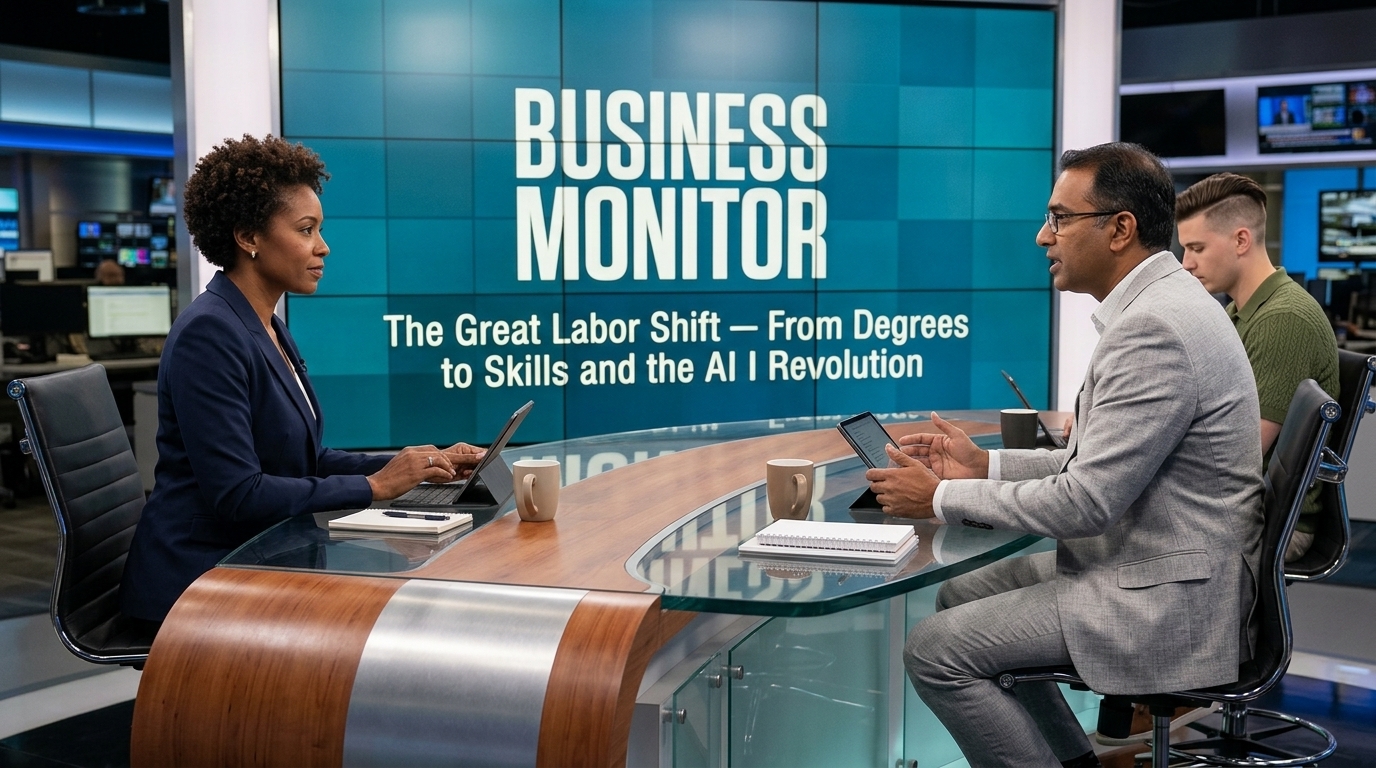
The traditional office landscape, characterized by rigid hierarchies, static organizational charts, and a fixation on academic degrees as the sole passport to success, is now a relic of the past. As we move through 2026, the labor market is undergoing a structural transformation driven not only by technological advancement but also by a profound shift in human psychology. The recent episode of Business Monitor on One Channel brought to the fore the critical questions facing every modern enterprise: How do we survive in an environment where the only constant is change?
The Collapse of the Pyramid and the Rise of Agility
For decades, corporate structures resembled military hierarchies. Today, this model is deemed cumbersome and inefficient. Leading organizations are those adopting flatter structures, encouraging decision-making at all levels. The concept of the "manager" is gradually being replaced by that of the "facilitator," who doesn't just issue commands but creates the right environment for their team to excel.
This shift is not merely organizational; it is cultural. Gen Z and Gen Alpha employees demand autonomy and purpose in their work. They are no longer satisfied with just a good salary; they seek flexibility, work-life balance, and, above all, a culture that respects individuality. Businesses that refuse to adapt to this new reality face the phenomenon of "quiet quitting" or a mass exodus of talent toward more progressive competitors.
Skills vs. Degrees: The New Market Currency
One of the most radical changes is the devaluation of the traditional degree as the ultimate hiring criterion. In the age of Artificial Intelligence, technical knowledge becomes obsolete rapidly. What matters now is "learnability"—the ability to learn how to learn. Companies are pivoting to a "Skills-First" model, where the emphasis is on horizontal skills (soft skills) such as critical thinking, emotional intelligence, and complex problem-solving.
- Upskilling & Reskilling: Continuous retraining is no longer an option but a prerequisite for survival.
- Micro-credentials: Short, specialized certification programs are gaining ground over multi-year master's degrees.
- Cognitive Flexibility: The ability to transition from one subject area to another with ease.
Artificial Intelligence acts as a catalyst here. While it automates repetitive tasks, it frees up time for creative thinking. However, this requires employees to know how to collaborate with the machine. The "hybrid worker" of 2026 is one who can direct AI models to produce results that neither a human nor a machine could achieve alone.
AI as a Partner, Not a Replacement
The fear that AI will steal jobs remains real, but the reality is more nuanced. AI does not replace humans; rather, humans using AI replace those who do not. Business Monitor highlighted that the transformation involves creating new roles that we couldn't even imagine five years ago, such as "AI Ethicists" or "Prompt Engineers."
"Technology is not the enemy of work, but a mirror of our need for evolution. Those who invest in both people and technology simultaneously will be the winners of the next decade."
In the Greek context, businesses face the additional challenge of the digital divide. Despite significant strides, many small and medium-sized enterprises (SMEs) struggle to integrate these changes. State support and investment in digital literacy are essential to ensure that the transformation of work does not lead to a two-tier society.
Conclusion: The Human-Centric Approach
Ultimately, success in the new era of work depends on balance. Businesses must embrace technology without losing their humanity. Future leadership requires empathy, transparency, and a commitment that organizational growth goes hand-in-hand with the employee's personal development. Work is no longer a place we go, but an activity that provides value, and the way we perceive it will continue to evolve rapidly.