In a world grappling with climate change and energy volatility, the solution for sustainable living may not always be found in the showrooms of multinational corporations, but in the e-waste recycling bins of our cities. The case of a home energy storage system (Powerwall) built entirely from 650 discarded laptop batteries is a landmark example of how technological ingenuity can tackle two of the greatest challenges of our era: the management of electronic waste and the urgent need for affordable, green energy.
As of June 2026, while battery technology has advanced significantly, the cost of off-the-shelf storage solutions remains prohibitively high for many households. This is where the DIY (Do It Yourself) and energy-hacking culture steps in. This project isn't just a weekend hobby; it's a declaration of independence from the central grid and proof that the 'second life' of materials is often as valuable as their first.
The Chemistry of Recycling: Why 18650 Cells?
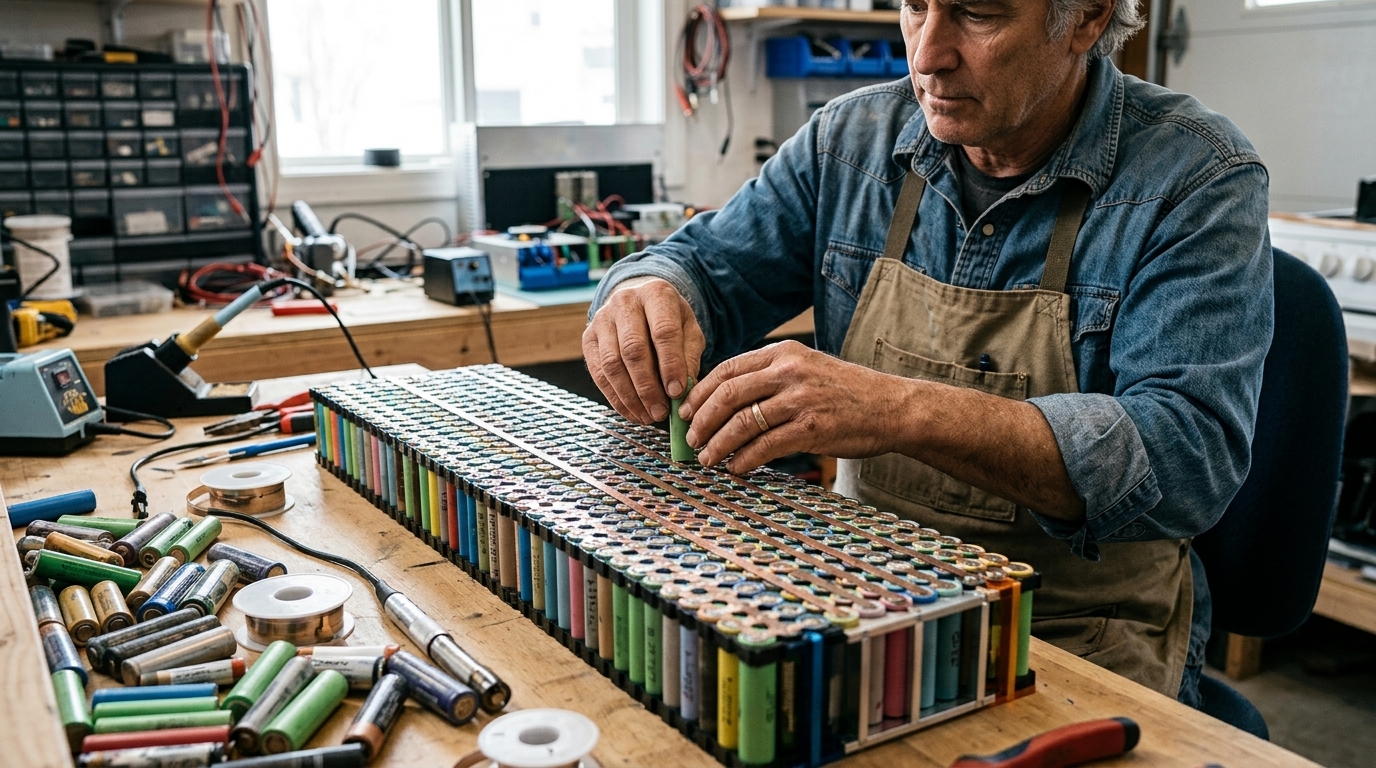
The heart of this system is the 18650 cell. This is the standardized cylindrical lithium-ion battery that powered most laptops for over a decade. Although a laptop battery pack might be considered 'dead' because two of its six cells have failed, the remaining four usually retain 80-90% of their original capacity. The process of harvesting 650 such cells requires immense patience and meticulousness.
The creator of the system had to disassemble hundreds of battery packs, check the voltage of each individual cell, and, most importantly, measure their actual capacity in milliampere-hours (mAh). The cells are then sorted so that each 'pack' in the larger bank has a similar total capacity, ensuring the stability of the system during charge and discharge cycles. This sorting process is what elevates the DIY Powerwall from a simple assembly to a feat of precision engineering.
Safety and Management: The DIY Challenge
The strongest argument against improvised lithium systems is safety. The risk of 'thermal runaway,' which can lead to intense fires, is real. However, modern DIYers utilize sophisticated Battery Management Systems (BMS). A BMS constantly monitors the temperature and voltage of every series of cells, automatically disconnecting the system if any anomaly is detected.
Furthermore, the use of individual busbar fuses for each cell ensures that if one battery shorts out, it is immediately isolated from the rest of the array without causing a chain reaction. This level of engineering protection, combined with housing the system in fire-rated enclosures, makes these solutions viable for domestic use, provided that strict electrical standards are followed. It bridges the gap between raw waste and a sophisticated power plant.
The Economic and Environmental Footprint
From an economic perspective, the benefits are staggering. While a commercial 10kWh storage system can cost several thousand euros, a DIY system made from recycled cells costs a fraction of that, primarily consisting of the price of the inverter and the BMS. In a 2026 landscape where solar energy is abundant but electricity prices remain vulnerable to international crises, the ability to store daytime solar power for nighttime use is the 'holy grail' of household economics.
Beyond the financial aspect, there is a profound ethical weight. E-waste is one of the fastest-growing pollution sources globally. By repurposing these batteries, we delay their entry into landfills and reduce the demand for mining new lithium and cobalt—processes often associated with environmental degradation and unethical labor practices in developing nations. The DIY Powerwall is not just a technical achievement; it is an act of political ecology.
Conclusion: Toward a Decentralized Future
The story of these 650 laptop batteries shows us that the future of energy can be decentralized. When citizens stop being mere consumers and become 'prosumers' (producers and consumers), the market dynamics shift. Although building such a system requires specialized knowledge and is not recommended for everyone without guidance, its existence pushes corporations and governments to take recycling and the accessibility of green technologies more seriously. The energy of the future might be free, provided we have the wisdom to harvest it from the scraps of the past.