

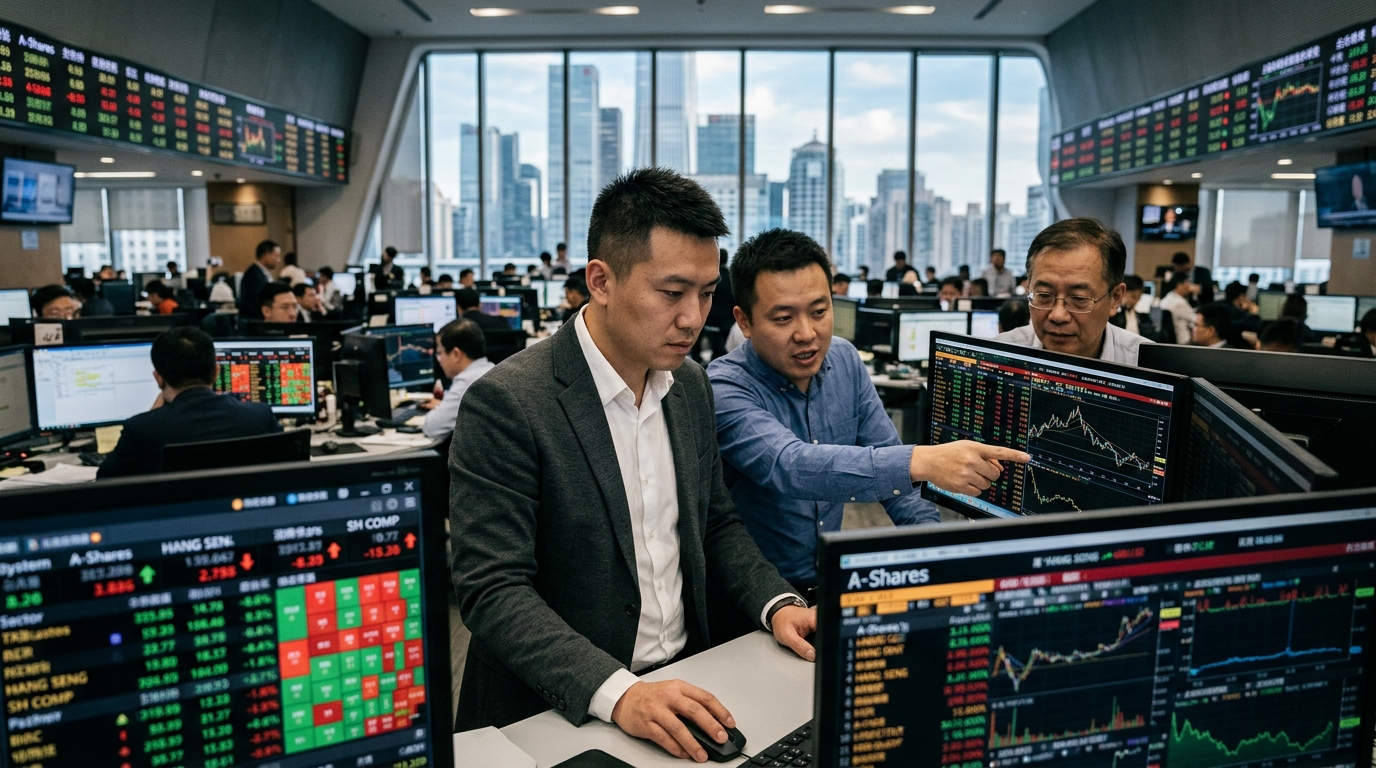
In the heart of Beijing, a new generation of tech giants, known as the 'AI Tigers,' is reshaping the global innovation map. Zhipu AI, perhaps the preeminent representative of this group, is in advanced talks to raise a staggering $4 billion. This move is not merely a business transaction; it is a clear declaration of China's intent to challenge the hegemony of OpenAI and Anthropic amidst intensifying geopolitical pressures.
The Ascent of Zhipu AI and its Academic Pedigree
Zhipu AI is no ordinary startup. Founded in 2019 with roots in the prestigious Tsinghua University—often referred to as the 'MIT of China'—the company has leveraged its academic ties to secure a unique competitive edge. This connection has granted it access to some of the nation’s most brilliant minds in machine learning and natural language processing. Its flagship series, the General Language Model (GLM), is widely regarded as the most potent domestic rival to OpenAI's GPT-4.
The new funding round is expected to propel the company's valuation to levels that would make it one of the most valuable unicorns globally. Existing backers include giants like Alibaba, Tencent, and Meituan, suggesting a rare alignment of Chinese Big Tech behind a single national champion. This consolidation of capital is vital, as the cost of training Large Language Models (LLMs) continues to climb exponentially, requiring deep pockets and long-term vision.
The Technological Cold War and the Semiconductor Hurdle
Zhipu AI's expansion occurs within a highly restrictive international environment. US-led export controls on advanced AI chips, particularly from Nvidia, have forced Chinese firms to become exceptionally resourceful. Zhipu AI has invested heavily in algorithmic optimization, ensuring their models deliver peak performance even on less powerful hardware or domestically produced semiconductors.
However, the pursuit of $4 billion highlights a blunt reality: AI is a capital-intensive arms race. This capital will be funneled not only into securing computational power through various channels but also into an aggressive talent war. China is actively seeking to repatriate scientists currently working in Silicon Valley, offering compensation packages and research opportunities that rival those of Google, Meta, and Microsoft.
The Strategy of the 'Four Tigers'
Zhipu AI does not operate in a vacuum. Alongside Moonshot AI, MiniMax, and Kai-Fu Lee’s 01.AI, it forms the new elite of Chinese technology. These companies are diverging from the paths of their predecessors like Baidu or ByteDance. They are focusing less on consumer-facing applications and more on foundational research and infrastructure. Their strategy is rooted in the belief that whoever controls the 'operating system' of intelligence will dictate the terms of the future global economy.
- Zhipu AI: Focuses on multimodal models and academic-grade precision.
- Moonshot AI: Specializes in long-context windows for complex data processing.
- 01.AI: Maintains a global vision with an emphasis on cost-efficiency and open-source contributions.
- MiniMax: Targets social and interactive AI experiences.
The acceleration of spending in this sector reflects a broader shift in China’s economic policy, moving away from real estate and traditional internet services toward 'hard tech' and strategic autonomy.
Conclusion: A New Balance of Power
The success of Zhipu AI in raising these funds will serve as a barometer for investor confidence in the Chinese AI ecosystem. While the West grapples with debates over AI safety and ethics, China appears to be moving with a sense of urgency reminiscent of the Space Race. This $4 billion bet is a wager on China’s survival as a technological superpower in a world increasingly bifurcated by a 'digital iron curtain.' The outcome will determine whether the future of intelligence is a monologue or a dialogue between two distinct technological philosophies.





