

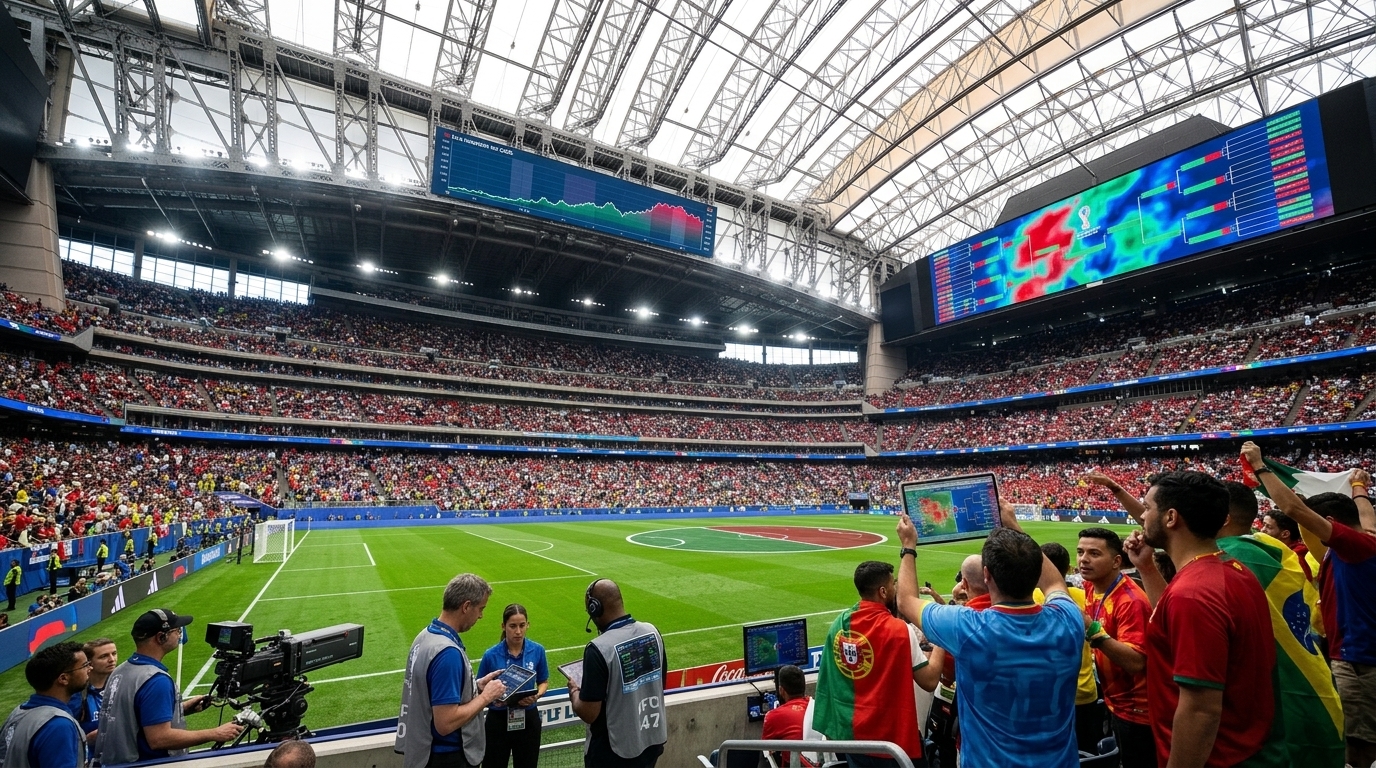
As the 2026 FIFA World Cup reaches its fever pitch across stadiums in North America, a parallel, equally intense competition is unfolding on the screens of investors and tech enthusiasts. The rise of prediction markets is no longer a theoretical exercise for academics or crypto-evangelists; it is a financial reality reshaping how we consume information and risk. Platforms like Kalshi, Polymarket, and the emerging Rothera are seeing trading volumes skyrocket to dizzying heights, turning every goal, injury, and VAR decision into a tradable asset.
The Collective Intelligence Revolution
For decades, betting was an activity confined to traditional bookmakers and sportsbooks, where odds were set by centralized analysts. Prediction markets flip this model on its head. They operate as exchanges where participants buy and sell "shares" in event outcomes. The price of a share reflects the market’s perceived probability of the event occurring. If the price for a USA victory over Brazil is $0.35, the market estimates a 35% chance of success.
The 2026 World Cup has served as the perfect catalyst for this evolution. The sheer scale of the event and the abundance of data have allowed these platforms to showcase their superiority in "price discovery." While traditional bookmakers are often slow to react to breaking news, prediction markets adjust in milliseconds, driven by thousands of users who have a financial incentive to be accurate.
A Three-Way Battle: Kalshi, Polymarket, and Rothera
The industry's current dynamic is defined by three main players, each employing a distinct strategy. Polymarket, built on blockchain technology, dominates international trading volume by leveraging the absence of geographical barriers and the low friction of cryptocurrencies. During the group stages, Polymarket recorded trades exceeding $2 billion, proving that its decentralized nature can handle extreme loads without a hitch.
On the other hand, Kalshi has taken the path of regulatory compliance in the United States. Following prolonged legal battles with the Commodity Futures Trading Commission (CFTC), Kalshi successfully legalized "event contracts" for the American public. This World Cup marks the first major tournament where Americans can legally "trade" on match outcomes through a federally regulated platform, lending institutional credibility and security to the sector.
Rothera, the newest entrant, focuses on the integration of Artificial Intelligence. By using advanced algorithms to provide liquidity in less popular markets—such as the number of yellow cards in a Round of 16 match—Rothera has attracted a more technical audience interested in arbitrage and high-frequency data analysis. Their AI-driven market-making has significantly reduced spreads, making it more attractive for professional traders.
Beyond Football: Economic and Political Implications
The success of prediction markets during the World Cup has broader implications. Many economists argue that these markets are the most accurate forecasting tools available to humanity. Their ability to aggregate dispersed information into a single price is invaluable not just for bettors, but for businesses and policymakers alike.
- Risk Management: Hospitality and tourism companies are using data from Kalshi to forecast demand based on national team performance, adjusting inventories and staffing levels in real-time.
- Political Clout: With global elections always on the horizon, the success of sports predictions bolsters the credibility of political markets, which are often cited as more reliable than traditional polling.
- Ethical Concerns: Despite their success, concerns persist regarding market manipulation by "whales" (large-scale investors) and the risk of addiction as the line between investing and gambling becomes increasingly blurred.
In conclusion, the 2026 World Cup will not only be remembered for the goals on the pitch but as the moment the global economy fully embraced prediction markets. The shift from "luck" to "information" is now irreversible. The platforms leading the charge today are laying the foundation for a future where every global uncertainty will have its price on a digital ticker.





