

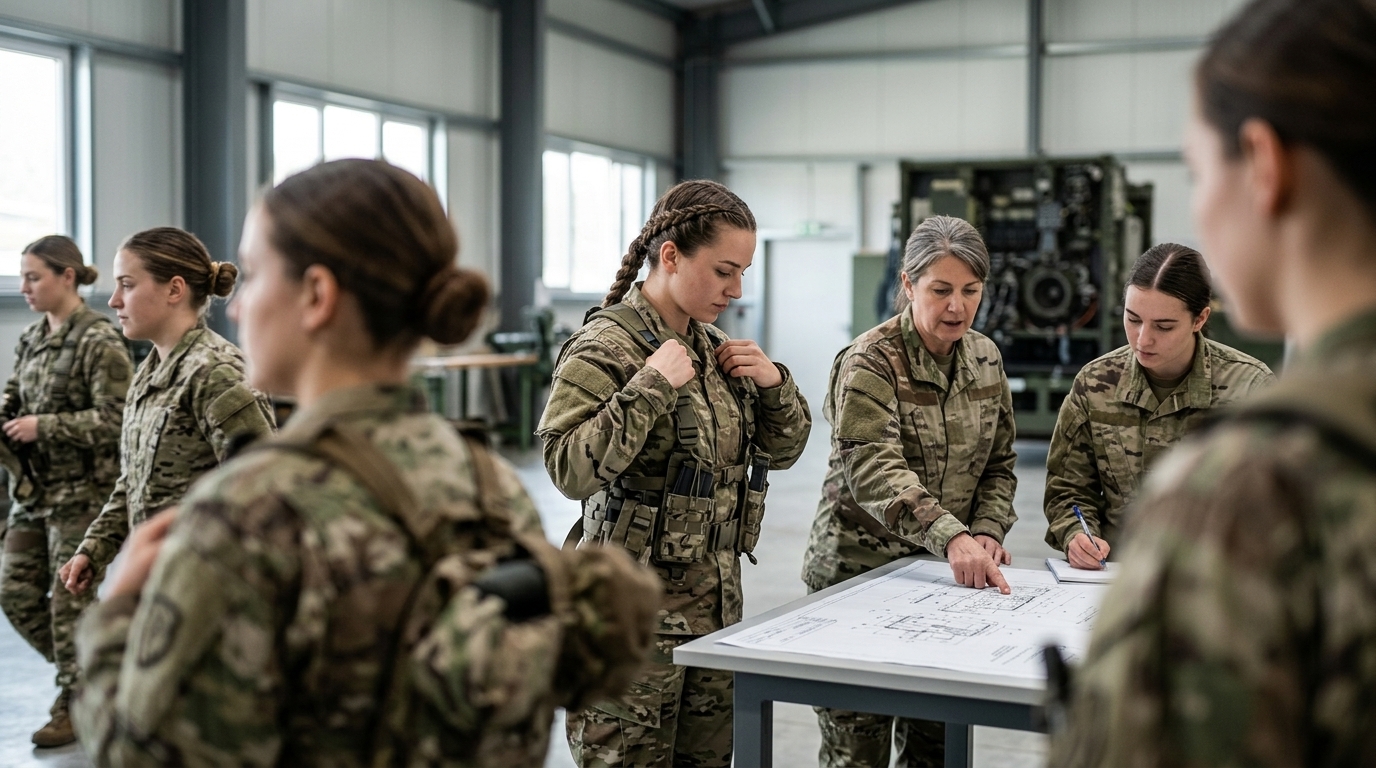
For decades, the defense sector and the military-industrial complex were considered the ultimate bastions of male dominance. The image of a military leader or the CEO of a weapons manufacturer was almost exclusively male. However, as we move through the first half of 2026, this reality is changing at a pace that goes beyond mere "inclusion." Women's participation in defense is no longer an exception that proves the rule, but a strategic choice that enhances efficiency, innovation, and decision-making in an increasingly complex geopolitical environment.
The Ascent to the Top of the Hierarchy
The most visible change is found at the highest levels of the defense industry. In the United States, as well as in Europe, women are now at the helm of giants such as Lockheed Martin, Northrop Grumman, and General Dynamics. This shift is not accidental. The modern defense industry has transformed from a "smoke and steel" industry into a high-tech sector where software, artificial intelligence, and cybersecurity play a leading role. In this new ecosystem, the skills required for leadership have diversified, emphasizing strategic flexibility and the ability to manage complex international partnerships.
In Greece, the participation of women in the Armed Forces and the domestic defense industry follows a steadily upward trend. From military academies to leadership positions in organizations like Hellenic Aerospace Industry (EAB), women are proving that operational capability and technical expertise have no gender. The integration of women into combat units, although initially met with cultural resistance, is now taken for granted, strengthening human resources at a time when demographic pressure makes the utilization of all talent imperative.
Technology as a Catalyst for Equality
The rapid development of autonomous systems and cyber warfare has changed the nature of conflict. The traditional notion that defense requires primarily physical strength has been debunked. Today, a drone operator or a cyber-threat analyst requires cognitive abilities, composure, and analytical thinking—fields in which women excel. The "digitalization" of the battlefield acts as an equalizer, allowing female scientists and engineers to lead in the development of systems that will define the future of global security.
Furthermore, studies show that teams with diverse compositions tend to make more balanced decisions and solve problems with greater creativity. In the defense sector, where mistakes can have catastrophic consequences, avoiding "groupthink" is vital. The female perspective in risk analysis and strategic planning offers an additional safety net, enhancing the resilience of defense systems.
Challenges and the Future
Despite progress, challenges remain. The "glass ceiling" has not been broken everywhere, and women are still underrepresented in specific technical branches and certain ranks of the military hierarchy. Retaining women in the industry requires policies that support work-life balance, as well as the elimination of stereotypes that still persist in traditional environments.
NATO and the European Union have placed the "Women, Peace and Security" agenda at the heart of their policies. This is not just a matter of social justice, but a necessity for survival. In a world where threats are hybrid and multidimensional, excluding half the population from the process of ensuring peace is a luxury no country can afford. The transition from exception to active participation is now irreversible, and the defense industry of the future will undoubtedly be more inclusive and, consequently, more powerful.





