

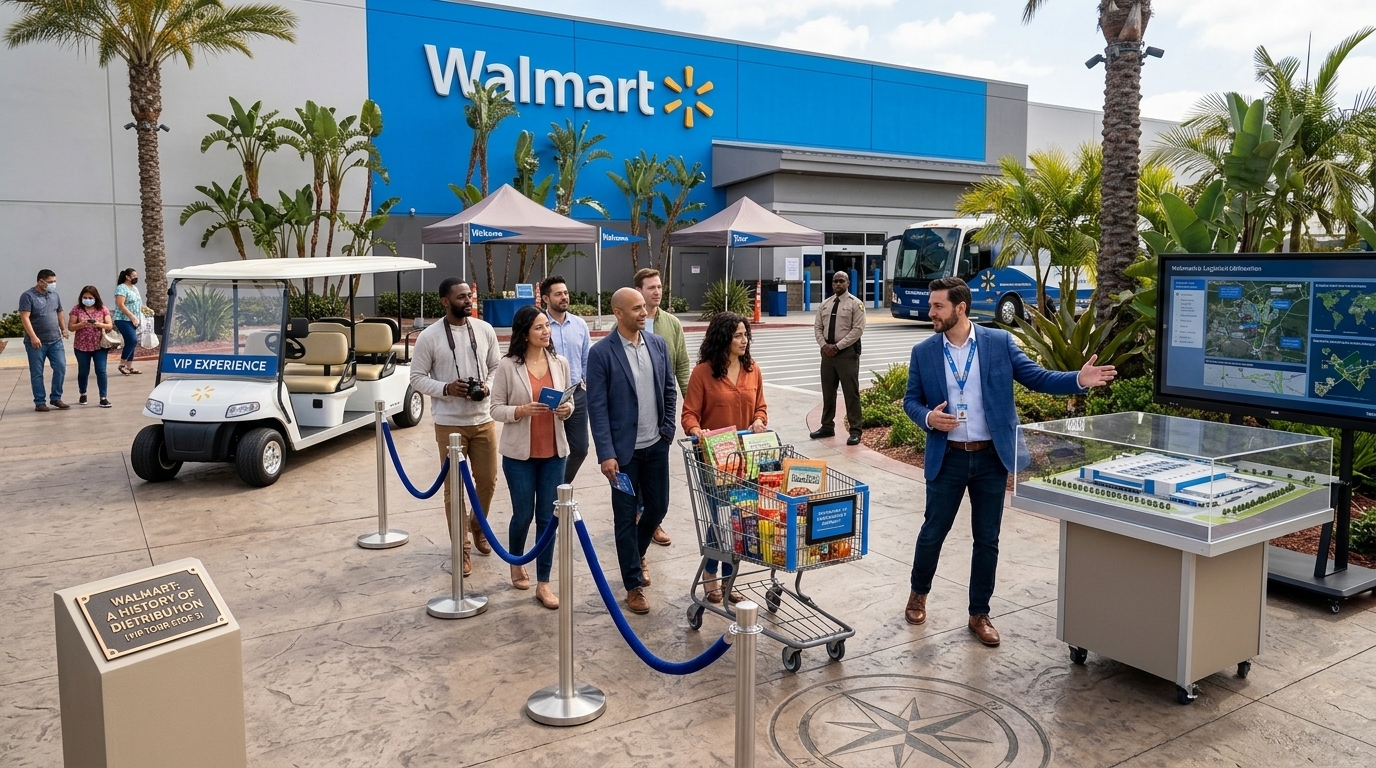
In a surprising move that redefines the boundaries between retail and tourism, Walmart, the titan of American superstores, has announced the launch of a VIP tour program for foreign visitors. What was once considered a simple point of purchase for daily necessities is now being transformed into a cultural landmark, a "living museum" of American capitalism and supply chain prowess.
Transforming the Store into a Destination
For decades, Walmart stores have served as the backdrop for the daily lives of millions of Americans. However, for international travelers, particularly from Europe or Asia, the sheer scale and variety of a Walmart Supercenter evoke a sense of awe. Walmart's new initiative recognizes this "exotic" allure that hyper-retail holds for foreigners. These VIP tours are not merely walks down the aisles; they offer an in-depth, behind-the-scenes look at the world's largest company by revenue.
Visitors have the opportunity to see automated sorting systems, shelf-scanning robots, and massive cold storage units up close. As one company executive put it, "We aren't just selling products; we are selling the American dream of abundance and efficiency." This strategy fits into the broader context of "experiential retail," where consumers seek not just an object, but the story and experience that accompany it.
From Bentonville to the World: Sam Walton’s Legacy
The heart of these tourist routes is often in Bentonville, Arkansas—Walmart's headquarters—where founder Sam Walton's original store already operates as a museum. However, the new program is expanding to selected stores in major cities and tourist hubs. Participants receive exclusive souvenirs, enjoy tastings of local American products, and are briefed on the company's history and its impact on the global economy.
"Walmart is to America what the Eiffel Tower is to France: a symbol of scale and identity," notes a market analyst.
This move is no accident. In an era where e-commerce threatens physical stores, Walmart is investing in "physical presence" as a competitive advantage. By turning the store into an attraction, the company bolsters its brand against competitors like Amazon, creating an emotional connection with the public that a digital screen simply cannot replicate.
Economic Implications and Branding Strategy
Economically, VIP tours represent a new, albeit small for now, revenue stream. The real gain, however, lies in branding. Foreign tourists, upon returning to their home countries, become brand ambassadors. Furthermore, Walmart is tapping into the "industrial tourism" trend, following in the footsteps of companies like Boeing or Coca-Cola, which open their facilities to the public to showcase technological superiority.
- Strengthening international brand recognition.
- Differentiating from e-commerce platforms through physical experience.
- Leveraging "Americana" as a tourist product.
- Creating new partnerships with travel agencies and platforms like TripAdvisor.
Despite the positive outlook, critics argue that turning a workplace of low-wage employees into a tourist spectacle carries ethical risks. The challenge for Walmart will be to balance the tourist gloss with the reality of daily operations, ensuring the experience remains authentic and respectful to all involved.
The Future of Retail as Entertainment
As industry lines blur, it is certain that we will see other giants follow Walmart's lead. The concept of "shoppertainment" no longer just applies to malls with cinemas, but to the stores and their processes themselves. In the future, a visit to a supermarket might be as scheduled as a visit to an art museum, marking a new era for global consumer culture.





