

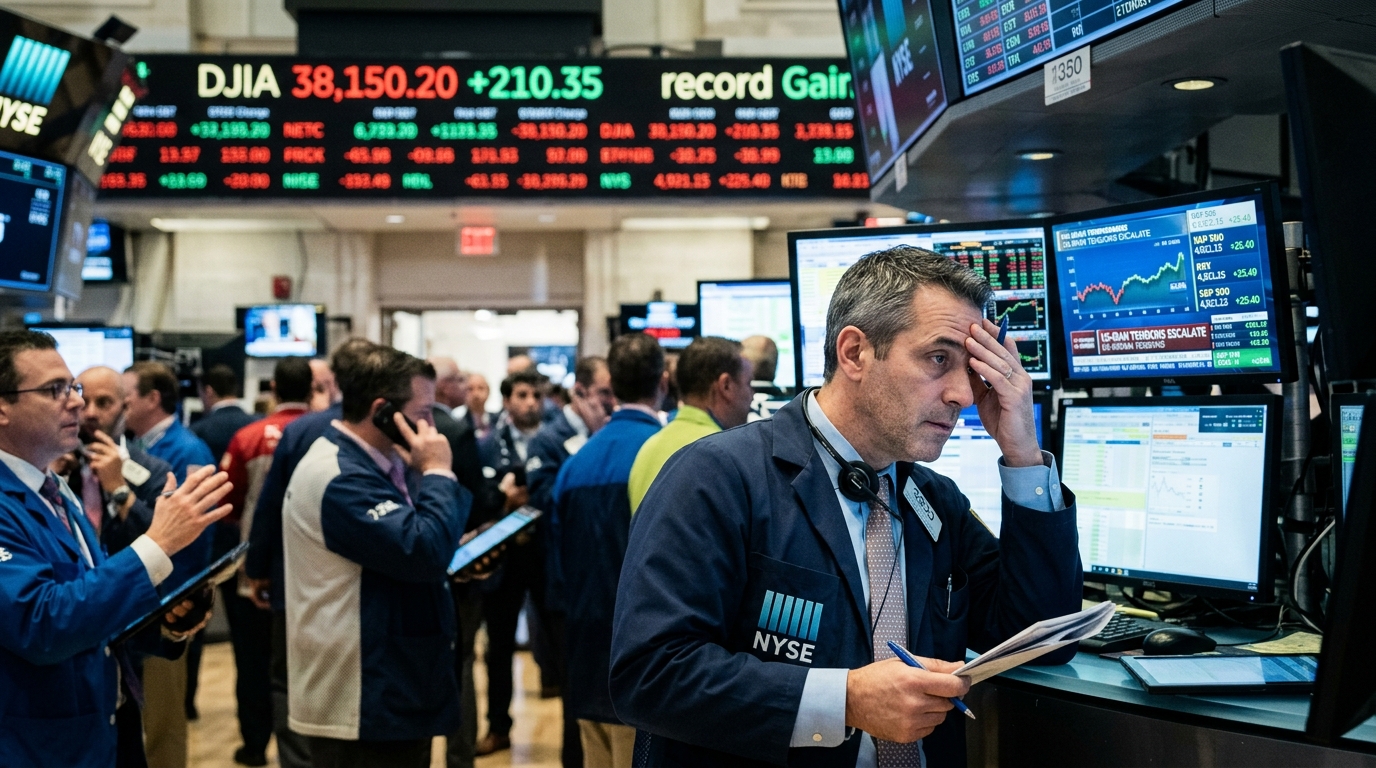
In one of the most striking periods in financial history, Wall Street is concluding the second quarter of 2026 with a performance that defies traditional economic logic. While the drums of war beat in the Persian Gulf and direct military engagement between the US and Iran has sparked global anxiety, the S&P 500 and Nasdaq are hitting record highs. This resilience is not merely a reaction to uncertainty, but a fundamental shift in how capital perceives geopolitical risk in the age of Artificial Intelligence.
Market Decoupling from Geopolitical Reality
Historically, a conflict of this magnitude involving a superpower and one of the world's largest oil producers would have sent markets into a tailspin. However, 2026 is different. The "decoupling" we are witnessing is driven by three main factors: US energy autonomy through new extraction technologies, the dominance of tech giants that are independent of Middle Eastern supply chains, and an investor conviction that the conflict will remain "contained."
Analysts point out that fears of a global energy crisis have been mitigated by the rapid adoption of AI-driven energy management systems, which have optimized consumption across Western economies. Furthermore, the pivot toward defense industries integrating autonomous systems has created a new wave of profitability for sector giants, pushing their stock prices to unprecedented levels.
The Role of AI as a 'Safe Haven'
If gold was once the ultimate haven during wartime, today that role seems to be occupied by "digital capital." Major technology firms, the so-called "Magnificent Seven" of the new era, have evolved into de facto economic states. With cash reserves exceeding the GDP of many nations, these companies are perceived as safer than government bonds.
The explosion of Generative AI, which matured significantly in the first half of 2026, has created an expectation for productivity gains that outweigh the negative impacts of war-induced inflation. Investors are betting that AI will solve the supply chain disruptions caused by the blockade of the Strait of Hormuz, utilizing advanced algorithms to reroute global trade in real-time.
Inflation and Monetary Policy Challenges
Despite the stock market euphoria, the Federal Reserve finds itself in a precarious position. Oil prices, while not skyrocketing to the $200 levels many feared, remain elevated, fueling persistent inflation. The Fed's decision to hold interest rates steady, rather than hiking them further, was interpreted by markets as a "green light" for risk appetite.
There is, however, a darker side to this narrative. Many economists warn that the current rally resembles the dot-com bubble, but with the added volatility of geopolitical instability. Wall Street appears to be betting that the war will be brief and that US technological superiority will ensure rapid stabilization. Should this bet fail, the market correction could be violent and systemic.
Conclusions and Future Outlook
The quarter-end finds investors in a state of "controlled euphoria." The market has learned to live with the sound of gunfire, focusing instead on balance sheets and algorithmic returns. Yet, history teaches us that markets tend to underestimate "black swans"—unpredictable events that can overturn even the most sophisticated forecasting models. For now, capital is flowing into New York, seeking profit in a world that is increasingly on edge.





