

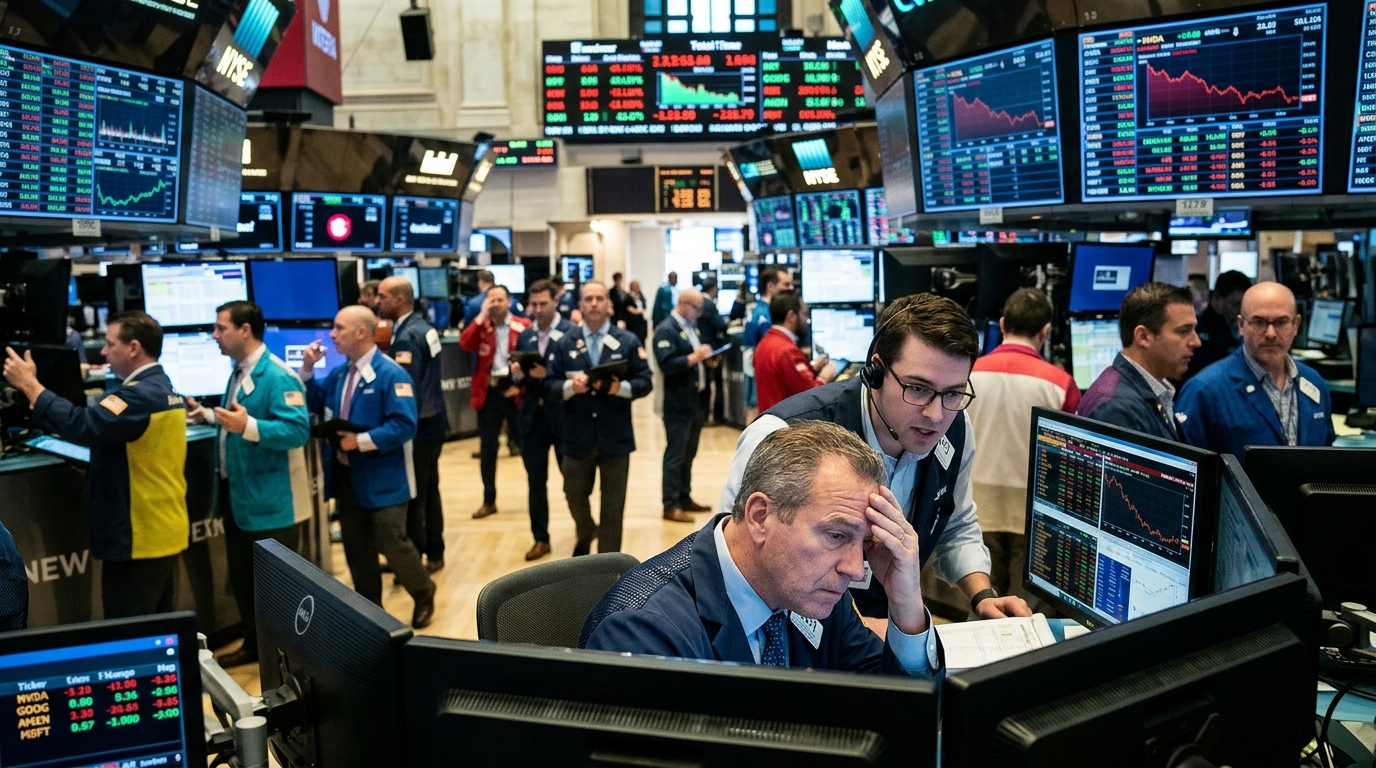
The history of financial markets is punctuated by cycles of euphoria followed by periods of violent grounding in reality. From the 17th-century 'Tulip Mania' to the dot-com bubble of the early 2000s, the pattern remains identical: a new technology promises to change the world, capital flows in unchecked, valuations decouple from fundamentals, and eventually, Wall Street demands to see the 'color of the money.' Today, Artificial Intelligence (AI) stands at exactly this critical crossroads.
From Euphoria to Skepticism
For nearly two years, the market moved under a simple dogma: whoever invests in AI wins. Nvidia became the world's most valuable company, Microsoft saw its capitalization skyrocket, and every startup with '.ai' in its domain raised millions in funding. However, recent quarterly reports from Big Tech giants have begun to induce nervousness. Despite impressive revenues, investors are now focusing on another metric: Capital Expenditures (CapEx).
Analysts from Goldman Sachs and Barclays have started sounding the alarm. In a recent report, Goldman Sachs questioned whether the $1 trillion expected to be spent on AI infrastructure in the coming years will ever yield a proportional return. The problem is not the technology itself, but the gap between the massive investment in hardware (chips, data centers, energy) and the slow adoption of applications that actually generate revenue from end-users.
The Infrastructure Paradox and the Revenue Enigma
The current phase of AI strongly resembles the construction of railroads or the laying of fiber optics in the late 1990s. We are building the infrastructure before we have fully figured out how to commercially exploit it at scale. Cloud companies like Amazon (AWS) and Google are frantically buying Nvidia processors to ensure they are not left behind in the arms race. Yet, the customers of these services—the enterprises—remain hesitant.
- Integrating AI into business processes is proving slower and more expensive than anticipated.
- Model 'hallucinations' hinder adoption in critical sectors like healthcare or legal services.
- Operating costs (inference costs) remain high, squeezing the profit margins of software companies.
This imbalance is leading Wall Street toward a re-evaluation. This is not a total abandonment of the technology, but rather the end of the 'easy money' period. Investors are no longer satisfied with promises about the future; they demand to see how AI will boost earnings per share (EPS) in the present.
The Next Phase: Selective Investment and Survival of the Fittest
As the bubble of excessive expectation deflates, we will see a flight to quality. The companies that survive and dominate will not necessarily be those with the largest models, but those offering specialized solutions to specific problems. 'Vertical AI'—applications tailored to specific industries like heavy manufacturing or supply chain management—seems to be gaining ground over general-purpose chatbots.
"The market is moving from the 'what is possible' phase to the 'what is profitable' phase. This is a healthy evolution for any technological revolution," says a leading Wall Street strategist.
In conclusion, the 'brake' Wall Street is tapping does not signify the death of AI, but its coming of age. Stocks that relied solely on hype will face severe pressure, while true leaders will emerge through their ability to turn algorithms into dollars. For the average investor, the keyword for 2024 and 2026 is no longer 'growth,' but 'efficiency.'





