

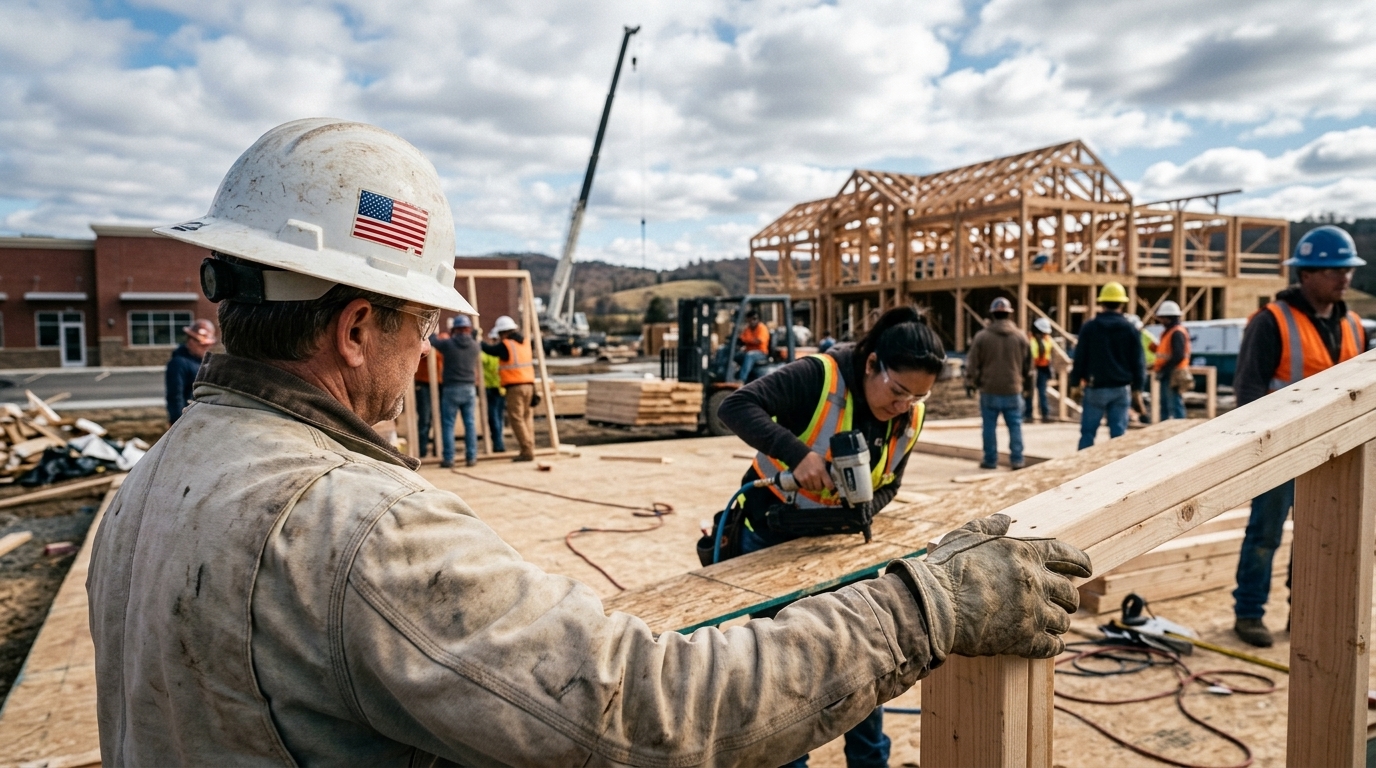
In a stunning display of economic resilience that harks back to a different era, the U.S. labor market continues to defy every conventional forecast. According to the latest data from the U.S. Department of Labor, initial jobless claims have dropped to levels not seen since 1969. This news is not merely a statistical milestone; it is a profound testament to the fact that the world's largest economy maintains a momentum that many analysts considered impossible amidst high interest rates and global geopolitical volatility.
Historical Context: From 1969 to 2026
To grasp the magnitude of this figure, one must look back to 1969. At that time, the American economy was in a state of intense overheating driven by Vietnam War spending, and the technological landscape was light-years away from today's reality. Now, in 2026, the labor market operates under entirely different parameters. The integration of Artificial Intelligence, the stabilization of remote work, and an aging demographic have created a new ecosystem.
The dip in claims below the psychological threshold of 180,000 per week suggests that businesses, despite occasional headlines about tech sector layoffs, remain extremely hesitant to let go of staff. The experience of the "Great Reshuffle" in previous years has taught employers that finding capable talent is a grueling and expensive process, leading to the practice of "labor hoarding." Companies are choosing to absorb higher costs rather than risk being understaffed when demand surges.
The Federal Reserve's Dilemma
While this is welcome news for the average worker, it presents a complex puzzle for central bankers in Washington. Such a tight labor market typically fuels inflationary pressures through wage growth. When workers are scarce, companies are forced to offer higher compensation to attract or retain them—a cost that is frequently passed on to consumers in the form of higher prices.
The Federal Reserve, striving to anchor inflation near its 2% target, views these figures with a degree of skepticism. If unemployment remains at these historic lows, the likelihood of interest rate cuts later this year diminishes. The "soft landing" strategy—cooling the economy without triggering a recession—appears to be succeeding, but the price may be "higher for longer" borrowing costs that continue to strain the housing and credit markets.
The AI Factor and Productivity
It is impossible to analyze the current state of affairs without considering the impact of AI. Contrary to initial fears that Artificial Intelligence would lead to mass unemployment, by mid-2026 we are seeing the opposite: technology is acting as a productivity multiplier that allows existing teams to handle larger workloads. This has reduced the desperate need for frantic mass hiring while simultaneously making current employees more indispensable than ever.
- Healthcare and hospitality sectors continue to report the most significant labor shortages.
- Digital literacy has become a non-negotiable prerequisite, driving up the value of skilled professionals.
- Automation of low-skill tasks has not yet reached the tipping point of replacing human judgment in critical service sectors.
In conclusion, the American labor market in 2026 represents a paradox. In a world that was bracing for an economic downturn, workers are enjoying a level of job security not seen in half a century. The lingering question is whether this resilience is the dawn of a new era of prosperity or the final flare-up before a structural realignment triggered by the full maturation of autonomous systems.





