

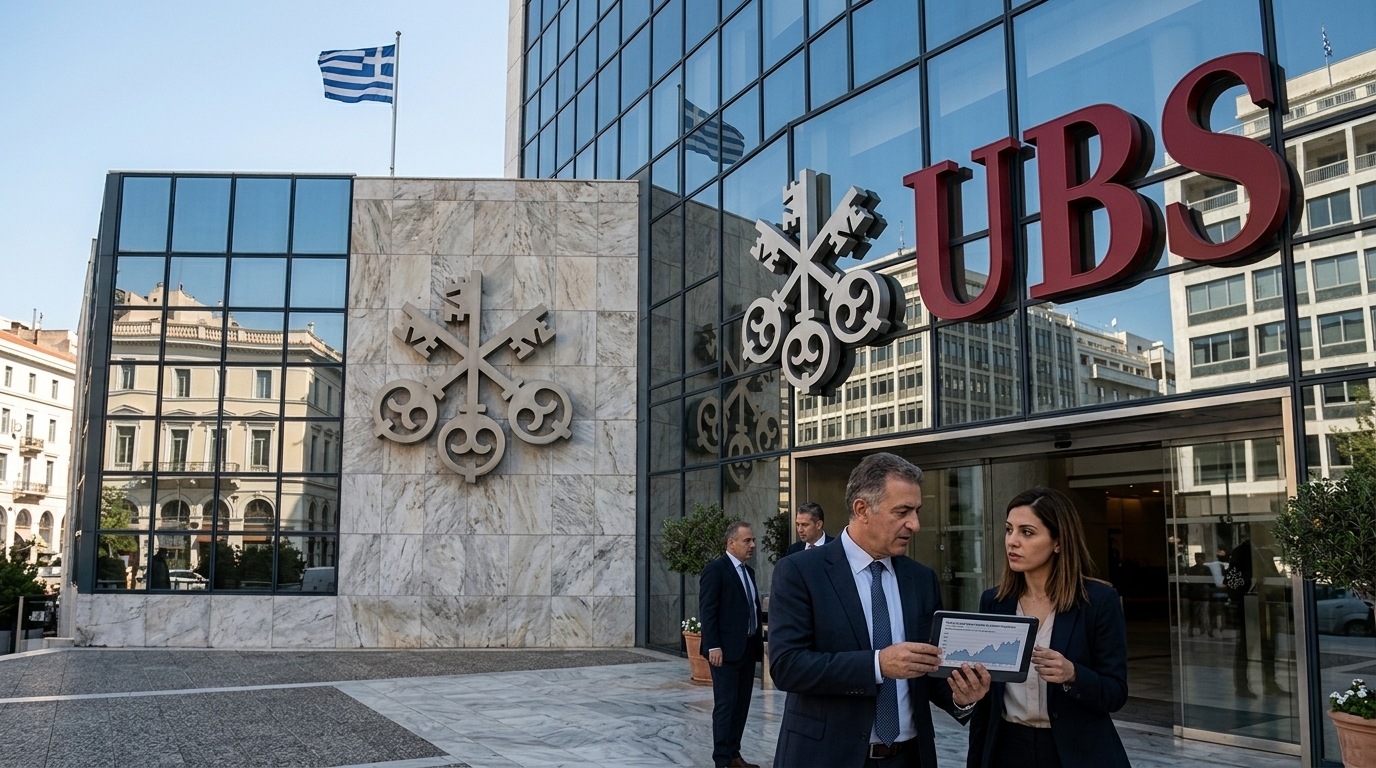
The recent report by UBS on the Greek banking sector is not merely a positive stock market analysis; it is a certificate of maturity for an industry that has navigated the treacherous waters of a decade-long crisis. By maintaining a 'Buy' rating for all four systemic banks—Alpha Bank, Eurobank, National Bank of Greece, and Piraeus Bank—the Swiss investment giant underscores that the Greek story remains one of the most compelling in Europe, despite the challenges of inflation and interest rate volatility.
Revenue Resilience in a Shifting Landscape
UBS's core argument focuses on the Greek banks' ability to maintain high levels of Net Interest Income (NII), even as the European Central Bank (ECB) proceeds with gradual rate cuts. The analysis shows that the liability structure of Greek banks, characterized by a large retail deposit base and relatively low funding costs, acts as a significant buffer. Furthermore, the acceleration of credit expansion, fueled by projects under the Recovery and Resilience Facility (RRF), is expected to offset margin pressures.
According to UBS, Greek banks are trading at a substantial discount compared to their European peers, despite exhibiting similar or even superior Return on Tangible Equity (ROTE) metrics. The upside potential identified—up to 26%—is not an arbitrary estimate but is based on the expectation that the market will increasingly price in the full normalization of the country's risk profile.
Dividends and Capital Returns: The New Pillar
For the first time in 16 years, Greek banks have made a dynamic return to dividend policies. UBS places particular emphasis on this development, viewing it as the final stage of the sector's rehabilitation. The banks' ability to generate organic capital allows not only for dividend distributions but also for the implementation of share buyback programs, further enhancing shareholder value.
The UBS analysis notes that Common Equity Tier 1 (CET1) ratios are at historically high levels, providing the necessary safety net against potential external shocks. The strategic focus on reducing Non-Performing Exposures (NPEs) has yielded results, with ratios now converging toward the European average, leaving behind the era of balance sheet toxicity.
Digital Transformation and the AI Impact
Beyond balance sheet figures, a critical parameter examined by UBS is operational efficiency. Greek banks have invested billions in digital transformation, drastically reducing their operating costs. The integration of Artificial Intelligence in risk management, customer service, and data analytics allows banks to operate with much lower cost-to-income ratios compared to the past.
This technological edge does not only improve profits but also creates a more personalized banking model. UBS estimates that banks leading in AI adoption will have a competitive advantage in attracting new customers and maintaining profitability in a lower interest rate environment, where efficiency will be the key to success.
Conclusion: A New Era of Stability
The UBS report concludes that Greek banks are no longer the 'black sheep' of Europe but a sector offering stability and growth. The upgrade of the Greek economy to investment grade and the successful divestment of the Hellenic Financial Stability Fund (HFSF) have paved the way for long-term institutional investors. With valuations remaining attractive, 2026 appears to be the year when the Greek banking system solidifies its position on the European map as a reliable and profitable capital destination.





