

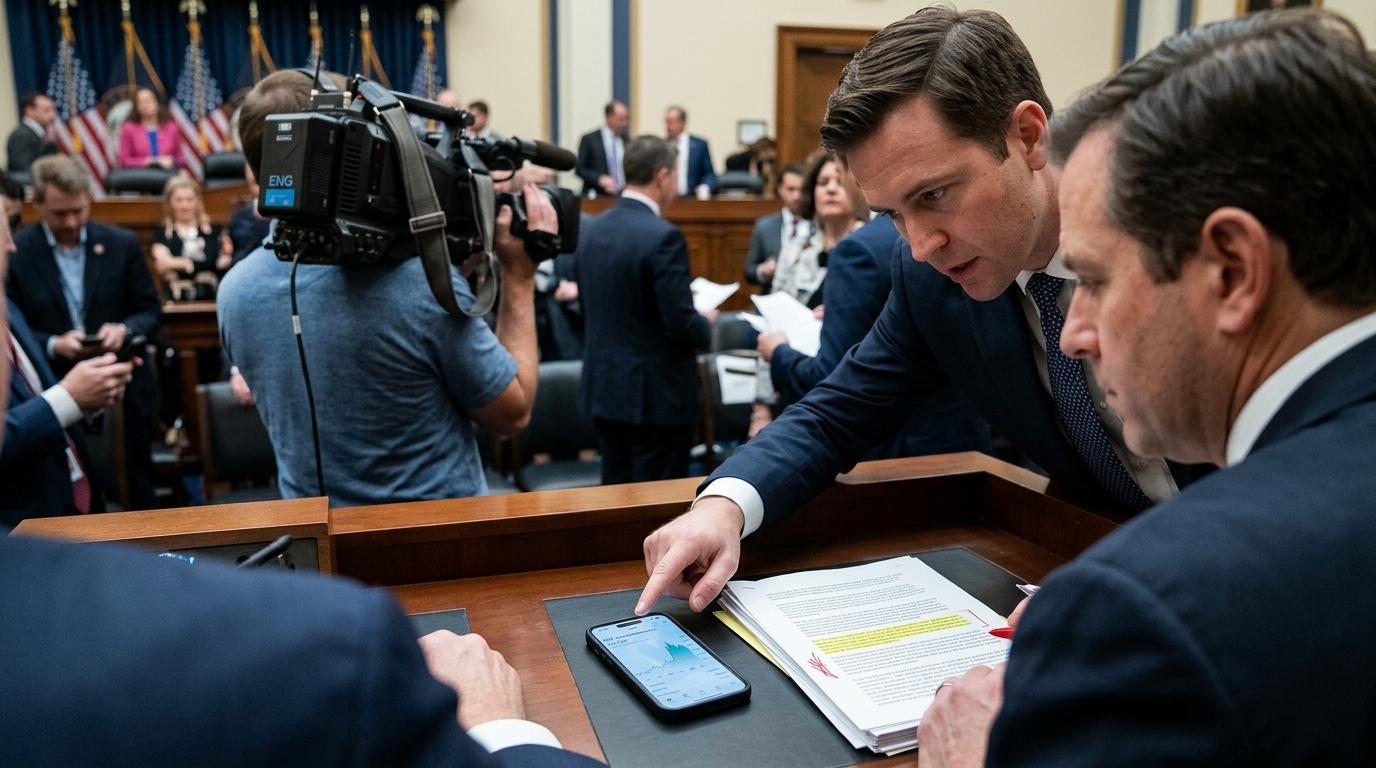
The recent release of Donald Trump’s financial disclosures for 2025 has done more than just cause a stir in the corridors of Washington; it has ignited a profound institutional crisis regarding the boundaries between private wealth and public office. According to documents filed with regulatory authorities, the 47th President of the United States engaged in stock purchases and investment product acquisitions totaling $1.4 billion, a move that propelled his personal fortune to new heights while his administration was simultaneously shaping critical economic policies.
The Portfolio of Power: Where the Capital Flowed
An analysis of these investments reveals a strategic positioning in sectors directly impacted by presidential decisions. A significant portion of the $1.4 billion was funneled into artificial intelligence (AI) companies, energy giants specializing in fossil fuels, and advanced defense contractors. The timing is, at the very least, remarkable: these investments were made shortly before executive orders were signed to deregulate the energy market and increase federal spending on cutting-edge military technology.
Critics of the President point out that holding such vast stakes in private corporations makes objective decision-making virtually impossible. For instance, Trump’s preference for American semiconductor firms, while imposing new tariffs on foreign competitors, creates the image of a policy tailored to his personal profit. White House legal advisors insist that all moves were conducted through independent managers; however, the absence of a true "blind trust" remains the primary point of contention.
Institutional Erosion and the Ghost of the STOCK Act
The issue is not merely ethical but legal. The STOCK Act (Stop Trading on Congressional Knowledge), which prohibits using non-public information for market transactions, appears to be tested to its limits. Although the law primarily targets members of Congress, its application to the Commander-in-Chief remains a legal gray area. The 2025 disclosures highlight the need for a stricter framework, as the market responded with intense volatility to every "signal" emanating from the President’s portfolio.
- Lack of transparency in over-the-counter (OTC) transactions.
- Potential influence of tariff policies on the value of his specific holdings.
- Relationships with foreign investors participating in the same investment vehicles.
Financial analysts note that the "Trump Index" has now become a tangible tool for Wall Street traders. When the President invests, the market follows, creating a self-fulfilling prophecy of profit that few other investors globally can orchestrate. This dynamic distorts free competition and transforms political power into an absolute advantage in the capital markets.
The Opposition’s Response and the 2026 Midterm Implications
With the 2026 midterm elections approaching, the $1.4 billion issue is expected to dominate the political agenda. Democrats have already launched inquiries in House committees, demanding full disclosure of communications between Trump’s financial advisors and policy-making officials. "We cannot have a President who uses the Oval Office as a Bloomberg terminal," a leading opposition figure stated pointedly.
"Public trust in institutions erodes when public service is transformed into a speculative vehicle. 2025 will go down in history as the year American plutocracy formalized its dominance over the political process."
On the other hand, the President's supporters argue that his stock market success is proof of his acumen and that a wealthy President is less susceptible to external pressures. However, the reality of the numbers suggests that conflicts of interest are no longer theoretical but measurable in the billions. The debate over whether a billionaire can govern without favoring his own empire remains the most pressing question of modern American democracy.





