

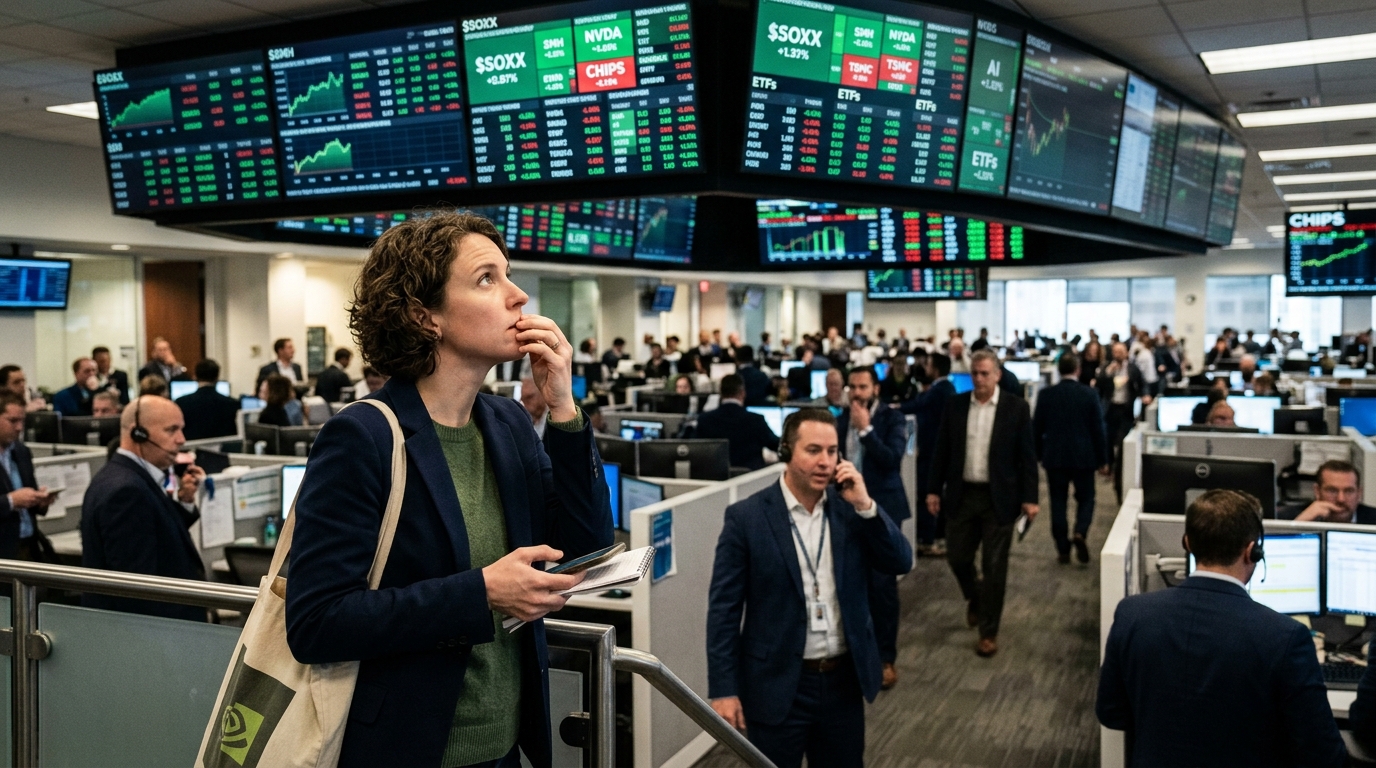
The Artificial Intelligence (AI) revolution is frequently described in terms of algorithms and large language models. However, in the physical world of infrastructure, the battle is fought in silicon. While Nvidia has stolen the spotlight with its Graphics Processing Units (GPUs), a new bottleneck has emerged: memory. Without the ability to store and retrieve data rapidly, even the most powerful processors remain idle. This has led to an explosive surge in demand for High Bandwidth Memory (HBM), creating a unique investment opportunity for those with even small amounts of capital, such as $100.
The 'Memory Wall' and the Ascent of HBM
For decades, computing power increased faster than memory access speeds, a phenomenon known as the 'memory wall.' In the era of Generative AI, this wall suddenly became the biggest enemy of efficiency. Models like GPT-4 require billions of parameters to move between the processor and memory in fractions of a second. The solution was found in HBM, a technology where memory chips are stacked vertically, allowing data to flow at unimaginable speeds.
Dominant players in this field, such as Micron Technology, SK Hynix, and Samsung, are seeing their order books filled for the next two years. Micron, for instance, recently announced that its 2024 production and most of its 2025 capacity is already sold out. This is not just a market cycle; it is a structural transformation of the semiconductor industry, where memory is no longer viewed as a simple low-margin 'commodity,' but as a critical, high-value specialized component.
Why an ETF is the Right Choice for $100
For the average investor, buying individual stocks in the semiconductor sector can be risky and expensive. A single share of Nvidia or ASML can cost hundreds or thousands of dollars, making diversification difficult with a small amount. This is where Exchange-Traded Funds (ETFs), such as the Strive U.S. Semiconductor ETF (SHOC) or the VanEck Semiconductor ETF (SMH), come into play. These investment vehicles allow the holder of $100 to gain exposure to the entire AI chip ecosystem.
- Diversification: With an ETF, you aren't just betting on one company, but on a group of leaders including memory makers, processor designers, and lithography equipment producers.
- Accessibility: Many of these ETFs have a share price below $100, allowing for immediate market entry.
- Reinvestment: Dividends collected from companies in the sector are often automatically reinvested, boosting returns over time.
Geopolitics and Risks: The Other Side of the Coin
Despite the optimism, the semiconductor sector remains one of the most geopolitically sensitive. The concentration of production in Taiwan and South Korea is a permanent point of friction between the US and China. Furthermore, the cyclical nature of the market means that periods of shortage are often followed by periods of oversupply. However, the difference this time is that AI demand is not coming from consumer goods (like smartphones), but from cloud giants (Microsoft, Google, Amazon) who have inexhaustible capital for infrastructure.
"Memory is the fuel in the engine of artificial intelligence. Without it, the revolution will simply stall."
In conclusion, investing in an ETF focused on memory and semiconductors is a strategic move for those who believe AI will continue to transform the global economy. With $100, an investor is not just buying a stock, but a front-row ticket to technological evolution.





